Body condition scoring the herd this August

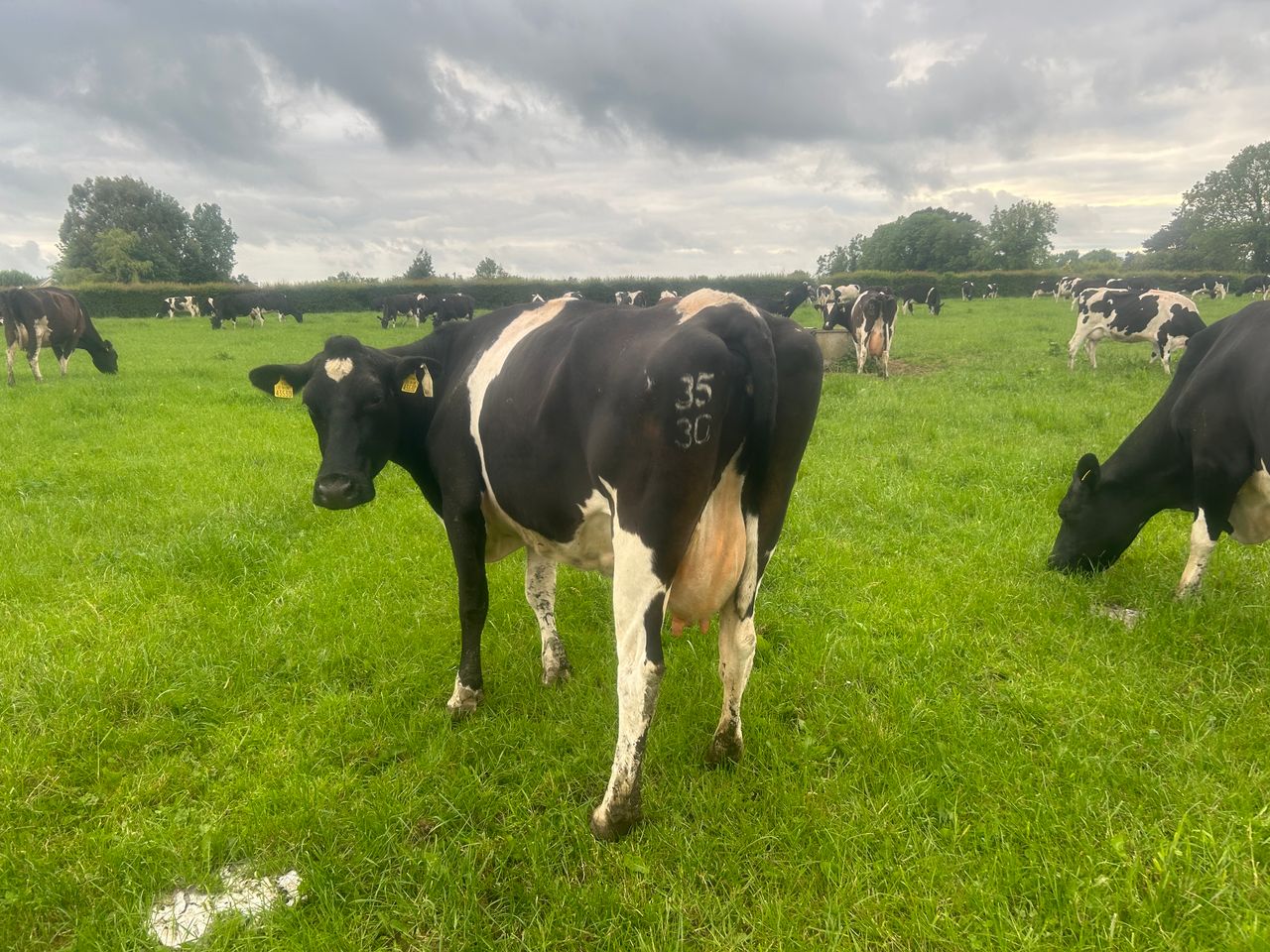
At this stage of the lactation, farmers should be body condition scoring their herd to ensure everything is in order after breeding.
Animals can easily lose condition during the breeding season if they are under stress, but it is easy to get things back on track during July and August while they are out grazing lush grass.
Unfortunately, the drought hit just as breeding wrapped this year, which has resulted in some imbalanced diets and poorly conditioned cows.
A lot of farms may feel body condition scoring is unnecessary as they see cows twice a day in the parlour.
However, carrying out proper condition scoring will identify any cows which are slipping through the cracks.
Assessing the body condition score (BCS) of your spring-calving cows at this time of year will allow for plenty of time to sort out any that are under- or over-condition ahead of drying off and calving.
For the autumn-calving cows, time is running out in terms of rectifying their condition before calving, so it needs to be done as soon as possible to get some of the skinny cows separated and on a richer diet.
Over-conditioned cows due to calve down this autumn should have their should have their diet restricted.
Ensure you are feeding dry cow minerals and consider adding hay, silage or high-fibre content feed to the diet, as fat cows at calving are highly susceptible to milk fever.
Body condition score
BCS is critical to a successful calving season, as the identification of thin cows early allows for steps to be taken to improve their condition in good time.
The first step is to BCS all of the animals in the herd, followed by providing extra care and attention to the thinner animals identified.
To assess BCS, one must check by hand the fat cover over the loin, plates, and pin bones of the pelvis and tail areas.
The BCS of a cow is graded on a scoring system of between one and five, as follows:
- Score 1: Individual transverse processes are fairly sharp to the touch and there is no fat around the tail head. Hip bones, tail head, and ribs are visually prominent;
- Score 2: Transverse processes can be identified individually when touched, but feel rounded rather than sharp. There is some tissue cover around the tail head and over the hip bones. Individual ribs are no longer obvious;
- Score 3: Transverse processes can only be felt with firm pressure. Areas either side of the tail head have a fat cover that is felt easily;
- Score 4: Fat cover around the tail head is evident as slight ’rounds’, and is soft to touch. Transverse processes cannot be felt even with firm pressure. Folds of fat are developing over the ribs;
- Score 5: Bone structure is no longer noticeable, and the animal present a ‘blocky’ appearance. Tail head and hip bones are almost completely buried in fat, and folds of fat are apparent over the ribs.
The aim is to have the cows at a BCS of 3.0 at drying-off, as this will give them the best chance of having a smooth calving and prevent them from any metabolic issues post-calving.
If a cow has low BCS now, you should start looking at improving her as soon as possible, rather than waiting for drying off.
These cows could be marked early, and potentially allocated an extra bit of meal or could potentially be milked once-a-day closer to the end of the lactation, come November.