Bluetongue cases approaching 120 across 19 counties

The number of bluetongue cases in the country is now approaching 120, across 19 counties.
The number of cases nationwide is now up to 117 according to the latest figures from the Department of Agriculture, Food and the Marine, which were updated today (Tuesday, November 24).
This is an increase of 15 cases over the last fortnight.
Up until today the data showed the virus had been detected in 17 counties.
Bluetongue has now been detected in two additional counties: Cavan and Kerry.
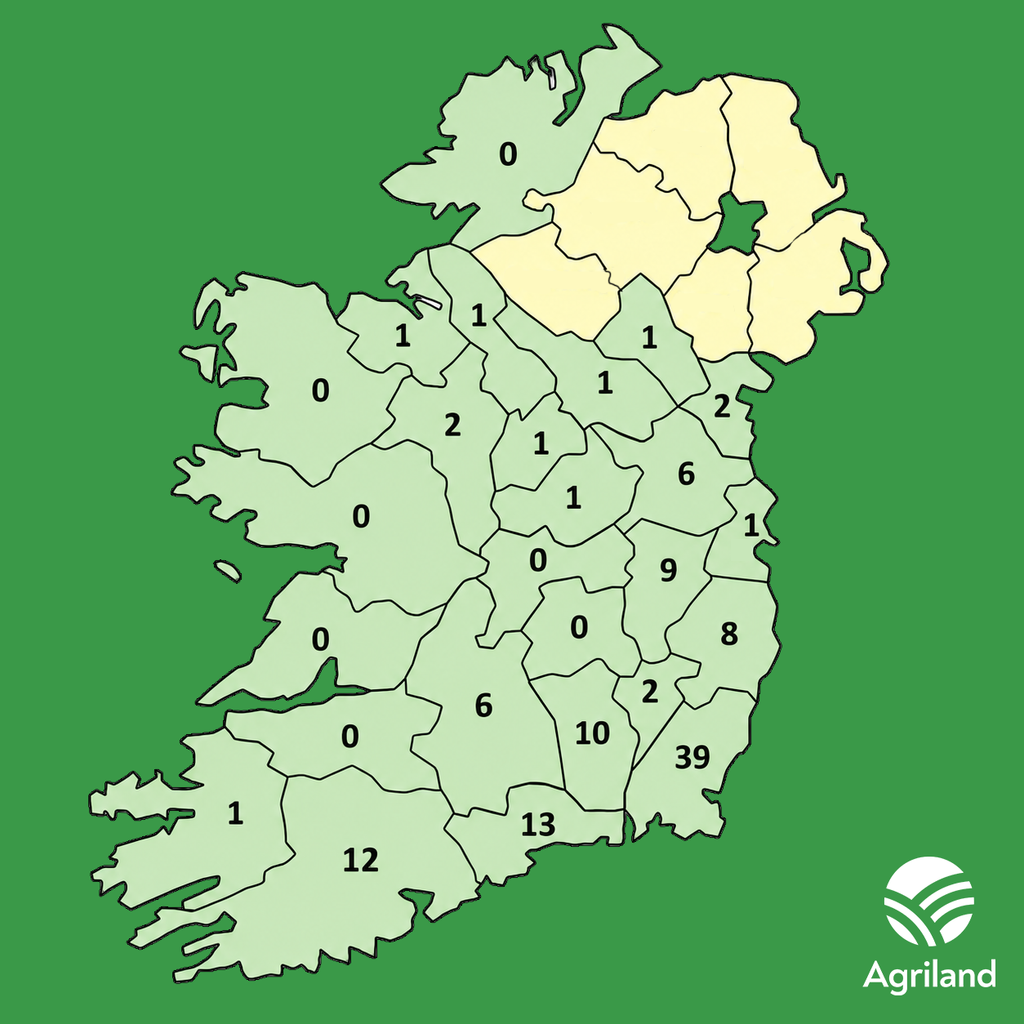
The latest data shows that the 117 cases are made up of 109 cases in cattle (bovine cases) and eight cases in sheep (ovine cases).
Co. Wexford, the first county where the virus was detected in January this year, remains the county with the most detected cases, with 39 in total (36 in cattle and three in sheep).
Three other counties have double-digit case numbers: Waterford (13 cases), Cork (12 cases) and Kilkenny (10 cases).
In all three of those counties, the cases are in cattle.
Apart from Co. Wexford, five other counties have seen cases in sheep, with one sheep case in each county.
These counties are Carlow, Kildare, Meath, Sligo and Wicklow.
Northern Ireland
In Northern Ireland, livestock farmers have been urged to remain vigilant, following confirmation of bluetongue virus in three sheep on a farm in Co. Down.
The confirmation was the first detected case in Northern Ireland during the 2026/27 season.
UFU deputy president Clement Lynch said: "The confirmation of bluetongue in Co. Down is disappointing and will understandably concern livestock farmers.
"However, given the significant spread of [bluetongue] across Great Britain and the Republic of Ireland in recent months, unfortunately it is not entirely unexpected," he added.
Lynch said that the UFU's message to farmers is "to remain calm, vigilant and continue to follow the veterinary advice".
"We have been highlighting the growing threat from [bluetongue] throughout this season, and this confirmation reinforces how important it is that farmers regularly check their livestock and report anything suspicious immediately," he said.