Biodiversity centre celebrates 20 years of farmer collaboration

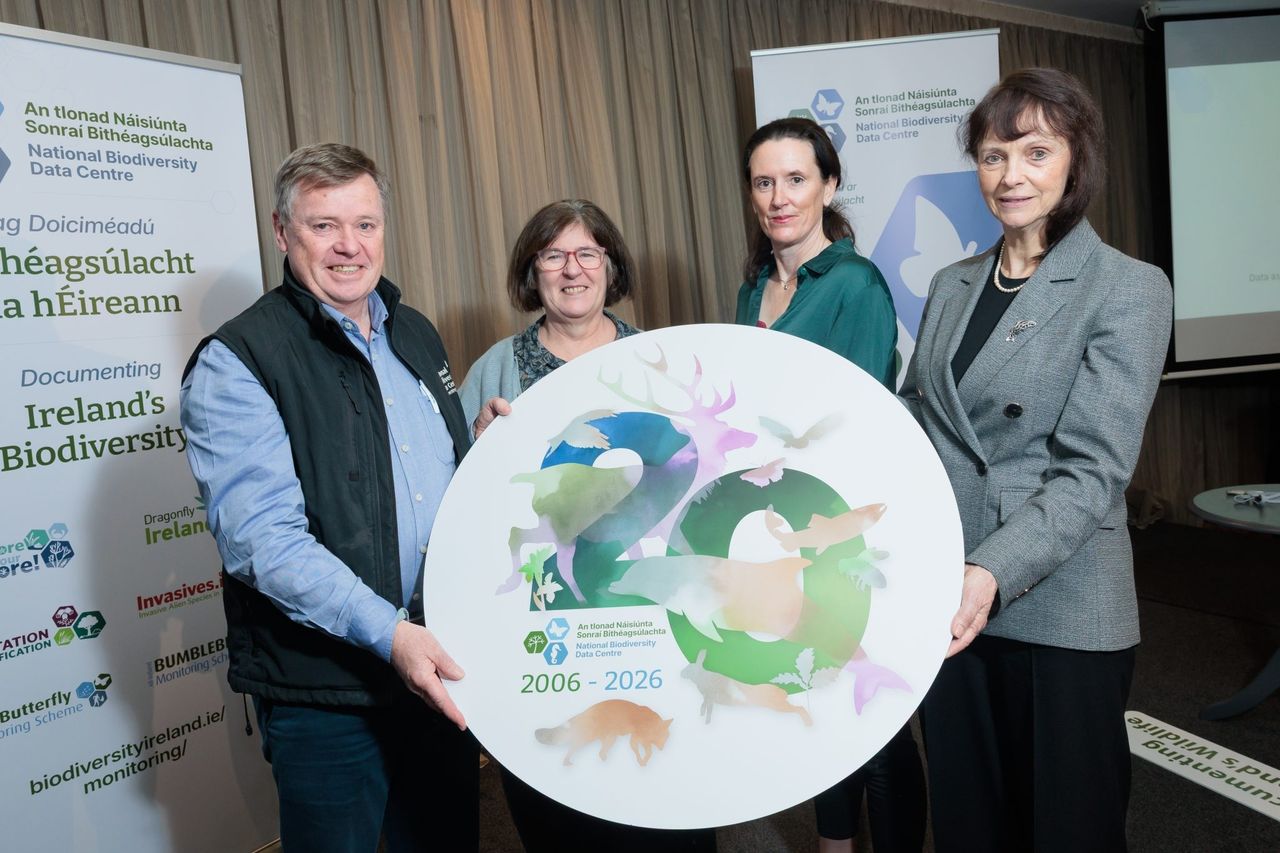
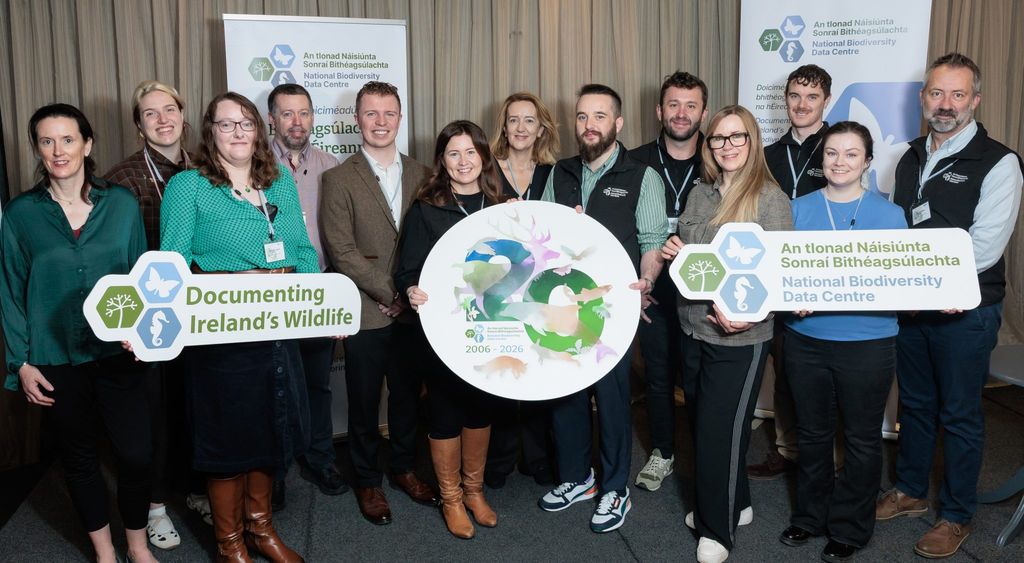
This year, the National Biodiversity Data Centre (NBDC) celebrates 20 years of advancing Ireland’s biodiversity knowledge and conservation.
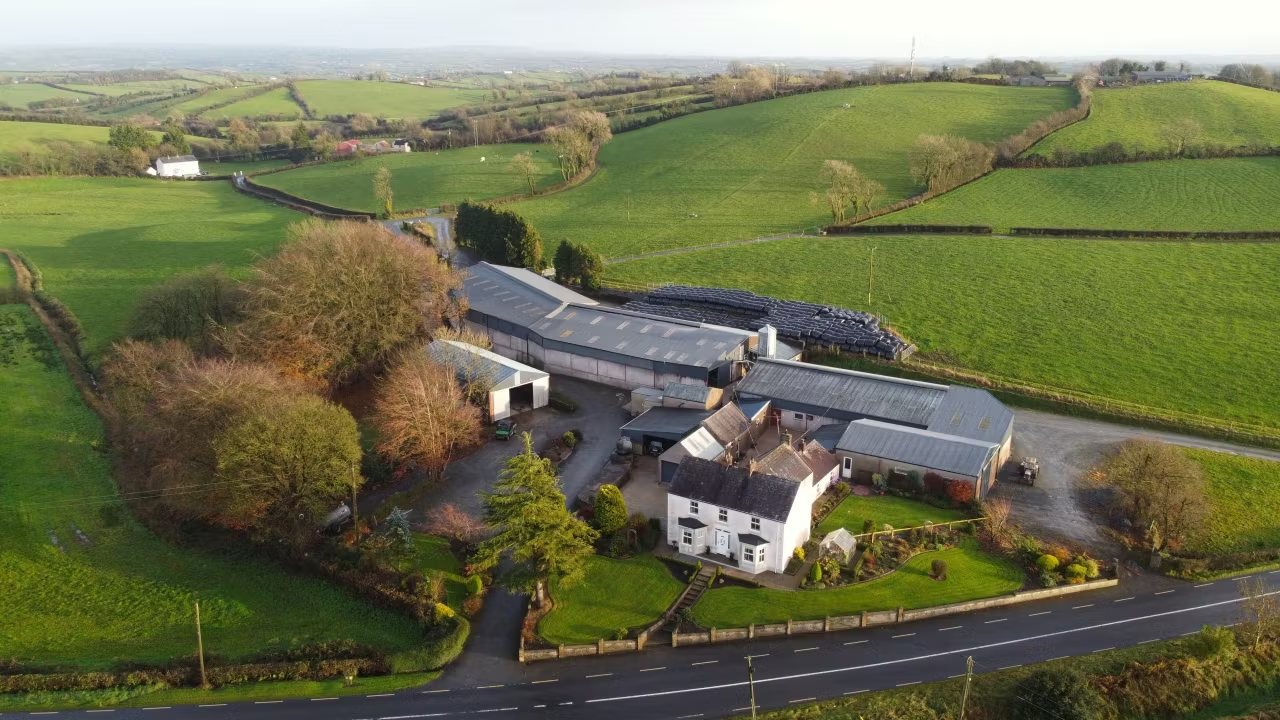
The centre collaborates directly with farmers to protect wildlife, support pollinators, and integrate nature-friendly practices into productive farming.
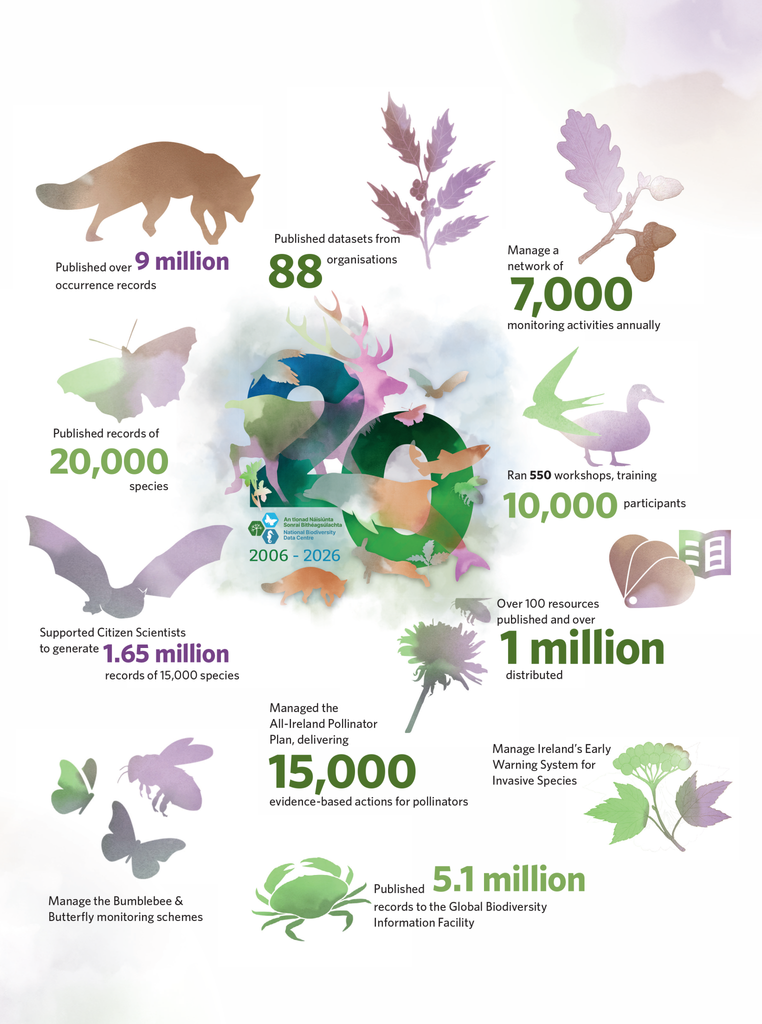
It manages Ireland’s citizen science portal, where anyone can log their wildlife records, and has published more than nine million occurrence records of almost 20,000 species.
This includes over 3.8 million records of protected or threatened species.
Citizen scientists
Much of this data comes from the public or ‘citizen scientists’ who want to contribute to conservation by participating in the centre’s monitoring schemes for:
- Butterflies;
- Bumblebees;
- Dragonflies;
- Moths;
- Rare plant populations;
- Marine biodiversity.
The centre supports a network of 30,000 recorders.
The citizen science programme, 'Explore Your Shore!' works to improve an understanding of marine and coastal biodiversity, generating almost 40,000 records of over 900 species around the coast.
Farm moth scheme
The farm moth monitoring scheme is an example of how the centre is working with farmer citizen scientists.
Tim Butter, farmer moth monitoring scheme officer at the NBDC said the scheme includes about 80 farmers located across the country, from Wexford to Donegal.
"It gives a really good kind of overview of your biodiversity because we've got around 1,500 different moth species.
"So you can have a really rich mixture of species and numbers of moths in the trap and they give us a really good idea of the biodiversity of the farm," he said.
He added that the project is being funded by the Department of Agriculture, Food and the Marine.
"Moths are really important as pollinating insects, and our primary interest in this project is actually to generate data for the All-Ireland Pollinator Plan," according to Butter.
"They're also really important in terms of the kind of the wider ecosystem and food chains, such as caterpillars providing food for birds."
Eimear O’Donnell from Ballydowane in Waterford, is one of the participants in the scheme.
"I find it really interesting. I love going out, and it's usually a surprise every fortnight seeing what I have.
"I'm not really good at the identification, but I love sending off all the pictures, and then Tim comes back to me with the formal identifications.
"The little buff-tip moths are my favourite; they look like a little birch twig - there’s always something new and something interesting," she said.
Butterfly monitoring
The butterfly monitoring scheme has tracked trends in 15 of Ireland's most common butterfly species over the past 18 years, highlighting declines in once common butterflies such as the Green-veined White.
This species has suffered a very serious decline of 84% during this perioed.
The centre’s bumblebee monitoring scheme began in 2012, making it one of the first schemes of its kind, globally.
It revealed declines in common bumblebees across the island of Ireland, showing year-on-year declines since monitoring began, with one-third of 100 wild bee species at risk of extinction, according to the centre.
A significant contribution to Ireland’s biodiversity knowledge base has been the development of the data and mapping portal, Biodiversity maps.
It provides free access to biodiversity data and datasets managed by partner organisations.
It is a resource for ecologists, researchers and decision-makers to improve the quality of decisions for conservation, and for citizen scientists and local communities to better understand the biodiversity of their locality.
“Supporting like-minded people who have a passion for biodiversity has been one of the most rewarding parts of our work," CEO of the NBDC, Dr Liam Lysaght, said.
"We are extremely grateful to all of our partner organisations and funding bodies, the NGOs [that] have shared their data, and to all of the 30,000 volunteers who have submitted records," he said.
Pollinator plan
For the past decade, the centre has managed the successful All-Ireland Pollinator Plan.
This has so far provided 15,000 evidence-based actions for pollinators, building partnerships with about 100 organisations, 360 businesses, and all 42 councils across the island of Ireland.
The aim is to create or restore habitats where pollinators can survive and thrive.
A state-of-the-art ICT system has been developed to track actions for pollinators across the island.
The centre has led the way in data collection for invasive species, which it said, "is one of the greatest threats to habitats and biodiversity, mapping around 100,000 records".
By establishing an invasive species unit, the centre has taken steps to curtail the incursion of new species, such as Asian hornet, into Ireland and to help in the control of damaging species such as Japanese Knotweed.
The centre developed an invasive species alerts system and provides support for this rapid response model.
The centre is responsible for 12 actions in the national biodiversity action plan 2024-2030, and has developed an action tracker to support its implementation.
The centre also supports the National Parks and Wildlife Service (NPWS) to report under the EU nature restoration plan, and EU Habitats Directive.
Since 2006, the centre has offered training for professionals and amateur naturalists, running 550 workshops, training 10,000 people.
It has also developed free online courses, providing opportunities to learn more about biodiversity and positive actions anyone can take to make sites biodiversity friendly.