AI is changing farming: Are farmers asking the right questions?
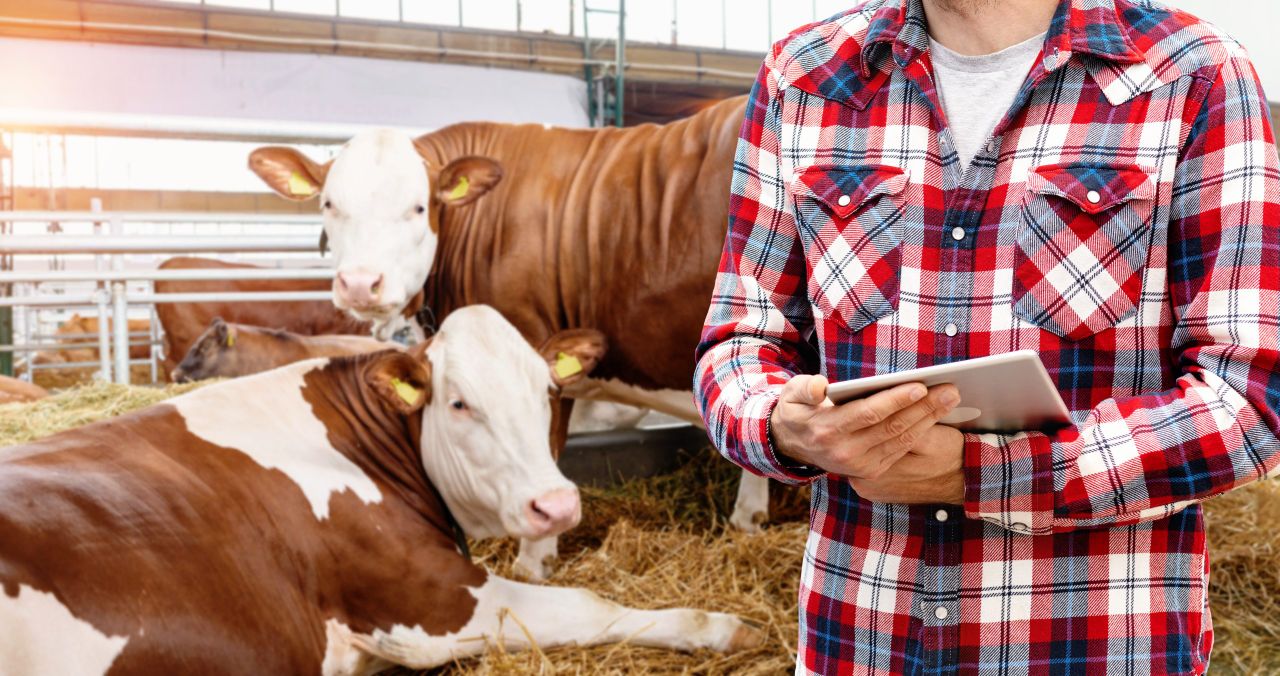
Artificial intelligence (AI) is now a feature on many farms, from smart cow collars to locomotion monitoring to laser weeders and automated slurry scrapers.
This may have made life easier for some farmers and producers, but before signing up to a new system, should farmers now be asking questions about privacy, data ownership, and who is responsible for what?
According to the president of the scientific-technical committee at the Italian Association of Artificial Intelligence Professionals (AIPIA), when it comes to AI, farmers rarely get a view from "someone with no stake in the sale”.
This is why Rafael Patron is urging farmers to ask the right questions before bringing AI onto their farms.
AIPIA, an independent non-profit based in Rome, brings together developers, data scientists, researchers and consultants, and keeps a public directory of AI professionals for organisations that need that kind of expertise.
Questions
Patron believes that farmers should look closely at what they think AI could deliver for them.
He uses the example of systems that use camera footage of housed cows to build an individual profile for each one.
But Parton said: “It does not see the cow at grass in July.
"It does not examine a foot, and it cannot tell you why a cow's mobility has dropped.”
In an example like this, Patron said farmers should ask the IT supplier which conditions the system is and is not designed to detect, and what happens to the score when cows are out for the summer.
He added: “Ask, too, about false alarms; a system that flags too many cows gets ignored within a month.
“One that flags too few gives a false sense of security, which is worse.”
According to Patron one issue that may not be exactly transparent is who owns the information gathered by AI systems.
He said: “Daily footage and scores for every cow add up, over a year, to a detailed record of how a farm is run: stocking, bedding, feeding routines, how quickly problems are picked up.
“If the system is part of a buyer's scheme, find out whether the buyer sees the raw scores, a summary, or only what the farm chooses to share.
“Ask where the footage is stored, how long it is kept, whether it is used to train the supplier's algorithm, and what you can take with you if you leave the scheme or change supplier.”
While Patron said that none of this is necessarily a reason to avoid a system, he believes it is important to get the answers to these questions in writing.
Who is in the loop?
In the case of cattle monitoring AI, Patron said: “Before installation, agree with your vet which alerts will trigger a visual check and which will go straight onto the herd health plan, and decide who on the farm looks at the dashboard each day.”
He advises that AI connected to existing software can help, but only if the scores end up in front of a human with the time and authority to act on the information.
Patron said that farmers who get the most from these systems “will probably be the ones who already know their cows well and use the scores to settle arguments with data rather than to replace their own eyes”.
He also recommends that it could be useful to visit a farm that has run a similar system for a full year, "ideally one that looks like yours”.