70% of farms in east and south-east still feeding silage

70% of farms in the parts of the country worst impacted by the drought are continuing to feed silage to livestock, the National Fodder and Food Security Committee (NFFSC) has heard.
The committee, chaired by Mike Magan, met today (Monday, September 7) to discuss the current fodder situation in the country.
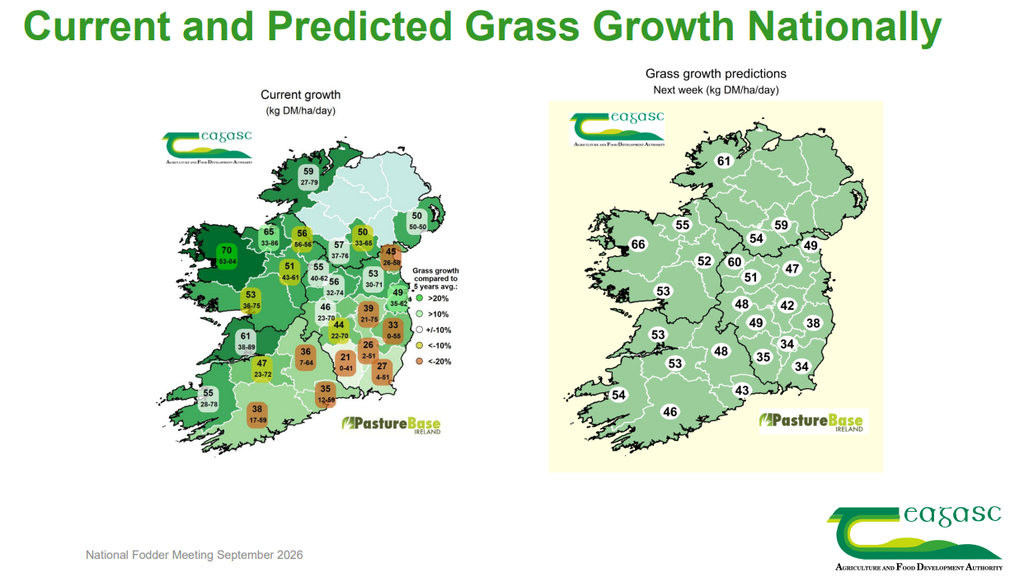
Michael O'Donovan, head of Grassland Science at Teagasc, told the meeting that grass growth is recovering following recent rain, but parts of the south-east remain in deficit.
PastureBase data from around 2,000 farms shows a movement upward in the grass growth curve over the past two weeks.
Up to last Friday (September 4), an average of 9,219kg of dry matter (DM) per hectare had been grown across farms this year.
Teagasc is forecasting that annual dry matter production is expected to be 400kg DM/ha below the five-year average of 12.3t DM/ha and down almost 1.2t on 2025 levels.
O'Donovan said the grass growth curve is currently pitched between 40-50kg DM/ha/day, with that expected to increase to 55-60kg/DM/ha/day of growth in the next fortnight.
He said that grass growth is "recovering as we speak and has recovered significantly in the last 10 days".
Silage
Despite the recovery in grass growth levels, the impact of the drought is continuing to be felt on many farms.
Pasturebase data from 1,815 farms across the country showed that 44% of cows' diets are currently being supplemented by silage and concentrates.
30% of 252 farms in the counties worst affected by the drought - Carlow, Kilkenny, Laois, Kildare, Wicklow and Wexford – are feeding at least 9kg of silage dry matter (DM) in their cows’ diet per day.
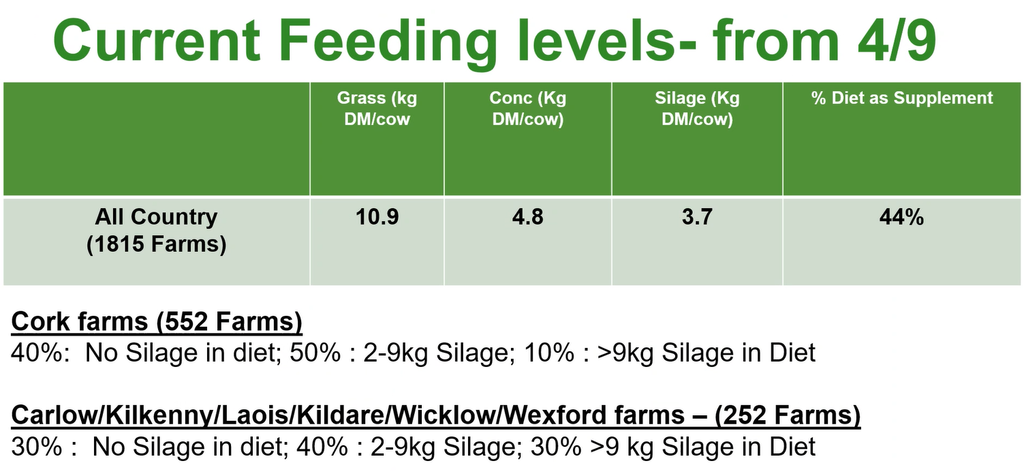
Half of these farms are feeding 2-9kg of silage, with 30% saying there is no silage being fed.
Data from 552 farms in Cork shows that 40% are feeding no silage, half are feeding 2-9kg and the remaining 10% are feeding over 9kg.
Feed
The latest Teagasc survey of 595 farms across the country shows that an average of 4.3 months of feed was available on these farms.
The average availability on farms in Munster, Connacht and Ulster stood at 4.5 months, while it was 4.2 months in Leinster.
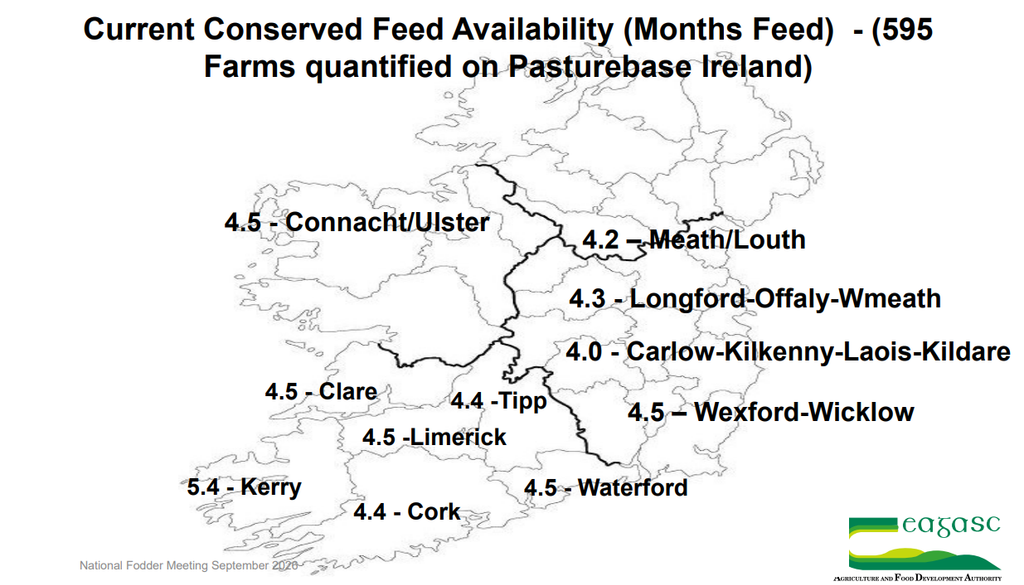
The data shows that 4 months of feed was available on some farms in Carlow, Kilkenny, Laois and Kildare.
Teagasc has advised farmers to have at least 5 months feed available for the winter period, with that figure increasing to 6 months in wetter areas.
Grass
O’Donovan stressed the importance of closely monitoring farm covers in the coming weeks to help budget grass for the remainder of this year’s grazing season.
"For farmers, the crucial thing now is to measure farm cover and budget into the autumn.
"There's two to three months more grazing season ahead in 2026 and that needs to be capitalised on especially in these drought areas," he said.
He said fertiliser and slurry should be "up to date", where possible, on farms before the closed period begins.
O’Donovan warned that many farmers may "over supplement" coming out of the drought without taking these actions.