Will Ireland be in hot water over nitrates at the Court of Justice of the EU?


Ireland may have just got over one hurdle when it comes to its nitrates derogation but it could face a fresh one at the Court of Justice of the European Union (CJEU) tomorrow (Thursday, December 11).
In the dock ostensibly will be Ireland's fifth Nitrates Action Programme (NAP) which sets out the minimum regulatory requirements that all farmers - including those in derogation - must adhere to.
The fifth NAP will be in the spotlight at the Court of Justice tomorrow because of a legal challenge first launched by An Taisce back in 2022 to judicially review the fifth NAP.
But it will also bring Irish farmers and Ireland's water quality status under the scrutiny of the court.
The environmental organisation claims that it originally brought the legal proceedings to "ensure that two of the essential ingredients for flourishing rural life and agriculture - clean water and uncontaminated soil - are preserved for future generations".
An Taisce believes that “measures taken under successive NAPs have failed in their objective” which is to “prevent pollution of surface waters and ground water from agricultural sources”.
The legal challenge by the environmental group was chiefly taken against the Minister for Housing, Local Government and Heritage and the Attorney General.
But the Minister for Agriculture, Food and the Marine, the Irish Farmers' Association (IFA) and the Irish Creamery Milk Suppliers Association (ICMSA) were also listed as notice parties.
Court of Justice of the European Union
The reason why the legal challenge will come before the Court of Justice of the EU is because the High Court judge that presided over An Taisce's challenge believed that the case raised "significant issues of European law".
Justice Richard Humphreys said An Taisce's legal action was "a challenge to the validity of domestic and European measures relating to the derogation for the use of nitrates above and beyond standard levels".
As a result Justice Humphreys decided to refer nine key questions raised during the legal challenge to the Court of Justice.
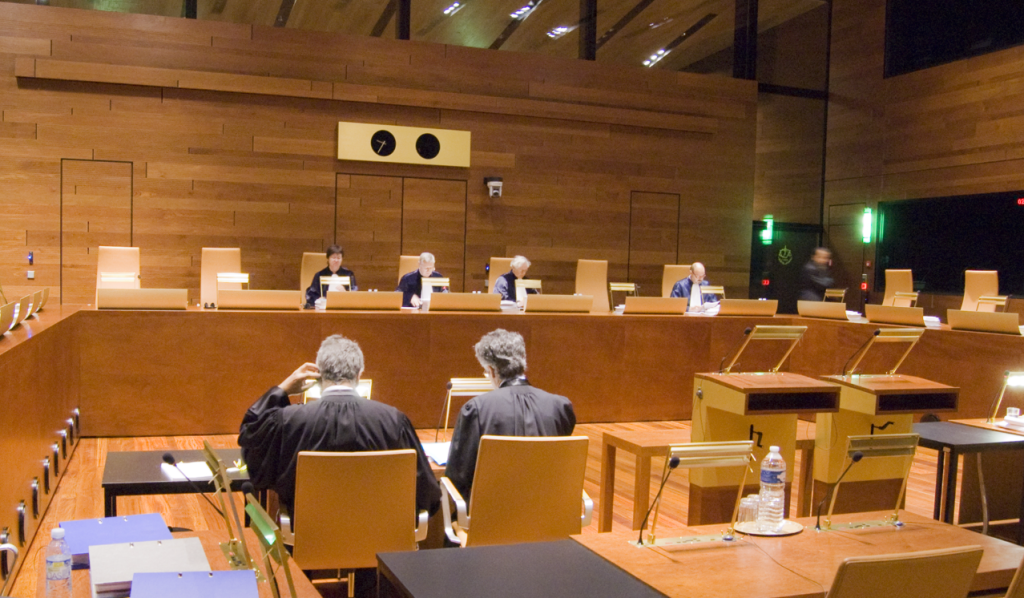
These questions are critically linked to the nitrates derogation because the court will examine key issues in relation to "the effects on the environment of the nitrate-emitting agricultural activities".
The court will look at environmental reporting and whether the adoption of the NAP resulted in any breaches of the Habitats Directive or the Water Framework Directive or if there is any risks to water bodies.
It may raise the question that if breaches are found then would this invalidate any relevant EU derogation decision?
Oral arguments are expected to be made at the Court of Justice tomorrow and it is expected that once the hearing and written submissions are complete the court will announce its decision but this could take up to 18 months.
In the meantime the case will be watched closely across Europe as it could set a new precedent in relation to derogations and environmental directives.