What does it take to become a supermarket supplier?

Signing a supplier agreement with a national supermarket can be a major milestone for food producers.
However, while a deal will bring brand exposure, there are challenges and considerations that producers should also take into account.
Agriland spoke to one established supermarket supplier about the standards expected from a major chain, the learning curve involved, and how the partnership has evolved.
Food suppliers
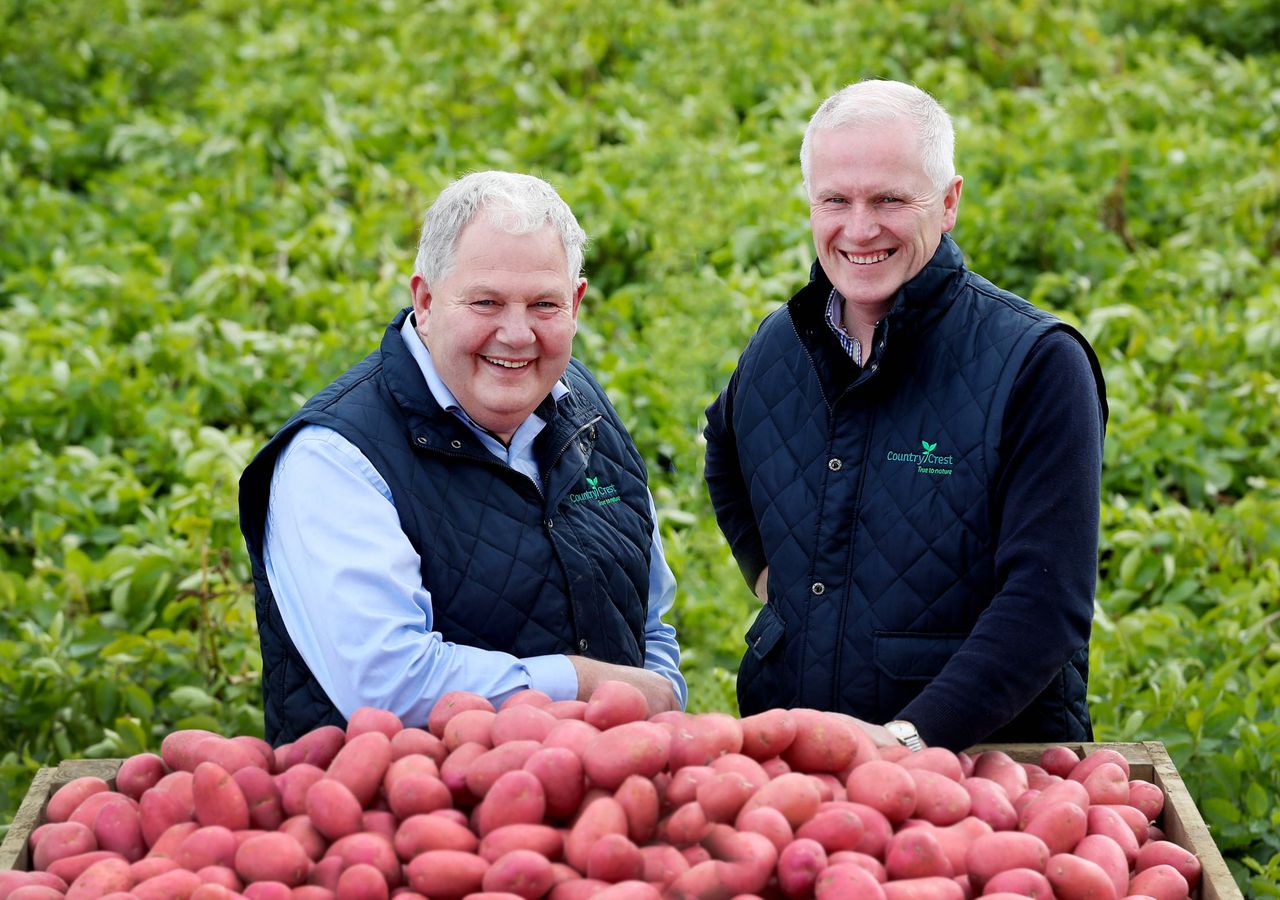
Country Crest is one of Ireland’s longest running potato suppliers, and the company has been in business with Tesco for almost 30 years.
Country Crest’s history dates back to 1910, when the north Co. Dublin family farm started out.
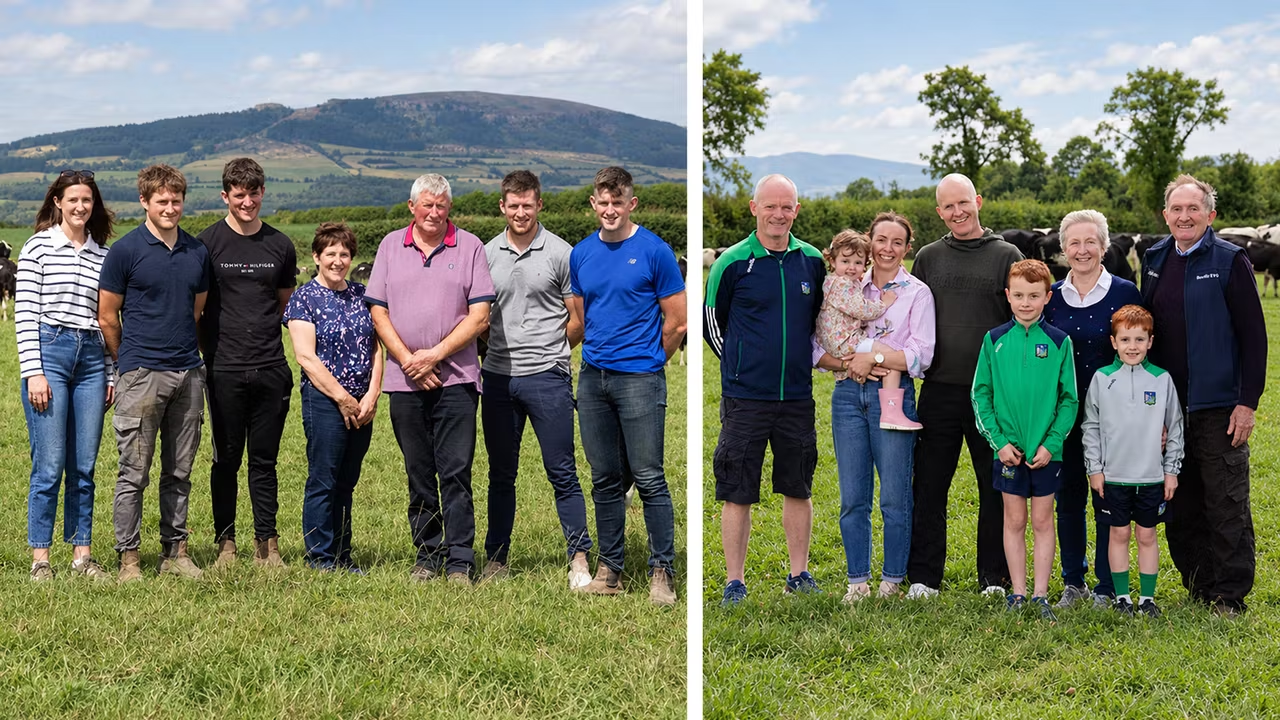
Now, three generations later, it is run by two brothers, Michael and Gabriel Hoey.
In 1993, the brothers established the Country Crest brand, which sells potatoes to retailers.
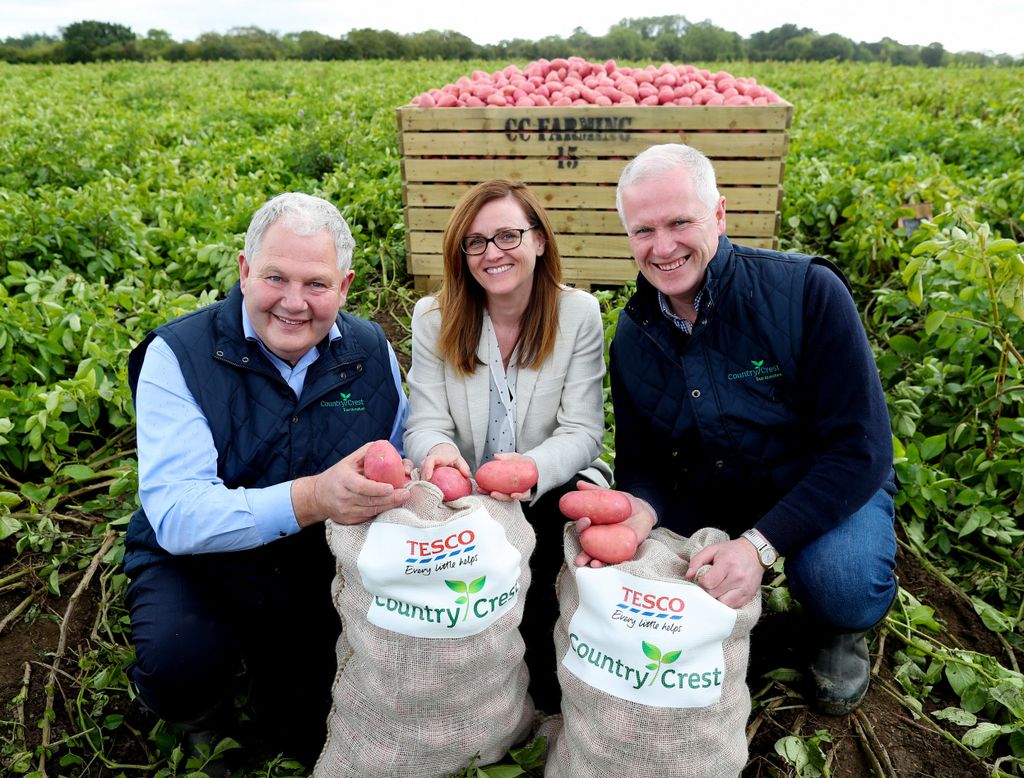
Country Crest is in an unusual situation in that one of its key staff members was once a buyer for Tesco.
Commercial manager, Joe Casey said: “I manage commercial relationship between country crest and Tesco.
"I’m the face of Country Crest in Tesco and vice versa.”
In the early 1990s, Country Crest was supplying Quinnsworth and Dunne’s.
Then, in 1997, Tesco came to Ireland and acquired Quinnsworth.
Tesco approached Country Crest in 1998 to talk about how the Dublin company could work as potato suppliers.
Standards
Company director, Gabriel Hoey said: “Tesco was one of the best in the UK regarding traceability and standards.
“When they approached us in 1998, it was a learning curve.
“Tesco probably brought standards into the country that no other retailer ever had before.”
Hoey explained that Tesco’s traceability standards are especially high, and from fields to harvesting to storage and packaging, “everything is itemised”.
“It was a whole new standard. They’d prefer to go without than go with second grade items on the shelves," he said.
Expansion
Over the years, Country Crest has expanded its product range to Tesco, branching out into onions, sweet potatoes, and last year, garlic.
Hoey said: “The one thing about Tesco is that we build a good partnership.
“Tesco let us look into other categories throughout the years.”
Casey added that trust is “key to that growth”.
Hoey pointed out that being in business with Tesco allows growers flexibility when it comes to looking for finance.
He said: “Your confidence in getting paid is a key factor to us and growers.
“So when growers go to use overdraft - the confidence knowing that we supply Tesco gives a guarantee that things are safe.
“It’s not easy to become a Tesco grower, but long-term, it’s a secure investment.”
Supermarket buyers
According to Casey, transparency and research are key factors for suppliers pitching to supermarkets.
He said: “Doing your homework is the first step, make sure you’re approaching in right manner and you’re honest about where you are in the process, where you want to be, and communicate that.
“Having been a buyer on Tesco side, it’s important to know where business is at and its potential.
"If you’re up-front, you can excel.”
John Brennan, a buyer for Tesco, said that suppliers connect with buyers in a variety of ways.
He said: “The conversation can begin anywhere, in a meeting room, on a phone call, by someone reaching out on LinkedIn.
“It can start anywhere.”
He added that honesty about suppliers’ abilities and limitations are important from the get-go:
“The first conversation has to be open, transparent.”
For buyers like Brennan, suppliers make an impact when they bring expertise beyond food production.
“The good suppliers that come in, do so solving a problem.
“They usually have data or insight: ‘Here’s a gap, here’s what customers are looking for’.”
Casey added that supermarkets will have high expectations from the start.
His advice to potential suppliers is simply: “Be ready to hit the ground running”.