'We should have bought it 40 years ago' - how one farmer solved a stone picking problem

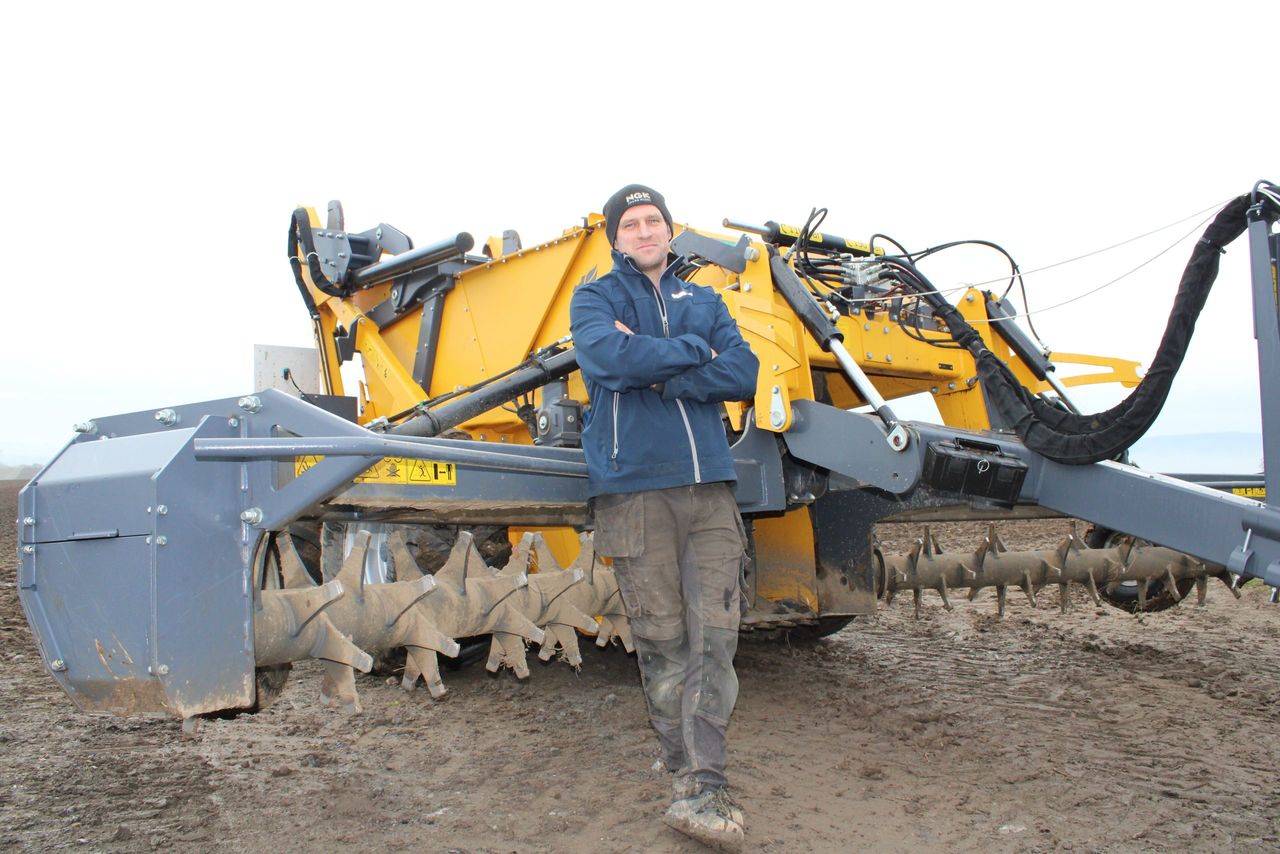
"Nobody is going to pick stones by hand anymore, and you can't blame them; it's hard work."
That is according to Rob Lewis, an Offaly-based tillage farmer and agricultural contractor who recently purchased a brand-new stone picker.
Agriland visited Lewis to get a first-hand view of the newest addition to his business, which he operates in partnership with his father, Bobby Lewis.
"We'd been looking at stone pickers for about 15 years saying we should get one, but we could never justify the cost of it," Rob said.
"I had to pick a couple of hundred acres on my own the last few years, you can't get anyone to pick stones anymore.
"Every farmer we're working for is the same; nobody wants to pick stones anymore," he added.

Lewis wanted a machine that improved efficiency and increase the number of acres he could cover in a day compared to traditional alternatives.
"Stone forks left too many stones behind and dug rough holes and all the driving with loaders compacted the seedbeds too much," he said.
In October, he finally decided to take the leap and purchase a Scorpio 550 stone picker from Finnish company Elho.
According to Lewis, his new machine has completed a few hundred acres already despite missing all of reseeding season and a lot of the tillage work.
Lewis now offers spraying of grassland, cultivation, stone picking, reseeding, fertiliser spreading, rolling and the application of post-emergence sprays.
"The stone picker is the final piece of the jigsaw in a full 'green to green' reseeding service that we provide."
Another benefit of the stone picker is that it transforms stones from a waste product into a resource.
"We can tip the stones into a trailer and the farmer can use them for roadways or get them crushed for further use," he added.
"This way, a useful product is made instead of buying stone at €15/t out of a gravel pit; you collect them yourself," Lewis added.
How does it work?
Spindles at either side of the Scorpio fold out to an operating width of 5.5m.
The spindles flick stones up and move them along towards the mouth piece in the middle of the machine, which, in turn, winds the stones into the hopper.
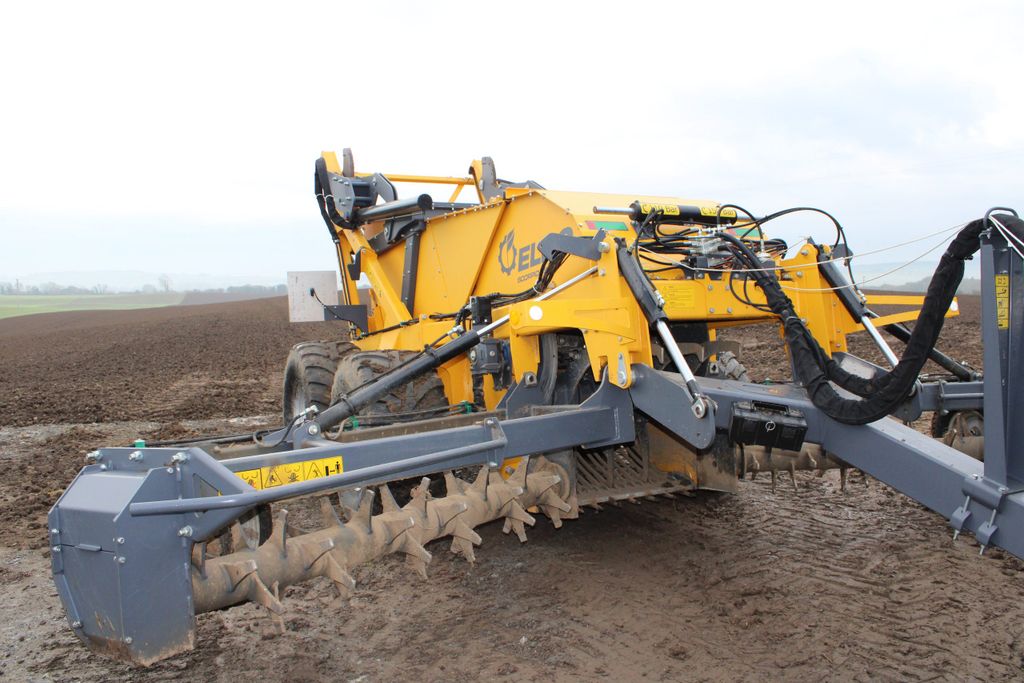
"The hopper extends up and out to tip into a dump trailer, and just like that you've collected 2t of stone," Lewis said.
Naturally, there is a lot of wear and tear on a machine that is moving stones and sifting through abrasive soils all day.
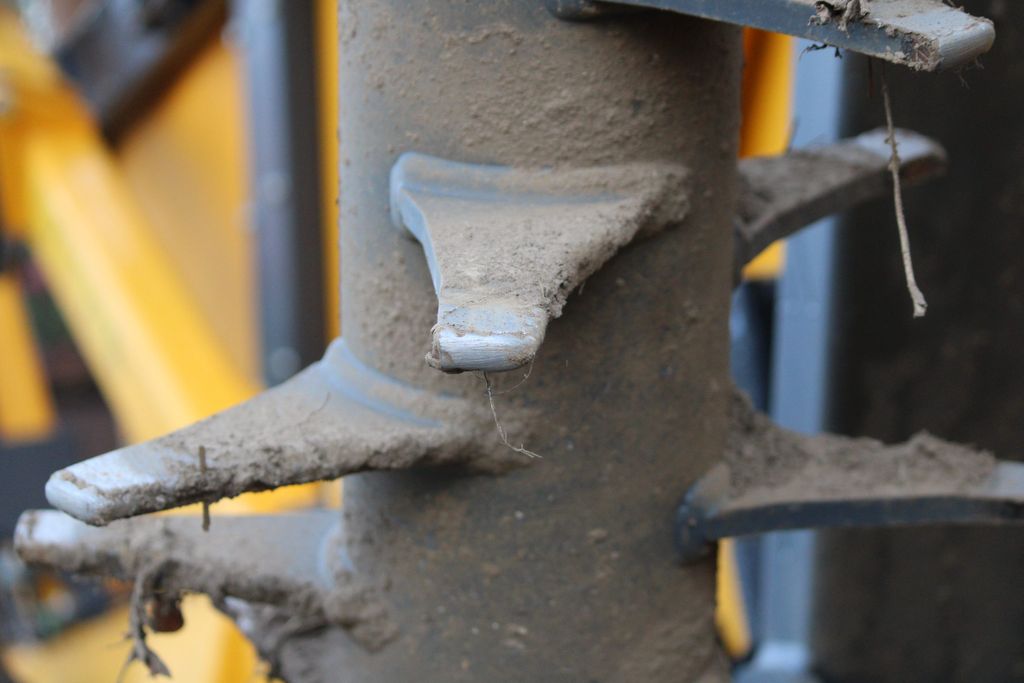
Lewis has to weld hard-facing welding rods onto the tips of the spindle teeth approximately every 200ac.
This added material builds up the teeth to their original 160mm length.
Luckily, both Rob and his father, Bobby, are equally comfortable in the workshop as they are in the cab.
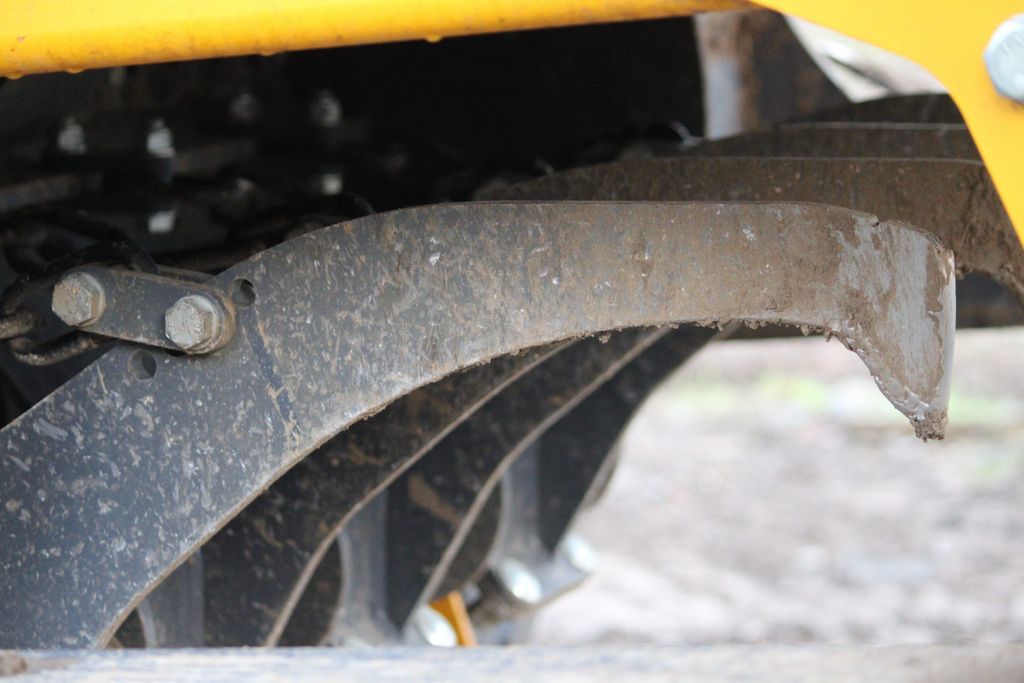
All of the clay is supposed to come up the cutting edge and go out through the screen.
However, Lewis has found that the original cutting edge was sending too many large clumps of wet soil up to the screen: "When clay is damp, it has a tendency to go up into the hopper."
To combat this, he has welded tines onto the underside of the cutting edge.
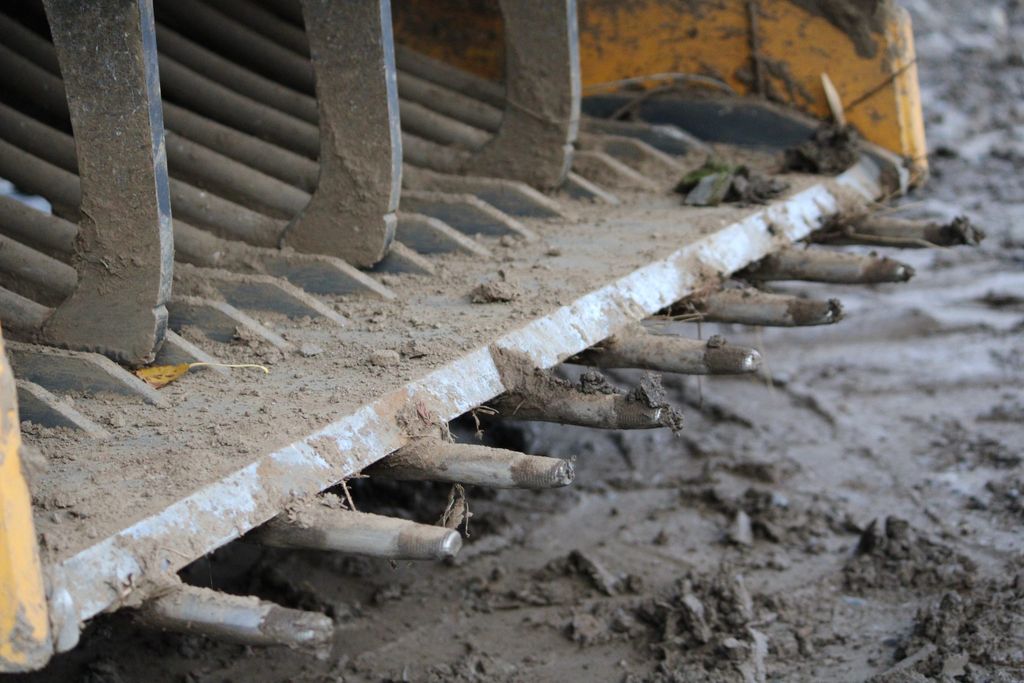
Lewis is well aware that the Scorpio does its best work on dry ground, but there is more than one reason for adding tines:
"The teeth on the fold-out arms rise all the stones at the sides, but there is nothing to rise the stones in the middle.
"Unless you are digging enough with the cutting edge, you could actually go out over stones," he added.
Horsepower
One of the key features of the Scorpio 550 is its fully hydraulic drive. The hydraulic flow is 85L/min, which is achieved with 110-150 bar.
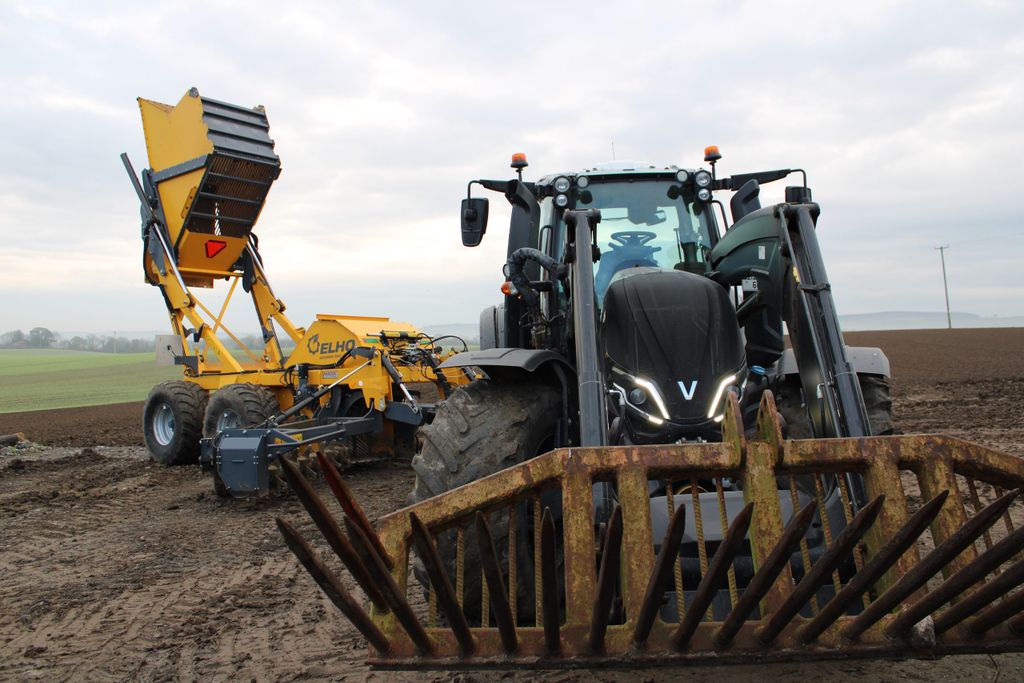
"A 130 or 140hp tractor is plenty big enough to handle the stone picker," Lewis said.
"You need a right good hydraulic flow; everything is driven with oil.
"We looked at the PTO-driven options, but the problem with them is, when you jam them they can't go in reverse," he added.
Although the feed rotor and lifting tines can be reversed in case of blockage, Lewis does not take any chances when it comes to big stones.
"To be safe, nothing bigger than 30cm or the size a football should enter into the stone picker."
The Scorpio 550 also boasts automatic working depth adjustment according to rotation resistance.
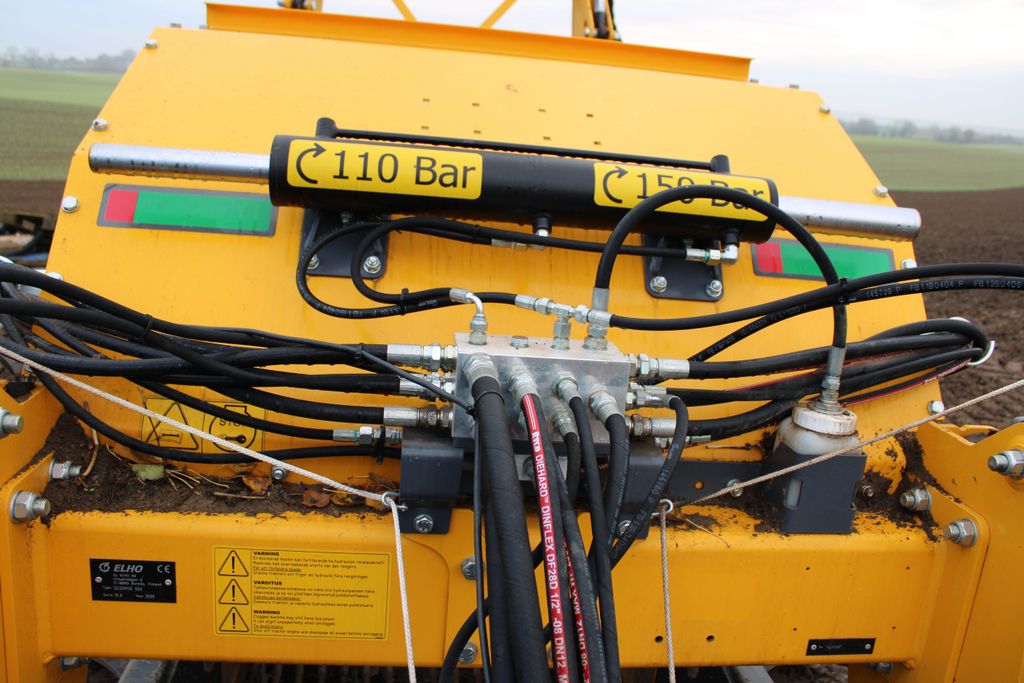
But the operator can also adjust the Scorpio's working depth based on ground conditions.
The verdict
Lewis is very happy with the newest addition to his fleet: "We are only buying it now when everyone's back is in bits from picking stones.
"It's something we should have bought 40 years ago.
"If you don't try and lift too big of a rock with it, you'll never have any issues apart from wear and tear," he added.