Watch: Why you should choose an Irish-grown Christmas tree

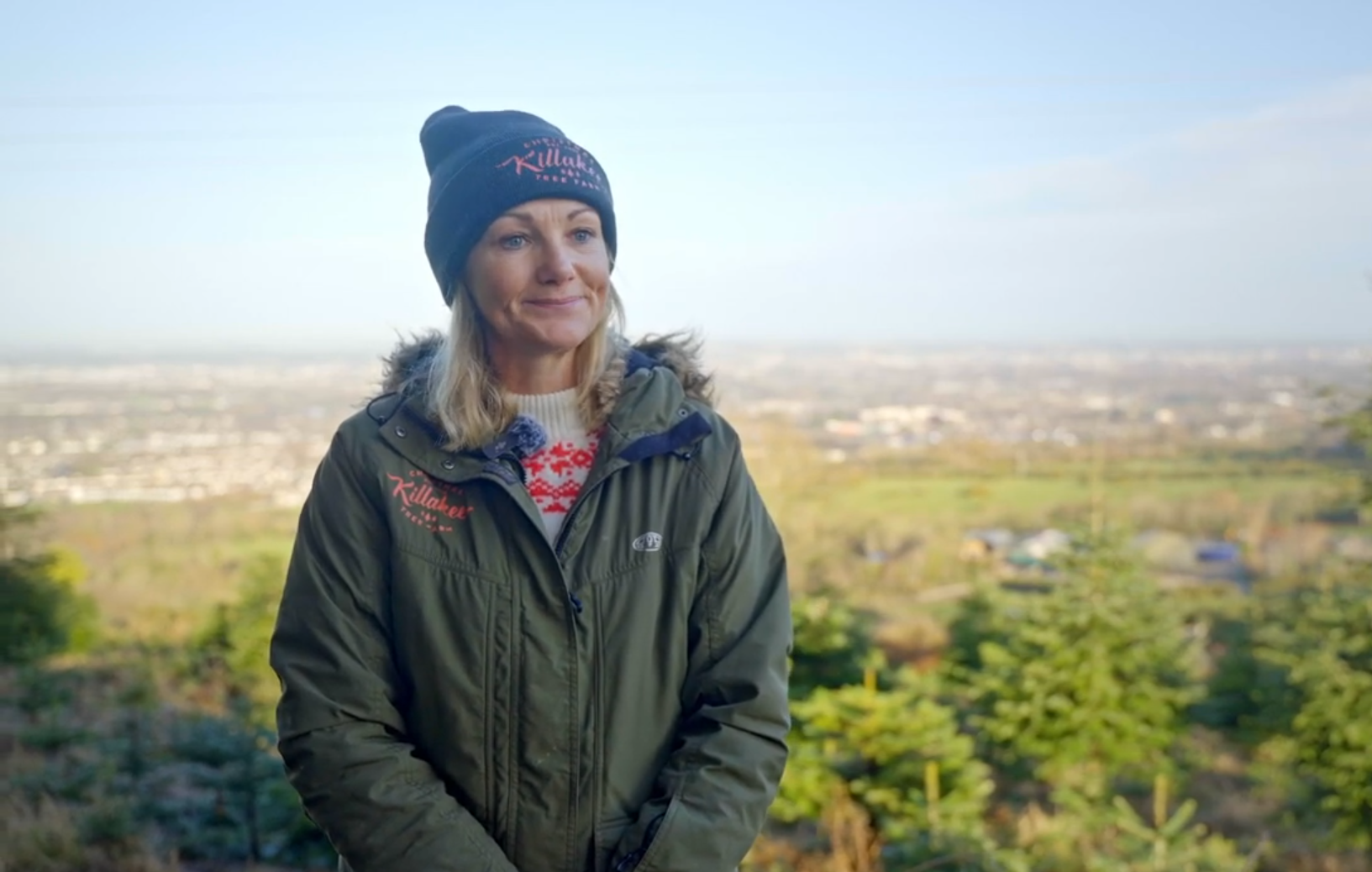
There was a "great growth season" for Christmas trees this year, growers and customers will be glad to know.
According to Karen Morton of Killakee Christmas Tree Farm, what you need to grow the "perfect Christmas tree" is some sunshine, a good bit of rain, and good quality soil - "and we have all of that in abundance".
"We had a beautiful summer, and we've had loads of rain recently," she said.
"We also like to see some heavy frosts before we cut the trees so that they're dormant - we'd like to have had a few more but we did have a few up here at least.
"It's definitely warmer at this time of the year than it ever was before, we can see that year-on-year."
The Christmas tree farm is located in the foothills of the Dublin mountains, near Rathfarnham, with views right across Dublin city.
The family business, run by Karen and Justin, started planting Christmas trees in 1994. They first opened the farm as a tree-picking experience for the public in 2004.
Hundreds of families are welcomed to the farm each year to come and find their perfect tree, according to Karen Morton.
Work continues throughout the year
There is a lot of work throughout the year building up to the opening to the public in late November.
"In the springtime, you're planting - you're replanting everywhere you have cut a tree at harvesting time," Morton explained.
"We replant with saplings, so we don't replant with seed. We take them as maybe two-year-old saplings because they have a much better chance of survival.
"Over the summertime you're doing some pruning - the perfect Christmas tree shape doesn't just magically happen, you do need to put a bit of work into them.
"You're keeping an eye out at that point for insects that could damage the trees as well.
"There is a good bit of care required over the heavy growth summer period."
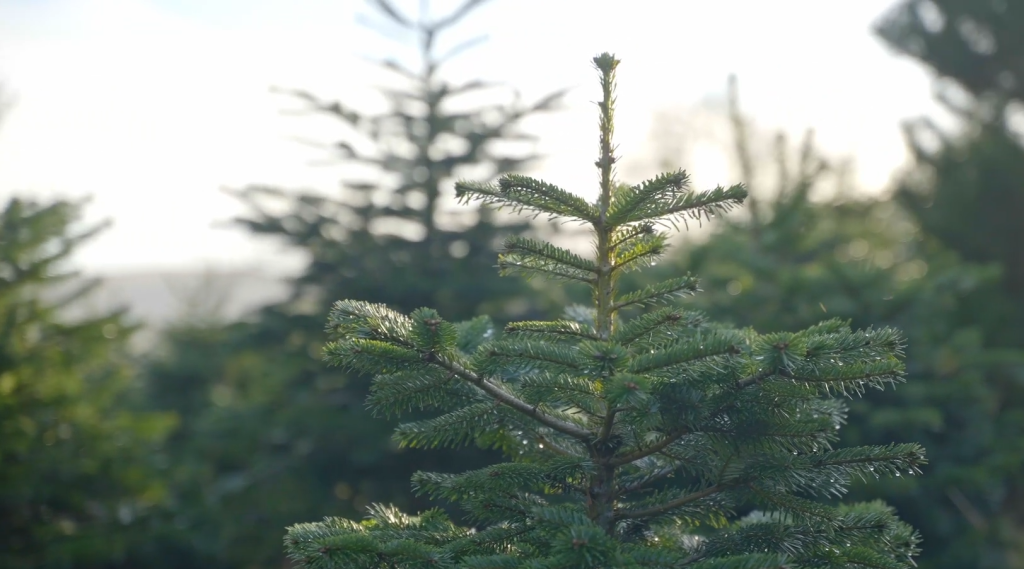
The farm cuts to demand - so when somebody comes and picks a tree, it is cut. The farm does not do wholesale.
The farm grows around 10ac of Christmas trees, with some long-term forestry as well.
"We have thousands of trees planted. They're all at different stages of growth," Morton said.
"It takes about 10 years for them to grow."
Main species
The main species grown are the Nordman Fir which, according to Morton, "is by far the most popular Christmas tree in Ireland".
"It's the really full bushy one, non-shed, that everybody loves the shape of."
They also grow the Noble Fir, which is a "little bit more gappy, but it has lovely, strong branches and a lovely fragrance".
The Lasiocarpa Fir and the Korean Fir are also grown, which are new species for the farm.
"We haven't harvested many of them yet, and we're seeing what customer appetite for them is like," Morton explained.
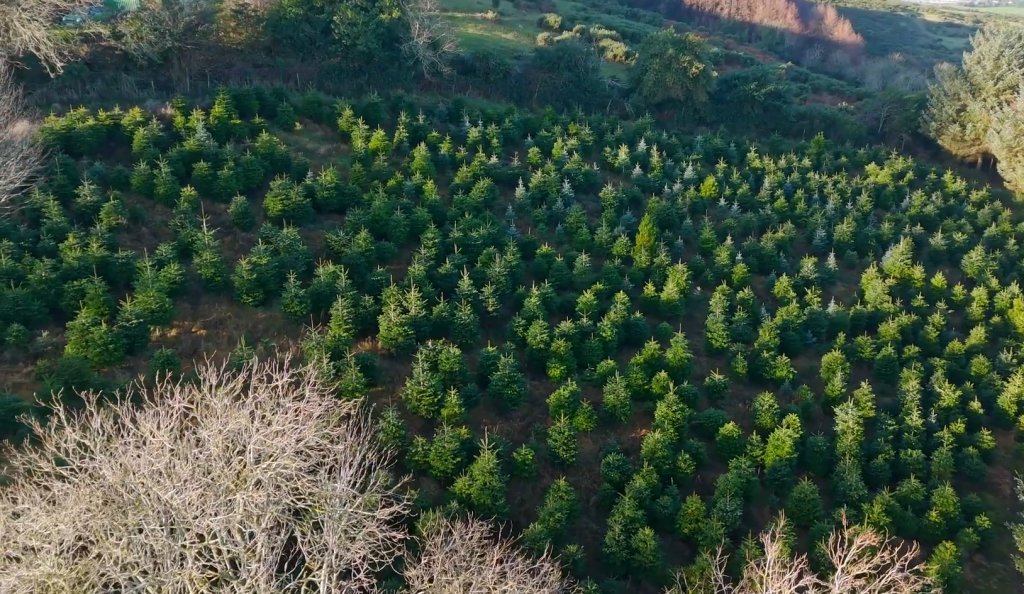
Morton is passionate about the environmental and health impact of tree growing, and is glad consumer demand remains strong for real Christmas trees.
"Every acre of growing Christmas trees is providing fresh air for 18 people," she said.
"That's a lot of fresh air we're providing. Obviously the trees are absorbing bad carbon dioxide, and then they're releasing fresh oxygen.
"When you come up here, I know it's a bit higher and a bit colder, but the air is definitely fresher because it's clean."
She also emphasised the importance of recycling the tree after Christmas "to get the full benefits from an environmental perspective".
'Important business'
Morton said that people should buy a real Christmas tree that is grown in Ireland because it supports the Irish forestry sector and associated jobs.
She said Ireland has a "very vibrant" Christmas tree business.
"It's a seasonal business but an important business in Ireland, as well as the other forestry that we do," she said.
Irish growers produce around 700,000 Christmas trees each year, with 450,000 sold at home and about 250,000 exported abroad, mainly to the UK, according to the Department of Agriculture, Food and the Marine.
The sector contributes an estimated €21 million to the Irish economy annually.
Tradition
Morton said they have visitors to the farm who have been coming since their children were small and are now grown up; as well as people starting a new family tradition.
"Every year we see new people coming who have never had a real tree before, and it's so exciting to be part of their first experience picking a tree," she added.
A fun fact from Morton is that you can tell the age of the Christmas trees without cutting them.
"Normally you'd count the rings on a tree when you harvest it.
"With the Christmas tree, each layer of branches is a year of growth," she said.