National Dairy Council School Farm Visits
This follows research commissioned by the council which showed how disconnected many children have become from food production.
According to the survey, more than half (56%) of parents with children under 12 years-of-age in Ireland say their child has never seen a cow being milked.
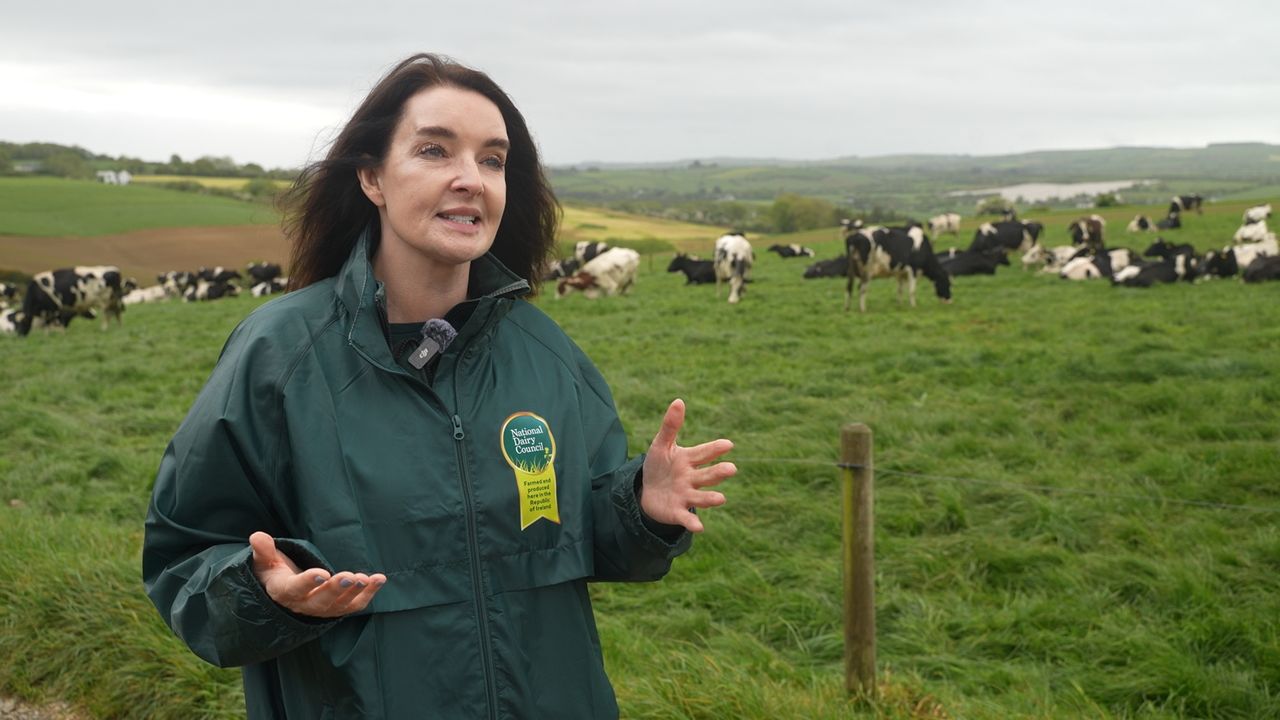
However, Emma Walls, chief executive of the National Dairy Council, stressed that while this lack of knowledge is worrying in itself, it also makes schoolchildren more vulnerable to misinformation about farming they may be exposed to on social media.
Walls explained: "When there's an information gap, when children don't know where their food comes from, either they remain ignorant about that or worse, they're misinformed.
"Very often, children are accessing the internet and they may see stories of farms and agriculture that's happening on the other side of the world.
"They may be misled into believing that that's how it is on Irish farms, and in fact, it's very different how we do dairy in this country.”
To address this lack of awareness among schoolchildren and to reconnect them with farming and food production, the NDC organised a series of school farm visits across Ireland in May.
1,500 children, 25 schools and five farms have taken part, including dairy producers in Kerry and Cork.
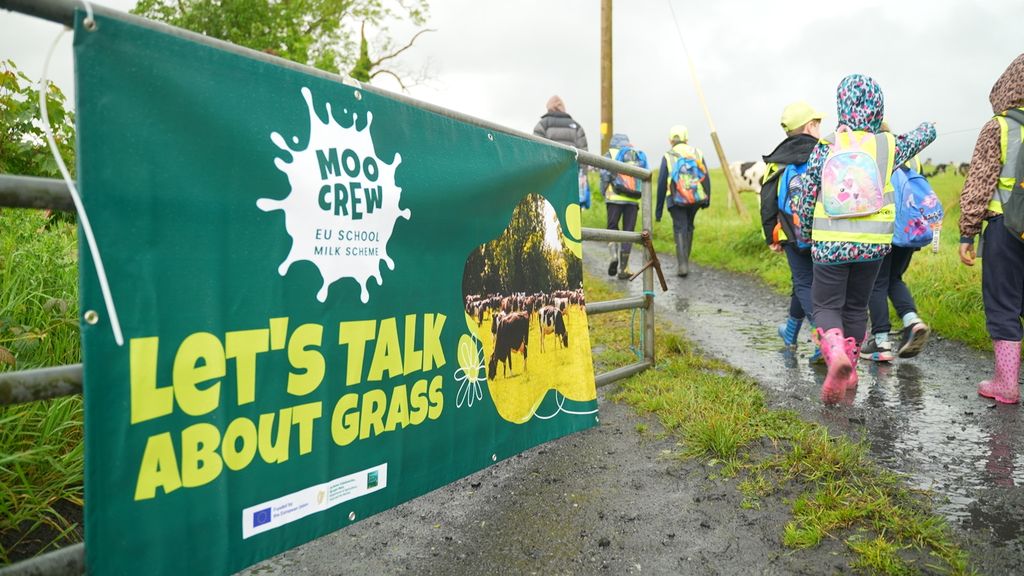
On each farm visit the children were told about the importance of consuming more dairy, with an NDC nutritionist on site teaching them about their five portions of dairy a day.
“We have a trademark station talking to them about food provenance and traceability," Walls outlined.
Another issue with online information is that even if it is accurate, the context might be missing.
For instance, not every country’s dairy farming industry is so focussed on grass and the outdoors.
“It's very different to other parts of the world,” Walls said.
“Our cows are outdoors and children really need to understand what it's all about and that's what we hope the school farm visits will do through the National Dairy Council.”
Information gap
The school farm visits are tactile, which means that the students traverse the farm, getting a sense of walking out to the paddock, then across to the calves, and to the parlour.
Along with information on grass, nutrition and caring for animals, the children see firsthand the work involved in getting the milk from the cow to the milk carton.
“I hope the children who come onto the farm through this scheme really get an appreciation of how hard our farmers work,” Walls said.

The NDC chief executive described the reaction of the students to the farm visits as "brilliant".
"They have loads of questions; they're curious, they're absorbing information like sponges," she said.
"And I think they're surprised when they see, for example, with grassland management how much thought goes into growing the grass - the multi-species sward, the clover, the care and attention that farmers devote to it.”
Children’s highlights on the day included “the baby calves”, the “really cool” milk parlour, being “outside with the cows”, and seeing “how the cows get milked”.
Walls continued: “I think the big surprise for me is not the student reaction because we knew that they would enjoy it, but also the interest from the schools.
"They all want the children to come in and do the visits.”
The NDC chief executive also praised the farmers she dealt with, noting that it is "a big undertaking" to bring 1,500 school children onto a farm.
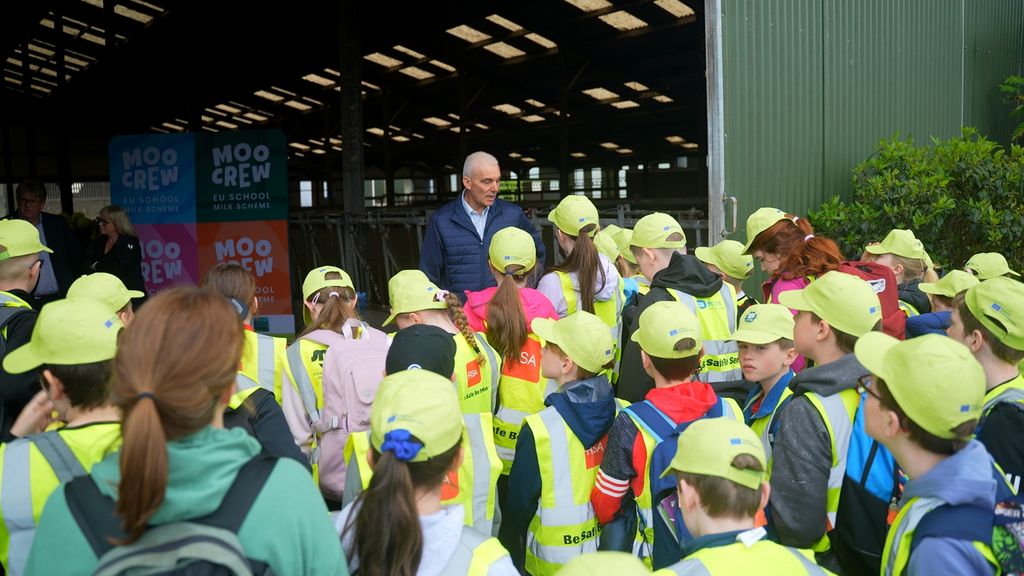
"But actually every farmer that we've spoken to about this initiative has said: ‘Yes, I’m willing, I’m ready to open the gates of the farm, I’m proud of what we're doing here and I really want the opportunity to showcase it to the next generation’.
“And we're hugely grateful to those farmers who are taking part," Walls said.
EU School Milk Scheme
The National Dairy Council School Farm Visits initiative is open to schools that are participating in the EU School Milk Scheme (SMS), which has operated in Ireland since 1982.
The SMS is managed by the NDC and funded by the European Union with the support of the Department of Agriculture, Food and the Marine (DAFM).
The EU SMS provides participating schools with a daily supply of milk at discounted rates, together with educational supports that promote the nutritional value of daily dairy consumption.
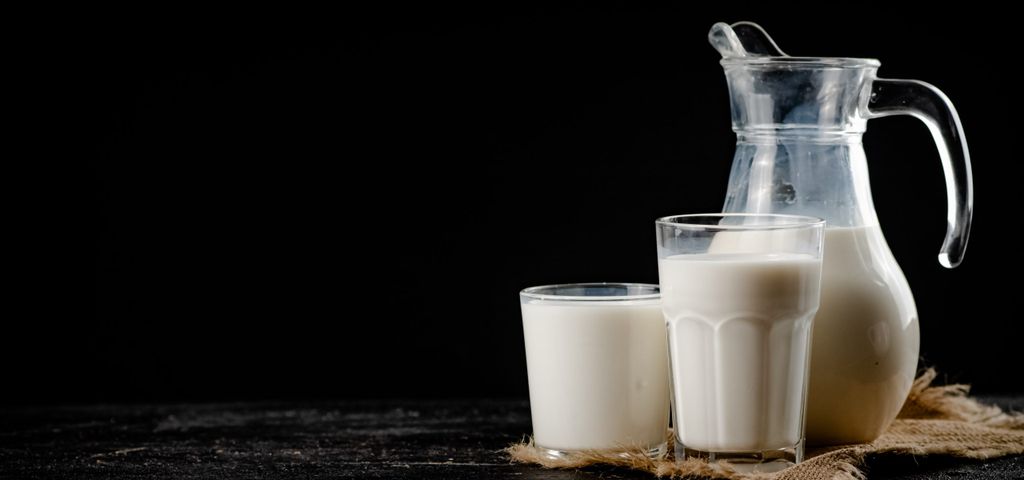
Through this combination of milk provision and learning activities, the scheme is designed to help reconnect children with agriculture and encourage healthy eating habits for life.
Interested schools can find out more at www.moocrew.ie/schoolmilk.
Keep updated on how NDC are bridging the rural/urban divide by signing up to the free newsletter here.
The NDC School Farm Visit series is a collaboration with Agriland about the importance of school visits to farms in familiarising children with all aspects of food production.