Watch: Milk suppliers look inside Tirlán's €400m Belview plant

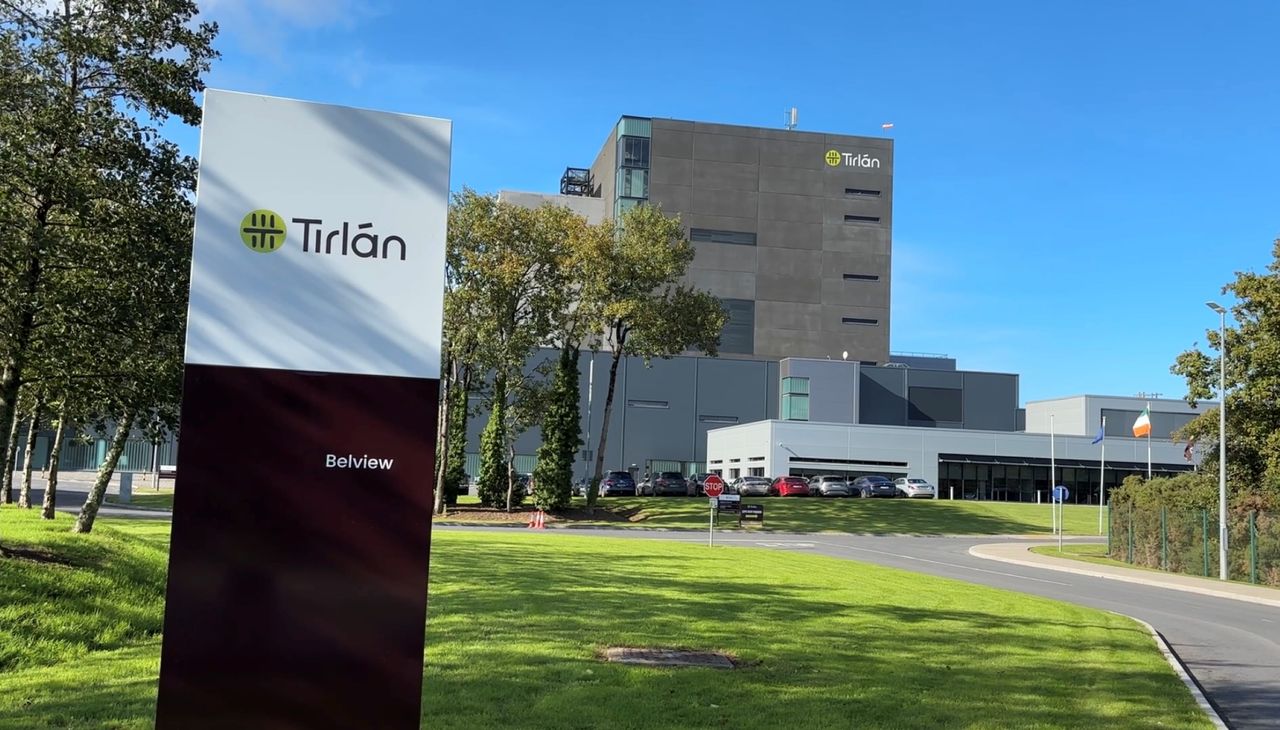
Over 1,500 Tirlán milk suppliers are expected to pass through the co-op's Belview plant between yesterday (Tuesday, October 13) and today (Wednesday, October 14) for the processers annual open day.
Tirlán has being hosting open days for the past number of years, with suppliers getting the opportunity to view its Wexford cheese factory last year, and its Ballyragget plant in Co. Kilkenny the year before that.
The events give suppliers a unique behind-the-scenes of where their milk goes after being collected, and the journey it goes on before making it to the shelves.
Agriland spoke to Tirlán chair, Gerard O'Brien, and Tirlán chief executive, Seán Molloy, to see what the day means to them and how it is adding value to the business.
Belview
The site, which is owned by IDA Ireland, contains Tirlán's Belview plant, where the focus has been on producing milk powders since its construction in 2015.
As well as that, the Kilkenny Cheese plant is also situated on the site. This plant was built in 2024 after Tirlán and the Dutch firm, Royal A-ware, entered a 50/50 joint venture, in 2019.
All in all, over €400 million has being invested in the Belview site over the last decade, with Molloy stating the co-op has "world class assets as a result of that investment".
The co-op processes 3.2 billion litres of milk across all of its sites annually, with 1 billion litres of that processed on the Belview site, a testimony to the scale of the the facility.
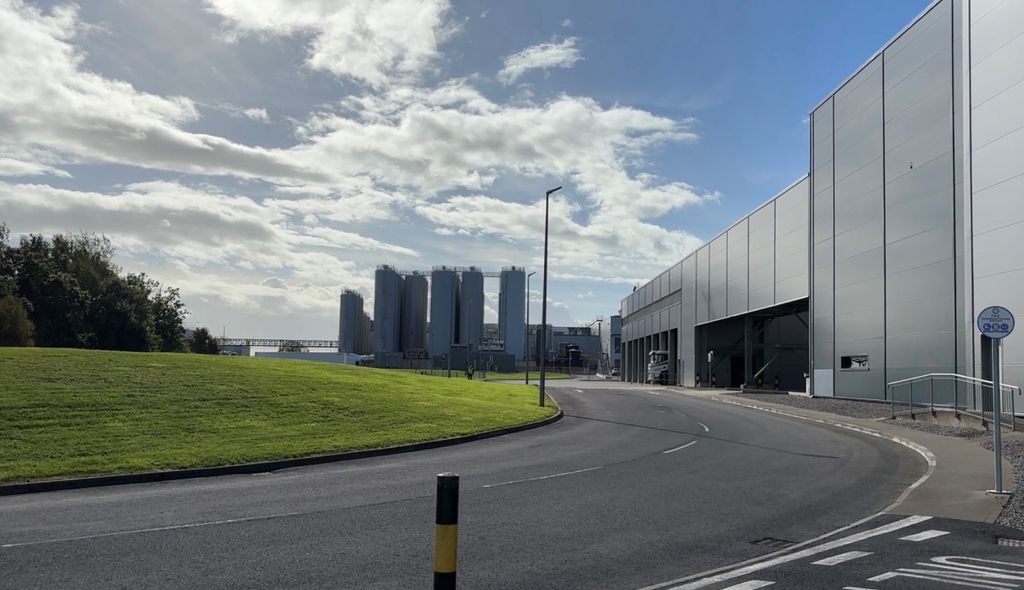
Belview has the capacity to process 30 million litres of milk per week, taking in 130 tankers of milk (30,000L each) per day in peak production.
With that, the plant can produce up to 3,000t of powder per week.
The plant produces whole milk powder, skim milk powder, fat-filled powder, buttermilk powder, whey protein concentrate powder, and liquid skim milk concentrate for infant powder, which are all exported across the globe.
The plant has eight milk intakes; this milk then passes through the pasteurisers, which can process 330,000L of milk per hour.
Milk is standardised and separated, with 36,000L of cream separated from the milk every hour.
The milk then heads to the milk evaporation processor, where the liquids are removed under vacuum conditions, which reduce the chances of heat damage and maintain the quality of the product.
The evaporated product then moves to the milk driers as 50% total solids, before being transformed to 97% total solids in the 200-bar drier.
The driers can produce 7.5t of powder per hour, meaning 500t of powder can be produced a day from 500 million litres of milk.
Overall, there are five evaporators and three driers in the plant.
All of this is done with only 90 full-time employees who work on a shift basis, highlighting the high level of automation involved.
Kilkenny Cheese
The Kilkenny Cheese factory is producing 55,000t of cheese for export on a seasonal basis, with the factory closed through December and January.
It processes north of 460 million litres of milk, 35% of which is processed during the peak period.
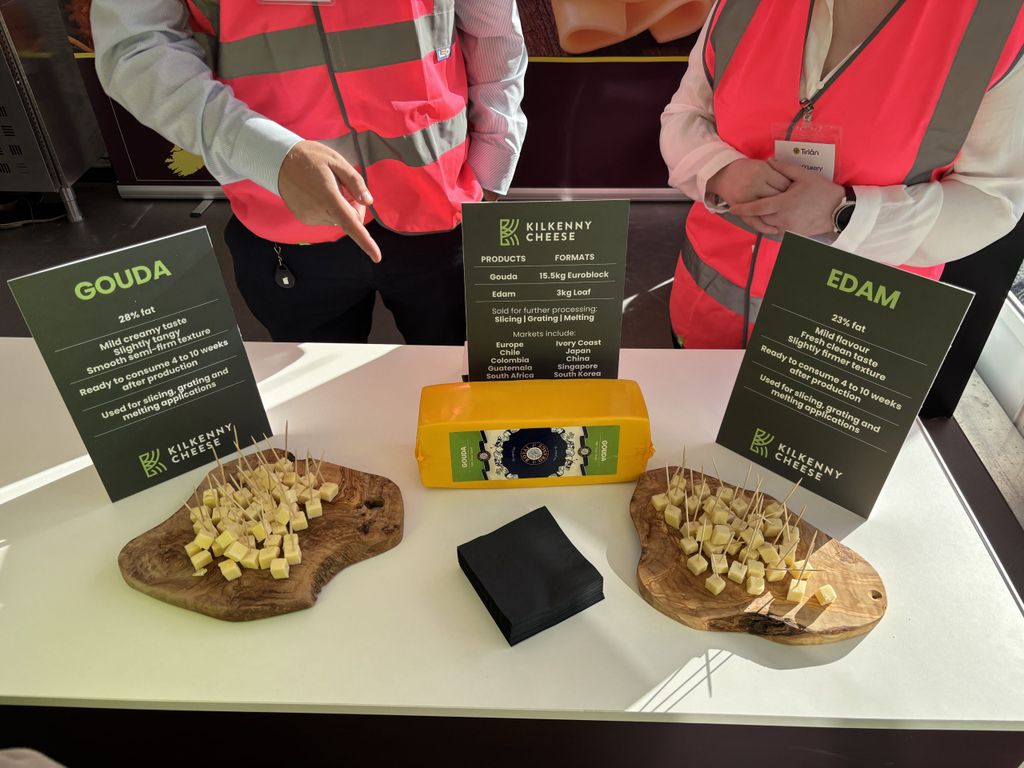
The plant produces Gouda and Edam cheeses rather than your typical cheddar cheese, which Tirlán produces in Co. Wexford.
These cheeses are ready for consumption four to 10 weeks after production, unlike cheddar, which may take up to two years, requiring additional storage.
However, these cheeses require a brine bath. This is a 4.5m deep bath filled with salt which flavours and preserves the cheese.
The cheese remains here for 2-4 days depending on the product, meaning 900t of cheese in the bath at any one time.
While the cheese is in the bath, it takes up to 2% salt, which means 10,000t of salt needs to be added each day in peak production.
Before this happens, the milk enters the plant via nine cheese vats, each with a capacity of 30,000L (one whole milk tanker).
Each one of these vats produces 3.5t of cheese.
When the milk comes in, it is standardised and pasteurised, before rennet, starter culture, and calcium chlorate are added; this takes roughly 90 minutes per vat.
It is then sent for casomatics, which is where the initial block of curd is started.
This then enter a mould and is pressed for approximately 80 minutes, before entering the brine bath.
Once out of the bath, it is washed and vacuum packed as 15kg Euroblocks or 3kg loaves.
This is loaded into re-usable crates, with 64 blocks of cheese in each crate, which are loaded in four minutes.
The plant puts out 90 shipping containers each week during peak production, with each container holding 22 crates.
Each block of cheese is fully tracked and traced from start to finished, and goes through a quality check before packing.
In terms of the by-products, the cream goes to Ballyragget, with Tirlán also processing by-products such as whey.
The Kilkenny Cheese plant is also highly automated, with 100 people employed, 60 of which are on shift work and spread across five teams, meaning 12 people are running the facility on any given day.