Tillage: Disease control in fodder beet

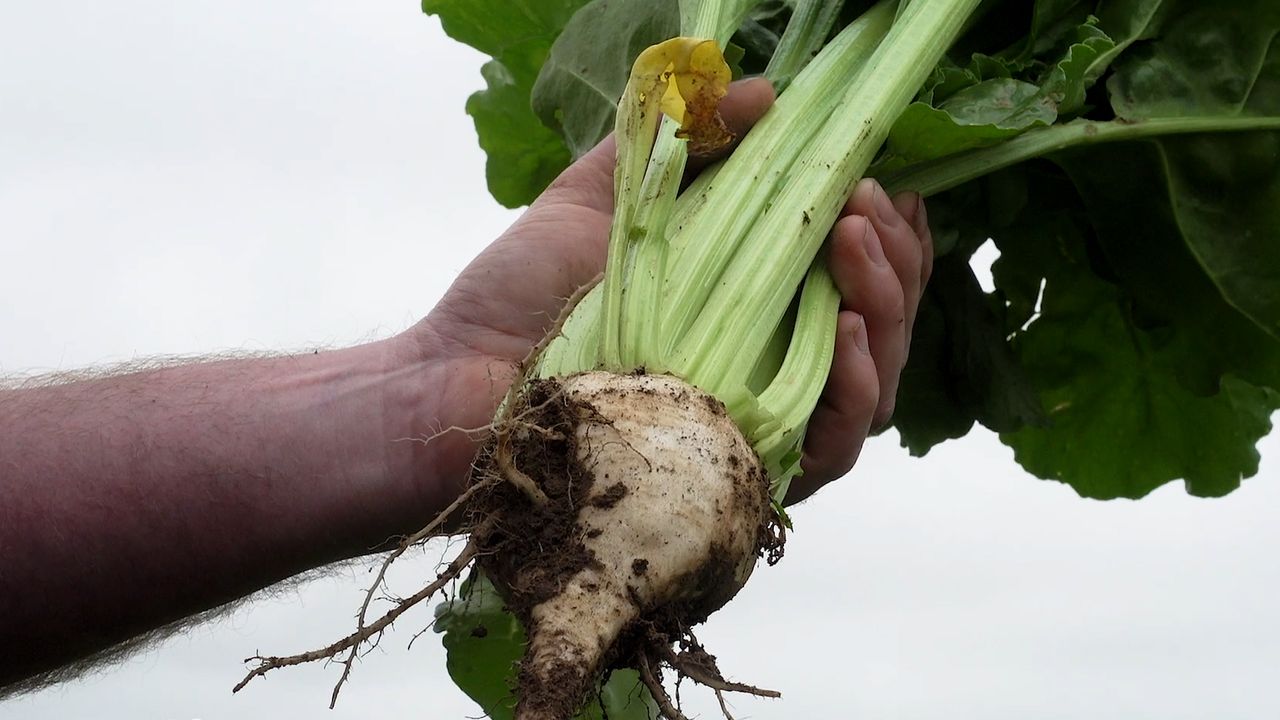
Disease control is essential in fodder beet to maintain a healthy green leaf canopy and maximise root yield.
According to Teagasc, this can be achieved with well-timed fungicide programmes capable of delivering significant yield responses.
Late July to early August is generally the optimum time for fungicide application.
Fodder beet remains one of the most important forage crops grown in Ireland, with approximately 10,000ha planted each year to provide high energy winter feed for livestock.
Crops have generally established and grown well this season, although many are now under increasing pressure from the recent dry weather, particularly on lighter soils.
With forage likely to be in high demand this autumn, protecting fodder beet yield is more important than ever.
Effective disease control can significantly increase root yield by maintaining the leaf canopy, allowing the crop to increase root yield well into the autumn.
Fungicide
The first fungicide should be applied at the first signs of disease, rather than waiting until infection is widespread.
For crops intended for later harvesting, a second fungicide application 3-4 weeks after the first is often worthwhile where disease pressure remains high.
However, it is important to avoid applying fungicides to crops that are suffering from drought stress.
Fungicides are most effective on actively growing plants, so where crops are under severe moisture stress it is better to wait until rainfall allows plants to recover before spraying.
Diseases
There are four key foliar diseases that affect fodder beet crops in Ireland:
Powdery mildew is favoured by the current warm, dry conditions and is likely to be the first disease seen in many crops.
Cercospora Leaf Spot is, increasingly, becoming the most damaging disease of fodder beet.
Warm, humid conditions favour its spread and severe infections can reduce yield by more than 50% if left uncontrolled.
Circular spots that are 3-5mm in diameter are the symptoms to watch out for.
These are necrotic with tan-grey coloured centres and reddish-brown borders. Over time, spots coalesce, leading to severe defoliation.
Ramularia results in angular leaf spots with central silvery cells and sometimes a dark outer margin on older leaves. Spots are larger than those of cercospora.
And, finally, rust typically develops later in the season as orange-brown pustules on the leaves.
Several fungicides are available to deliver disease control in fodder beet.
Growers should always follow the product label and observe the maximum total dose permitted per crop.