Tackling the 38% succession gap in dairy farming

Ireland is one of the best dairy producing countries in the world, pumping out an estimated 8.84 billion litres of high quality milk in 2026.
Our nation's presence in the global market is strong, as is our production levels.
But the challenges of generational renewal continue to pressure the industry, with over one third of dairy farms aged 50 and above not having a successor lined up.
This begs the question: who will be milking Ireland's dairy herd in another 10-20 years?
GROdairy
There is no doubt that there is a mountain of challenges facing the industry, from rules and regulations to income volatility and unsociable hours.
These challenges often bring a negative connotation to the industry, with many asking "why would a young person want to go dairying?".
However, with more than 2,500 young students completing Teagasc agriculture courses in 2025 alone, the data suggests that there is an interest.
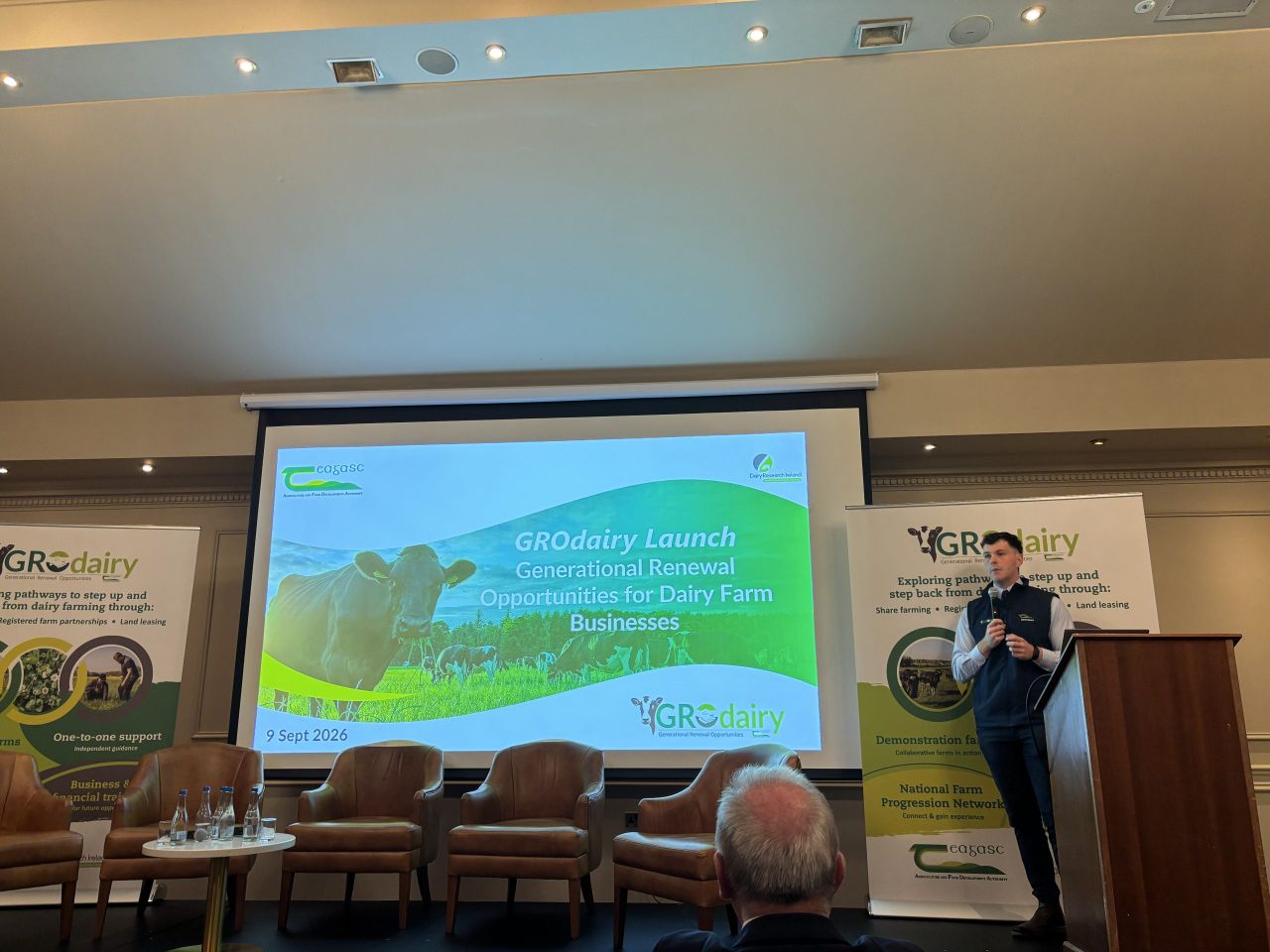
That is why Teagasc has officially launched its new GROdairy programme in a bid to help both the younger and older generations approach the subject of generational renewal.
Teagasc data shows that 38% of dairy farmers over 50-years-old have not yet identified a successor.
And considering over 60% of Irish dairy farmers are over 55 years-of-age, that means a lot of the country's dairy farms are at risk of not having a successor.
However, farmers in this situation must remember that succession is not as traditional as it once was, where the only options were to either pass the farm on within the family or sell it.
Now days, collaborative farming is becoming increasingly popular, with options such as farm partnerships, share farming, long-term leasing, and even contract rearing all on the table.
GROdairy is designed to help farms to understand these options and what best suits them and the future of their farm through collaborative farming demonstrations, a national farm progression network, and one-to-one consultations.
It will also provide supports such as business planning, communication, and financial training.
This will all help farmers transition, with Teagasc estimating that more than 900 new collaborative farming opportunities could become available on Irish dairy farms over the next decade.
Programme launch
The programme was launched in the Abbey Court Hotel in Nenagh, Co. Tipperary yesterday (September 9).
Speaking at the event, Teagasc director, Prof. Frank O’Mara said: “Generational renewal is often seen as a challenge, but it is also a significant opportunity."
He noted how Ireland has experienced farmers with knowledge, land and resources, as well as young farmers all looking to build careers in dairy farming, while an older generation is considering the future of their farm.
The director said: "GROdairy is about creating pathways that can socialise and normalise models that bring the two together and give farmers more options for the future.
“Planning for the future does not mean stepping away from the farm, it means creating choices."
He noted that the earlier a farmer can begin that process, the more options there will be available to them.
Teagasc People in Dairy Programme manager, Dr. Conor Hogan said: “Collaborative farming can create opportunities for both those stepping up and stepping back.
"GROdairy will provide a clear roadmap for successful collaborative arrangements, giving young people the skills, support and structure they need to develop and make these arrangements work, while giving established farmers clear options to remain involved in the dairy sector."