Table: Simple guide to work out pit silage or bale numbers needed for winter

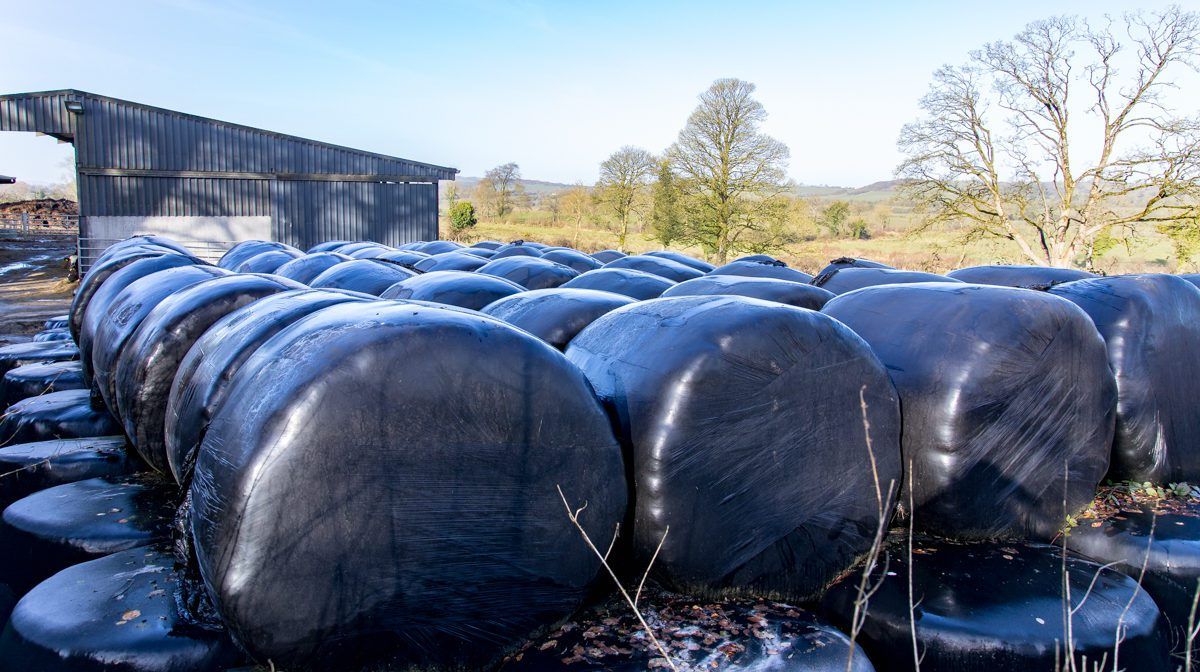
Most farmers have started using their pit or bale silage winter fodder reserves by now.
The dry spell this summer saw grass growth stall in many parts of the country, forcing some farmers to begin using some of their winter supply of fodder in summer.
However, grass growth rates bounced back in autumn and from a national perspective, the supply of fodder looks to be largely in a good position.
There are still many farms across the country that may be tight on fodder and where there is a concern, it is better to know in advance so a plan can be made in time.
A link to the Agriland fodder calculator is available here or alternatively, farmers can use the guidelines in the table below:
The table below is a Teagasc guide template for farmers to calculate the amount of fodder they need this winter:
| Stock Type | No. of Stock(A) | Winter Months(B) | Tonnes of fresh weight of silage required per month (C) | Total required(A X B X C ) |
|---|---|---|---|---|
| Suckler Cows | 1.4 | |||
| 2+ year olds | 1.3 | |||
| 1-2 year olds | 1.3 | |||
| Weanlings | 0.7 | |||
| Total tonnes of fodder required |
Farmers will be using either bales or pit in this calculation.
When measuring the fresh weight in tonnes in a silage pit, Teagasc advise farmers to measure the length X width X height in metres and divide the answer by 1.4.
This is allowing for a silage pit at 22% dry matter content.
The fresh weight of bales can vary from farm to farm but as a guide, Teagasc recommend farmers to allow 750kg fresh weight/bale when completing the calculations.
Where a deficit is identified, farmers should consider purchasing additional silage, increasing concentrate feeding strategically to stretch existing reserves, or combining both approaches.