Rewetting 'remains voluntary' as draft NRL plan published

Rewetting of drained peat soil under agricultural use "remains voluntary" under Ireland's Nature Restoration Plan (NRP), the draft version of which has now been published.
The Department of Housing, Local Government and Heritage has also announced a €20 million "pathfinder" fund for 2027 to support pilot restoration projects on public and private land.
The draft Nature Restoration Plan has been in the works for several months, and forms part of the process of implementing the contentious EU Nature Restoration Law.
The draft has been submitted to the European Commission for feedback, with the commission set to hand down its views on the plan by next March.
Following that, Ireland will develop the final version of the plan, which will be submitted to the commission around this time next year.
Commenting on the plan, Minister of State for nature Christopher O'Sullivan said: "Today is an important milestone as we publish the draft Nature Restoration Plan in full.
"Representatives from the farming, forestry and fishing communities; local authorities; public bodies, scientists; and NGOs [non-government organisations] played a foundational role in the development of this work, as did the many government departments and agencies who inputted at the technical level," the minister added.
"We need a new narrative for the future of nature in Ireland, one that is built on common ground and shared understanding. This draft Plan, and the work we will do together over the coming months to improve and refine it, will be the blueprint," he said.
Apart from the €20 million announced for projects in 2027, Minister O'Sullivan also said he is continuing to engage with government colleagues on the issue of a multiannual Nature Restoration Fund.
He said he aims to make an announcement on such a fund "in the coming months".
The plan
The draft plan is a highly detailed document, and as a result the Department of Housing has published explanatory notes to accompany it.
These notes include a section on organic soils in agricultural use constituting drained peatlands.
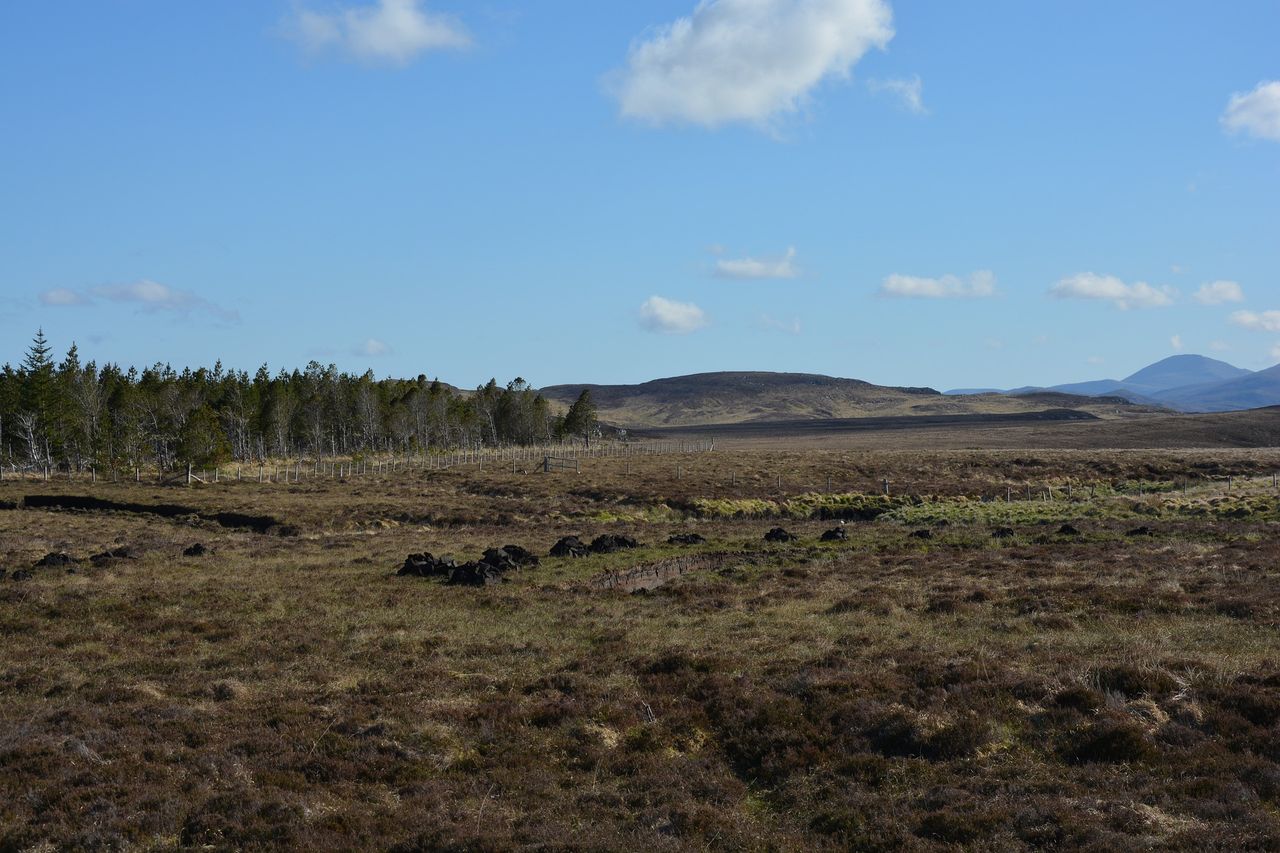
Peatlands are dealt with in article 11 of the Nature Restoration Law, and according to the accompanying notes, this article refers to the "restoration and rewetting" of organic soils in agricultural use that are on drained peatlands.
Restoration is defined here as "the process of actively or passively assisting the recovery of an ecosystem in order to improve its structure and functions, with the aim of conserving or enhancing biodiversity and ecosystem resilience, through improving an area of a habitat type to good condition, re-establishing favourable reference area, and improving a habitat of a species to sufficient quality and quantity".
Rewetting, on the other hand, is defined as the process of changing a drained peat soil "towards a wet peat soil".
The explanatory document states that rewetting targets "do not impose an obligation on individual farmers or private landowners and participation remains voluntary".
"It is important to not that the [Nature Restoration Law] does state that member states shall incentivise rewetting to make it an attractive option for farmers and private landowners," it adds.
In a briefing for journalists, a Department of Housing official also outlined that no mandatory actions under the NRP specifically are envisaged.
"The government has been very clear on that in the past, that measures introduced under the NRL will be voluntary for landowners and farmers," the official said.
"It's explicit in the regulation as well, particularly in regards article 11, which is all about restoring drained peatlands in agricultural use, it explicitly says that this has to be an incentivised process that supports those who chose to participate to enhance the biodiversity of their land," the official added.
This department official noted that the NRP builds on regulations that are already in place, such as the Habitats Directive and the Birds Directive, which "have existing obligations for landowners, for farmers...that won't change under the NRL.
"So the NRL doesn't add anything new there.
The intention is to make sure the measures that are introduced as part of the NRL, or are NRL-focused, are voluntary for landowners, voluntary for farmers and that there is no mandatory element beyond what is already in place anyway," the department official said.
Targets
The draft plan outlines how much organic soils in agricultural use the government is targeting for restoration or rewetting measures.
The surface area to be targeted for restoration of organic soils in agricultural use by 2030 is 423km2 (42,300ha) while the surface area targeting rewetting by the same year is 105.75km2 (10,575ha).
By 2040, the plan targets restoration measures on 564km2 (56,400ha) of organic soils in agricultural use, and rewetting on 188km2 (18,800ha).
By 2050, these targets will increase to restoration measures on 705km2 (70,500ha) and rewetting measures on 235km2 (23,500ha).
It should be noted that the draft plan described these figures as best estimates.