Research sheds new light on variable rate nitrogen applications


In-field variable rate nitrogen (VRN) applications on cereal crops result in only minor improvements to yield, margins, and emissions, according to research by a UK agricultural consultancy.
Recent research by Agricultural Development Advisory Service (ADAS) compared in-field VRN applications to the same average N rate as a flat application to the whole field (‘flat optimum N rate’) for winter wheat, winter barley, and oilseed rape.
The research, conducted across 11 commercial farms in the UK over five years, found that, on average, VRN applications would have increased yields by only about 0.05t/ha and improved profits by roughly £10/ha.
The environmental benefits of VRN were also modest, with only small reductions in greenhouse gas (GHG) emissions per tonne of crop produced.
Trials
To carry out the trials, ADAS divided single fields into hundreds of small square plots with different amounts of nitrogen applied to each plot, then fitted N response curves and calculated the “optimal” N rate for each plot.
Besides N, all other inputs and applications remained the same.
Within a single field, yields varied by up to 2.5t/ha (wheat), and the optimal N requirement differed by more than 200kg/ha (oilseed rape) between areas highlighting the large within-field variation.
Principal research scientist at ADAS and lead for the project, Dr. Kate Storer said: “These differences highlight exactly why precision farming tools are considered promising: crop needs are not uniform, even within the same field.”
Later data analysis revealed that applying N rates variably within the field would result in only small benefits compared with applying the flat optimum N rate.
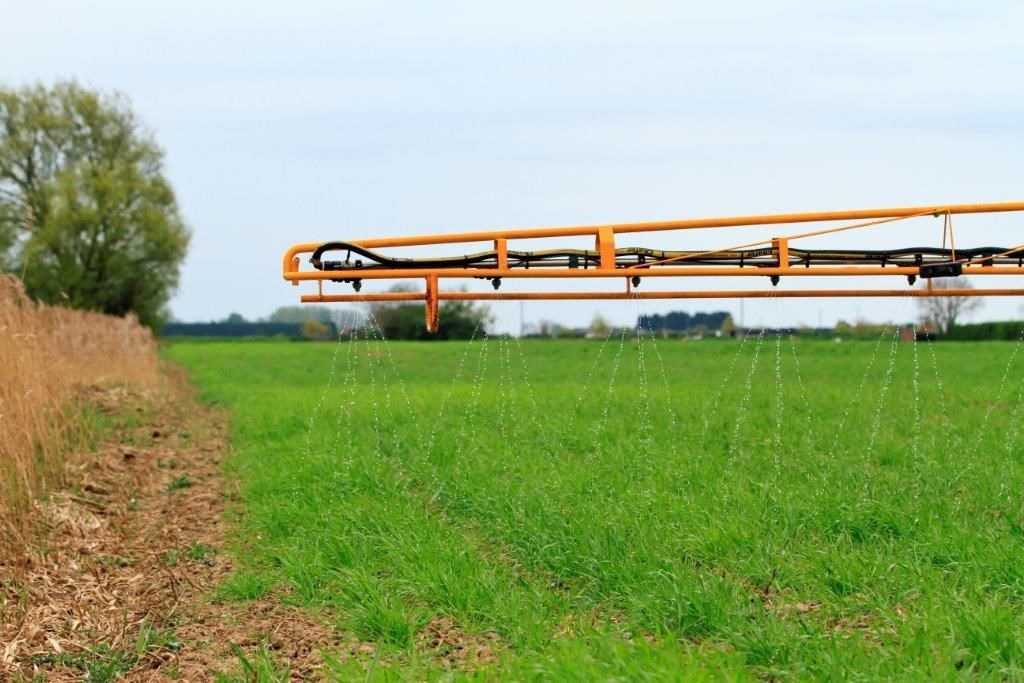
Storer added: “We found that using VRN would result in some small yield and gross margin gains, but ultimately most benefits came from being closer to the field optimum N rate.”
Environmental impacts followed a similar pattern: adjusting N rates within fields had very little impact on overall modelled GHG emissions when compared to using a flat optimal N rate for the whole field.
When a flat optimum N rate was used, the GHG emissions from applying above the optimum in some areas of the field were cancelled out by reduced GHG emissions when applying below the optimum in other areas.
According to Dr. Storer, the findings indicate that tailoring N applications by variably applying N within a field offers relatively little gain over applying an accurate flat optimum N rate across the field.
She added: “But estimating the perfect optimum N rate is difficult, so it’s important to utilise all relevant methods, including in season adjustments, to be as accurate as possible.”
Meanwhile, matching fertiliser applications to crop demand remains critical for optimising fertiliser use, but estimating the optimum N rate accurately remains a challenge.
ADAS research scientist, Dr. Sarah Kendall said: “There is a renewed focus on fertiliser rates as N prices rise.
"Yet, the results were similar when tested under increased fertiliser prices, suggesting that VRN will not necessarily provide greater benefits with a higher ratio of N cost to grain prices.”