100-cow herd currently needs at least 3 bales/day - nutritionist


The average farm needs to be feeding three to three and a half bales in the current conditions, according to Tirlán nutritionist Brian Harte.
Soil moisture deficits are still sitting above 90mm in the south-east according to Met Éireann.
This means most farms in the region will need approximately 30-40mm of rain before grass growth begins to return to normal, with recovery proportional to rainfall.
With growth rates sitting as low as 10kg of dry matter (DM)/ha in place, Harte noted that the problem will not be solved immediately when rain does come, stating that it will take at least 10 days for growth to recover.
Meanwhile, some farms in the north-west have no soil moisture deficits, with growth rates above 50kg DM/ha, letting them continue grazing with very few limitations.
Prioritise the cow
Harte noted that farms which are being hit with the drought must prioritise the cow, as there is still 35-40% of the year's milk solids yet to be produced, which is ultimately a farm's income.
Harte said: "The cow is the thing that is driving absolutely everything here."
The litres may be dropping at this time of the year, but typically we see solids increasing.
Therefore, diets need to be carefully adjusted to suit individual farm situations.
Harte said a lot of farms in the south-east are in a situation where they have a bit of grass, but expect it to run out over the next week or so.
If that is the case, they should be feeding a diet which comprises of a third grass, a third silage, and a third concentrates.
That is roughly 6-7kg of concentrate in the parlour, enough grass for cows to graze away happily during the day, and roughly 7kg worth of high quality dry matter silage.
That breaks down to approximately three to three and a half bales for the average 100-cow herd, which should be fed either side of milking.
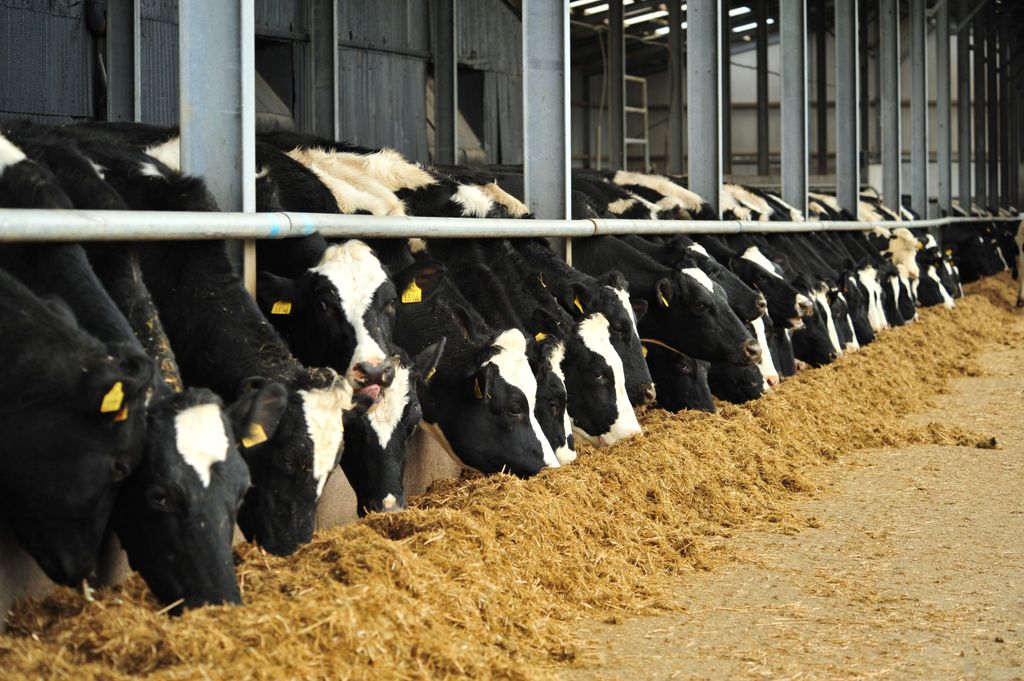
Harte advised that as famers run out of grass, they should keep the kilos of concentrates in the parlour at the same rate of 7-8kg, and up the amount of silage served as it is the most cost-effective option, giving 100 cows approximately five bales a day.
He did note that they often hear of cows' production plummeting a few days later when doing this, but said in the majority of case, this is due to cows are not being giving enough time to eat a sufficient volume of silage.
In reality, they will need four to five hours of good feeding time when being fed five bales a day.
Farmers should have fodder budgets done by now.
If they see that fodder availability is low for the winter, they should continue feeding 6-7kg of concentrates and three bales a day, while substituting grass for 3-5kg of soya hulls.
He said it is not ideal as you are pushing the limits in terms of concentrate intake, but it will safeguard winter fodder while maintaining production.
If this is the case, watch out for water availability as demand will rise significantly.
Harte recommended farmers speak to advisers or nutritionists, stating that every diet is 'incredibly individual'.
Grass growth and fertiliser
According to PastureBase Ireland, average growth rates fell as low as 13kg of dry matter (DM)/ha in Leinster during the week, with a national average of 26kg of DM/ha.
Average farm covers (AFC) have dropped back to 491kg DM/ha with pre-grazing yields of 1,126kg DM/ha as grass availability runs increasingly low.
This brought the average diet to 11kg of grass alongside 4.5kg of meal and 3.5kg of silage.
With such low growth rates, farmers are being reminded to hold off on fertiliser applications until growth goes back over 50kg DM/ha, at least a week to 10 days after adequate rainfall.
It is important to remember that during the drought, soil will still be holding nitrogen.
Once rain falls, mineralisation will occur, removing the need for fertiliser application and fuelling the recovery of grass growth.
Even with showers forecast, farmers should hold off on fertiliser until after it falls, as any spread will wash off the hard ground.