Nexat brings combine harvesting to its gantry system

We are now approaching the 200th anniversary of the field mechanisation of harvesting and threshing of cereals, yet companies are still innovating in a bid to increase the efficiency of the process.
Nexat is one such manufacturer, and at this year's Agritechnica, it was showing what amounts to a brand new combine harvester, although it looked nothing like the machines we are familiar with.
The appearance of a completely new harvester is a rare event - the Ideal brand from AGCO being launched in 2017 - but this year we have been treated to the hybrid Zoomlion and what amounts to a radical rethink of the combine harvester format from Nexat.
Gantry farming
The Nexat is a gantry system of farming, where the primary machine consists of two tractive units running in parallel with a gantry joining them together.
The purpose of the system is to reduce soil damage to tramlines that are reused on an annual basis, confining soil compaction to strips of sacrificial ground with the crop growing in between these lines.
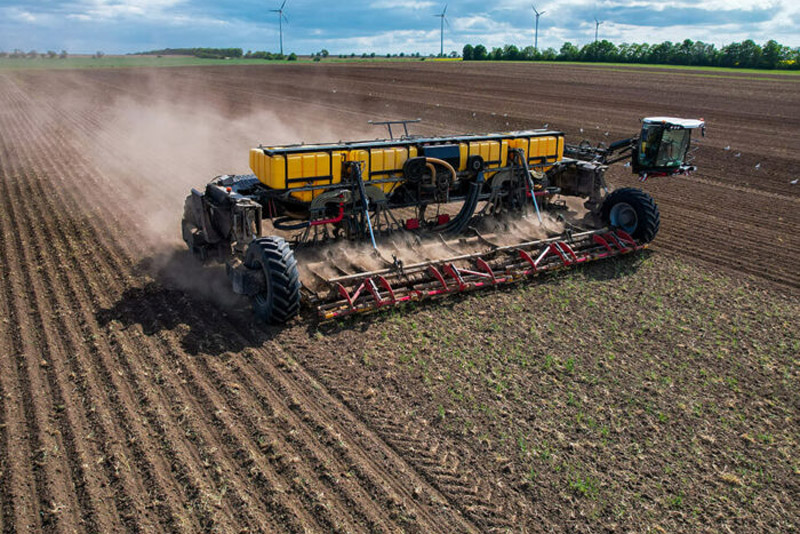
Up until now, the company has focussed on cultivation and drilling, but recently it has moved on into the harvesting of cereals, introducing its new module at Agritechnica.
Although it may amount to what is a brand new harvester, it is more accurate to describe it as a harvesting module that mounts upon the Nexat frame, with the Nexat frame providing both the power and forward drive.
Known as the Nexco harvesting module, it has been developed completely in-house rather than the technology being bought in from a third party.
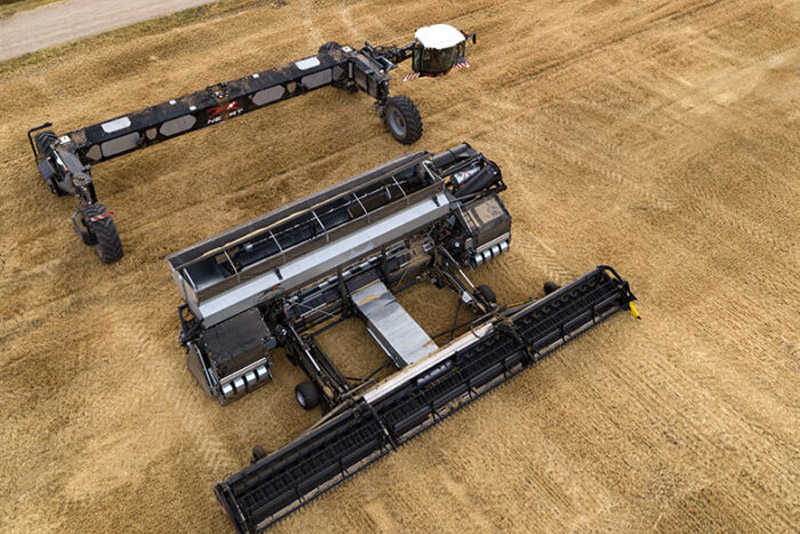
The company claims that the combination of the two represents the most efficient and powerful combine now on the market.
Nexat's unique thresher
The reel and feeder to the threshing drum are reasonably standard items adapted for the machine, and may be supplied by any of four companies, depending on the crop type and whether a rigid or Draper head is preferred.
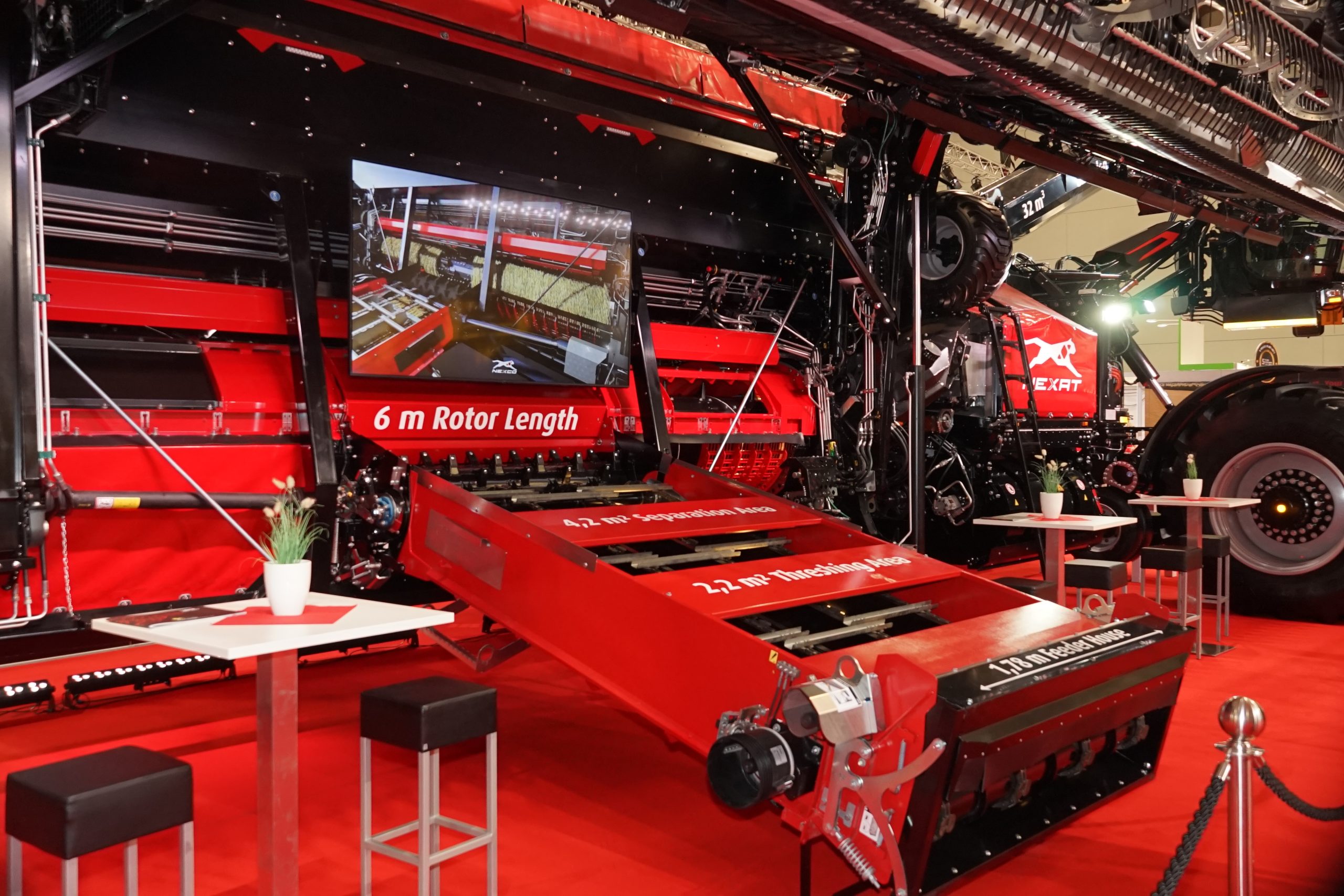
But it is the threshing mechanism that sets the machine apart from other harvesters, and is described by Nexat as being a dual tangential axial flow threshing concept.
By this, it means that the threshing mechanism is of the axial flow type with the crop intake being divided into two even crop flows: one that passes through a left-hand rotor; and another that goes to a right-hand one.
Both rotors are mounted at 90° to the direction of travel, a feature unique to the Nexat, and, according to the company, the whole arrangement leads to a significantly higher output.