Make sure you have enough fodder for a poor spring

2025 worked out to be a great year for grass growth and fodder production, but farmers still need to make sure silage lasts.
Spring is always an uncertain time with regards to weather, with cows out non-stop from February some years and still indoors in March other years.
Therefore, farmers need to be careful not to have excessive silage waste or feed out more than they should.
Instead, farmers should be sticking to their fodder budgets to ensure their silage gets them through any unpredictable times.
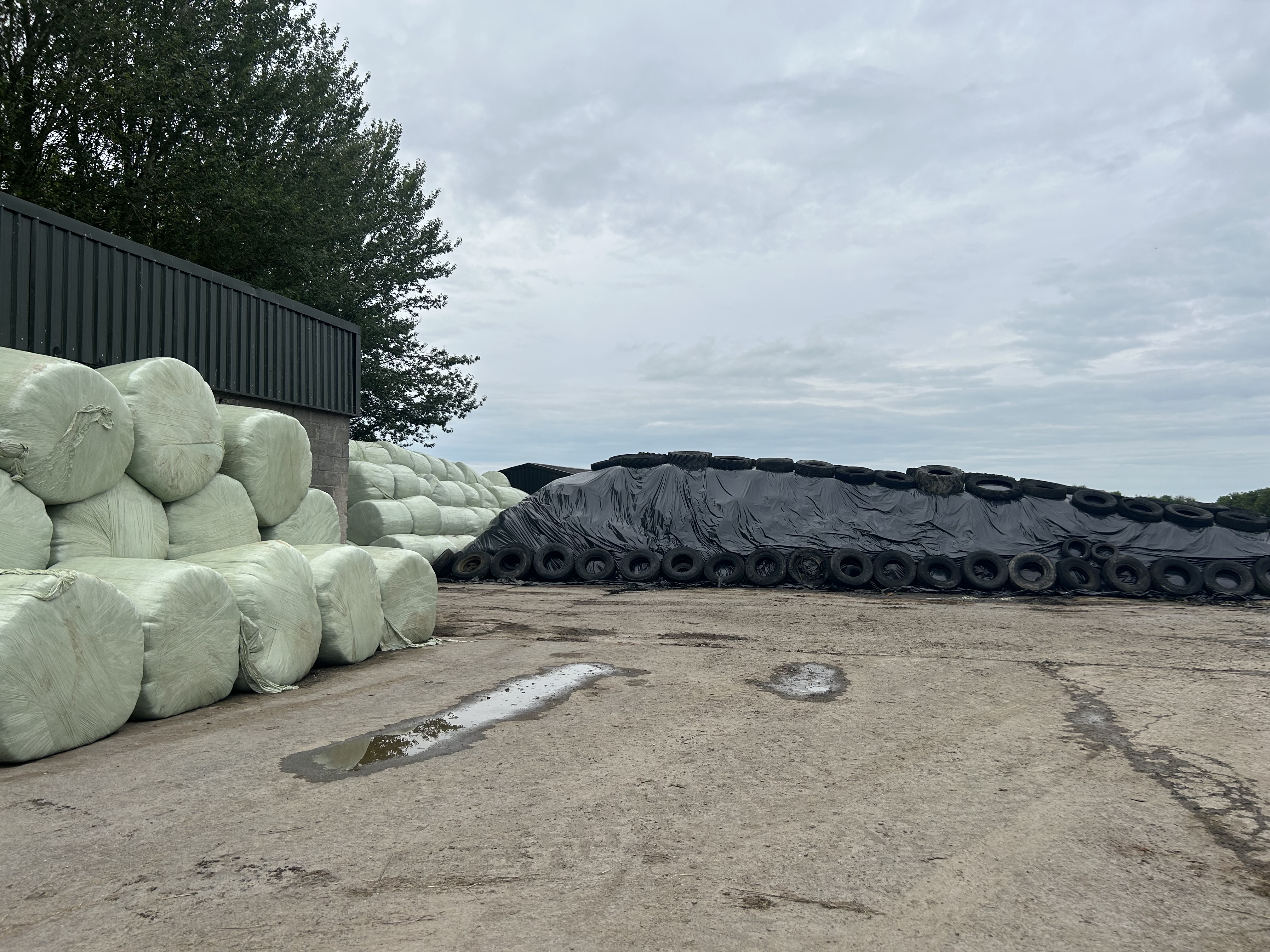
Silage pits have been open for near a month on the majority of farms across the country, meaning farmers should have an idea of how much they are feeding out, depending on the quality.
Fodder budget
Fodder budgets should be complete on most farms now, but for those who have not yet completed one or that want to revise theirs, now is an ideal time.
To complete a fodder budget, first measure all the silage pits in the yard , calculating them into tonnes:
Length x width x height in meters and divided by 1.35
Then include any bales in the yard, converting them to tonnes by multiplying the number of bales by 0.9.
Once this is done, the next step is calculating your herd's silage requirements for the winter.
Ideally, silage should be tested first to determine its nutritional value.
Typical dry matter (DM) intakes requirements/day:
- Dry dairy cows: 11-12kg of DM;
- Dairy cows: 16-21kg of DM (depending on yield/stage of lactation);
- Weanlings: 4-5kg of DM.
You should always allow an extra month of fodder as a 'saving grace' in case of a poor spring.
Once your budget is complete you should have an idea of how far into the spring you can get comfortably.
Reserves should not go into a deficit on the majority of farms this year; however if in the rare case they do, buying in straw or maize and feeding them as a total mixed ration can help stretch the silage.
The management of your silage pit during the winter can contribute to a lot of silage wastage, so farmers should be particularly mindful of that this winter.