'If young farmers don't get the land in time, it's no good to them later'
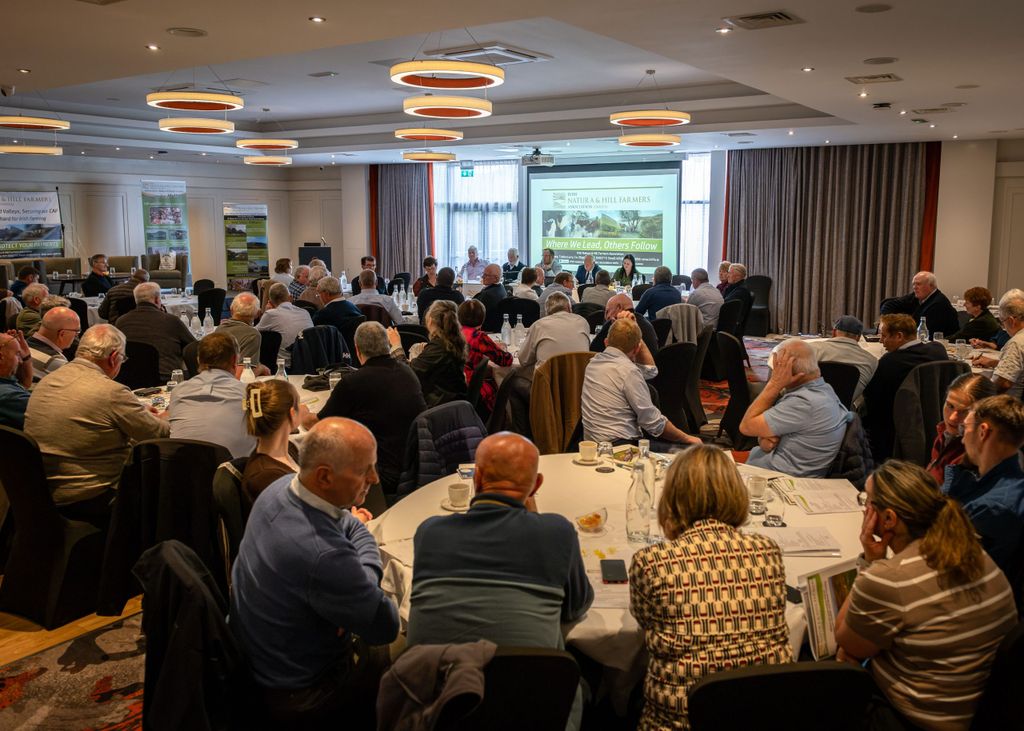
Delays in transferring land to the next generation need to be urgently addressed by the Irish government and the EU, the annual general meeting (AGM) of the Irish Natura & Hill Farmers' Association (INHFA) has heard.
Speaking at the meeting at the Clayton Hotel in Sligo last evening (Thursday, September 24), farmer John Moran explained that he would not be in a position to hand over his farm as it is, and live off a state pension.
However he acknowledged that if farmers hold onto the farm until perhaps 65 or 75-years-of-age, they might "as well hold on to it until 110" as it is "no good" to the next generation at that stage.
He was one of several farmers at the meeting who called for an early retirement scheme to incentivise older farmers to organise farm transfer at a time that can still benefit the next generation who want to farm, but also allows the retiring generation to be able to live on a decent income.
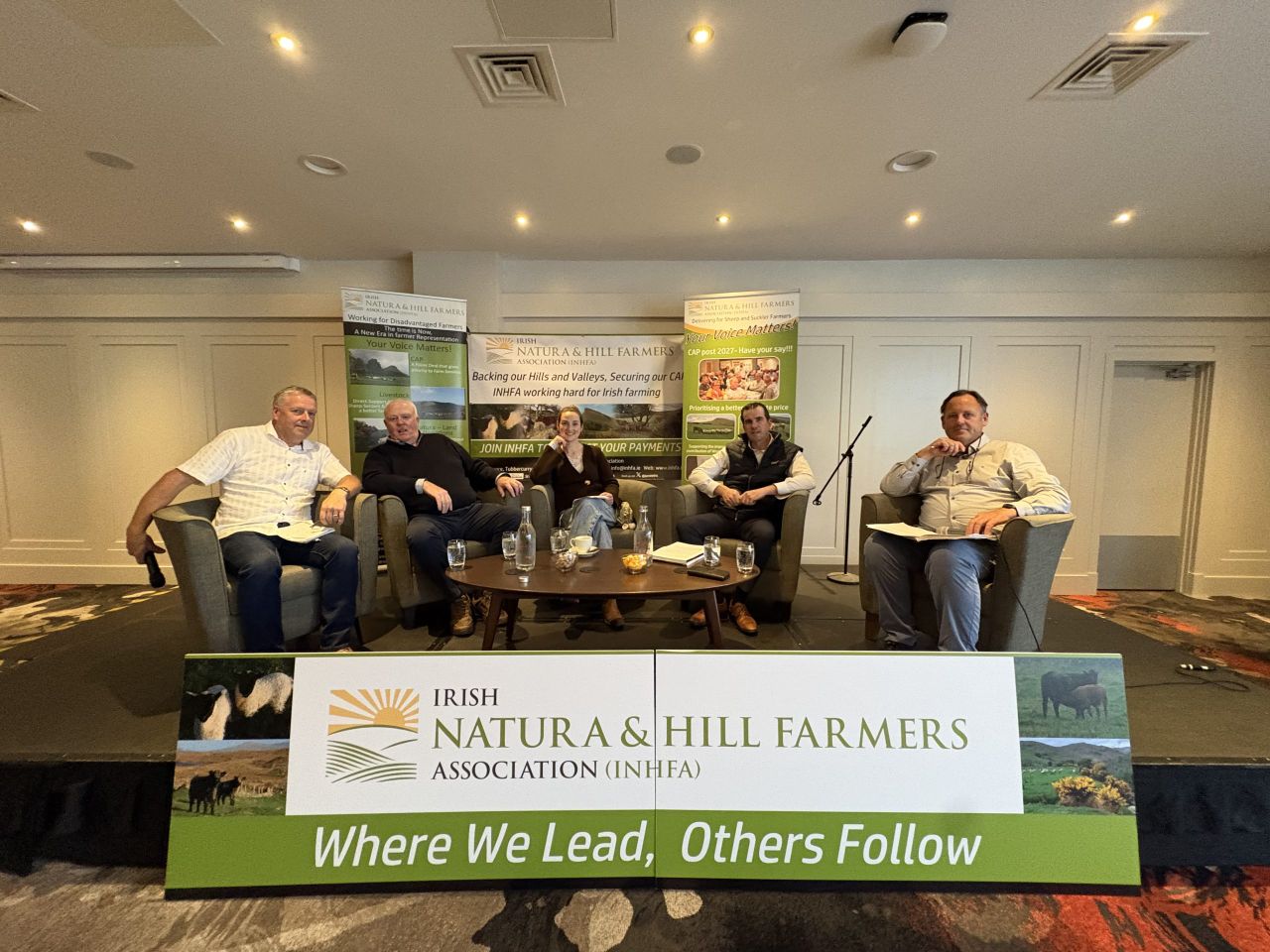
The comments were made during a panel discussion on generational renewal, chaired by INHFA national chair, Micheál McDonnell.
The panel consisted of farmer, John Moran, Trevor Boland of IFAC, Daniel Buckley, INHFA and Shepherdess Jaz, Jaz Williams.
Moran outlined that for farmers, particularly in areas where it is more challenging to farm, such as hills and coastal land, there should be a flattening of payments and an "equal payment on every hectare of land".
Young farmers
Moran explained that he has a farm he receives a payment on and said he is "lucky" that he has someone coming along the next generation interested in continuing farming.
"That person is between 25 and 30 [years-of-age] and if that person doesn't get that farm soon, they're not going to be interested in it," Moran told the meeting.
"Renting land... they [young farmers] do not own it. So if I'm not encouraged to transfer the farm to my son or daughter, that's where I see the key - because if I don't hand it over, they're going off to another job.
"There is no point in me trying to get them back when I'm in my late 70s when they are aged close to 50."
The farmer was applauded for his straight talking plea to introduce an early retirement scheme to enable farmers who plan to retire to transfer the farm to the next generation at an earlier stage, while not leaving themselves without means to live off.
"I'd like something for me, because I cannot afford to hand over my farm of land at the moment; the pension won't be enough for myself and my wife, so I feel there should be some incentive there.
"An incentive for young farmers to take over the family farm, not rent land, because they [often] have more interest in the home family farm," Moran said.
Kerry part-time farmer and INHFA member Daniel Buckley added that "without a proper scheme for a person to retire, it's going to be very hard for young people to step up".
Farm partnerships
Trevor Boland from IFAC told the meeting that he is a big "advocate for farm partnerships".
"Succession farm partnerships haven't really worked but registered farm partnerships are a very good mechanism to bring the next generation into farming, keep the older generation involved in farming, spread the income that's coming in on the farm that best suits that particular farm," Boland said.
"From there then you can look at transferring the land, be it now or in the future or when it suits any particular farmer."
Boland explained that there are two main difficulties he has experienced with people who contact him seeking succession advice.
"The first difficulty is, if you delay the transfer to the younger person, you're limiting their ability to build up assets outside the farm," he explained.
This means there could be a significant tax impact for that younger farmer.
"The biggest issue from the older farming generation is around the Fair Deal Scheme," Boland added.
"There is a five-year look-back on the transfer of assets, if somebody needs nursing home care. And someone might need nursing home care for a number of reasons, not just older age, they could have a sudden illness, a stroke, a bang on the head, that needs nursing home care.
"If you don't have the funds to pay for that - which could be €50-60,000 a year, there is going to be a 7.5% charge on your assets."
Boland explained that this is causing "real fear" among farmers and therefore they are doing a transfer at a younger age.
Women in agriculture
Sligo farmer Jaz Williams added to the conversation highlighting concerns regarding PRSI contributions and pension entitlements for women in agriculture.
She asked: "Can you build up enough [contributions] if you're also having a family?
"Because if I'm taking maternity leave and I'm getting those contributions, do I have to cap how many children I have so that I can build up enough contributions for that [pension] scheme?"
Jaz, who participated in the panel, also had her six-month old baby son in the audience and hopes that there is a future on the sheep farm in Sligo for her son to one day choose if that is what he is interested in.
Trevor Boland from IFAC explained that credit for females working in the home was introduced in recent years to try to make the system more fair, but still urged everyone to review their pension contributions and strive to ensure they have made sufficient contributions to be able to avail of support upon retirement.
Budget 2027 will be announced on Tuesday, October6, 2026 and negotiating the budget for the next Common Agricultural Policy is currently underway while Ireland holds the presidency of the EU.