How is the drought impacting Tipperary dairy-beef demo farm?

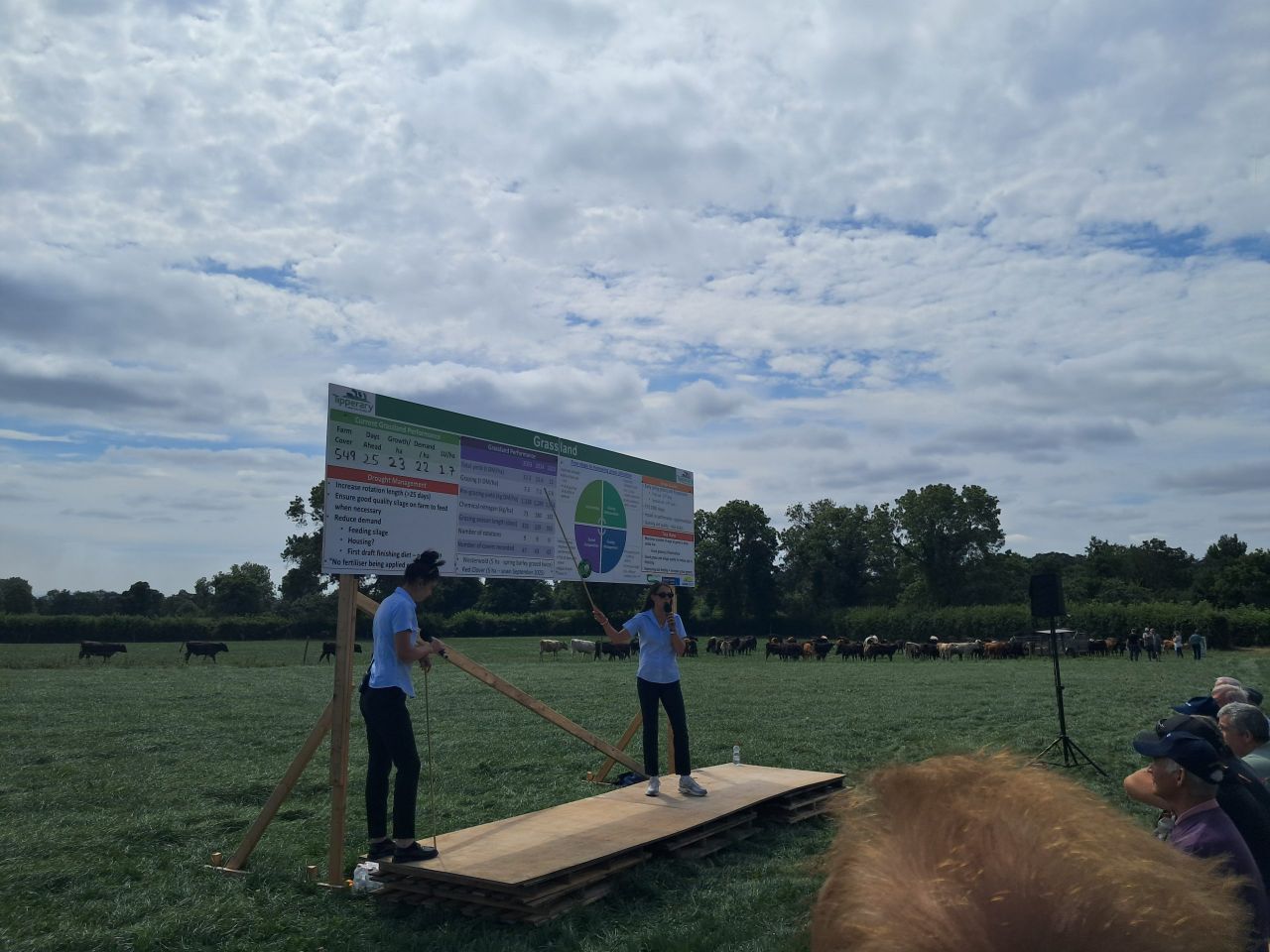
With soil moisture deficits hampering growth, the Tipperary dairy calf-to-beef demonstration farm (Ballyvadin Beef Farm Ltd) in Fethard, Co. Tipperary has had to move its rotation out to more than 25 days.
This means that cattle are grazing less than 4% of the farm every day.
The farm has also had to stop applying all fertiliser as the drought continues.
How the demo farm is managing the drought was discussed at its open day on Wednesday (July 22).
The farm system is set up to rear 3.5 spring-born calves/ha with cattle consuming 2t of grass dry matter (DM), 1t DM of silage and 0.8t DM of concentrates in their lifetime.
According to the specialists presenting at the open day, having good quality silage (DMD >75%) on hand to feed when necessary will reduce stress for farmers and reduce potential disruption to performance as the diet is altered.
In 2025, the farm produced 12T of DM from grass and grazed 7.8t DM.
The average pre-grazing yield was 1,564kg DM/ha. This has increased substantially from the 1,313kg DM average opening cover over the previous two years.
Speaking at the open day, Teagasc technician, Chloe Millar put this down to the massive surge in growth in August and September last year elevating the average cover.
She added that cattle were grazing 1,200-1,300kg DM covers beforehand.
The demo-farm received 182kg N in 2025 (compared to 180kg N in 2024), with nine rotations and 42 grass covers recorded over the year ensuring accuracy and real-time growth tracking due to the volume of covers.
Farmers who attended the event will have seen how the reseeds from 2025 compared to more mature swards during the drought
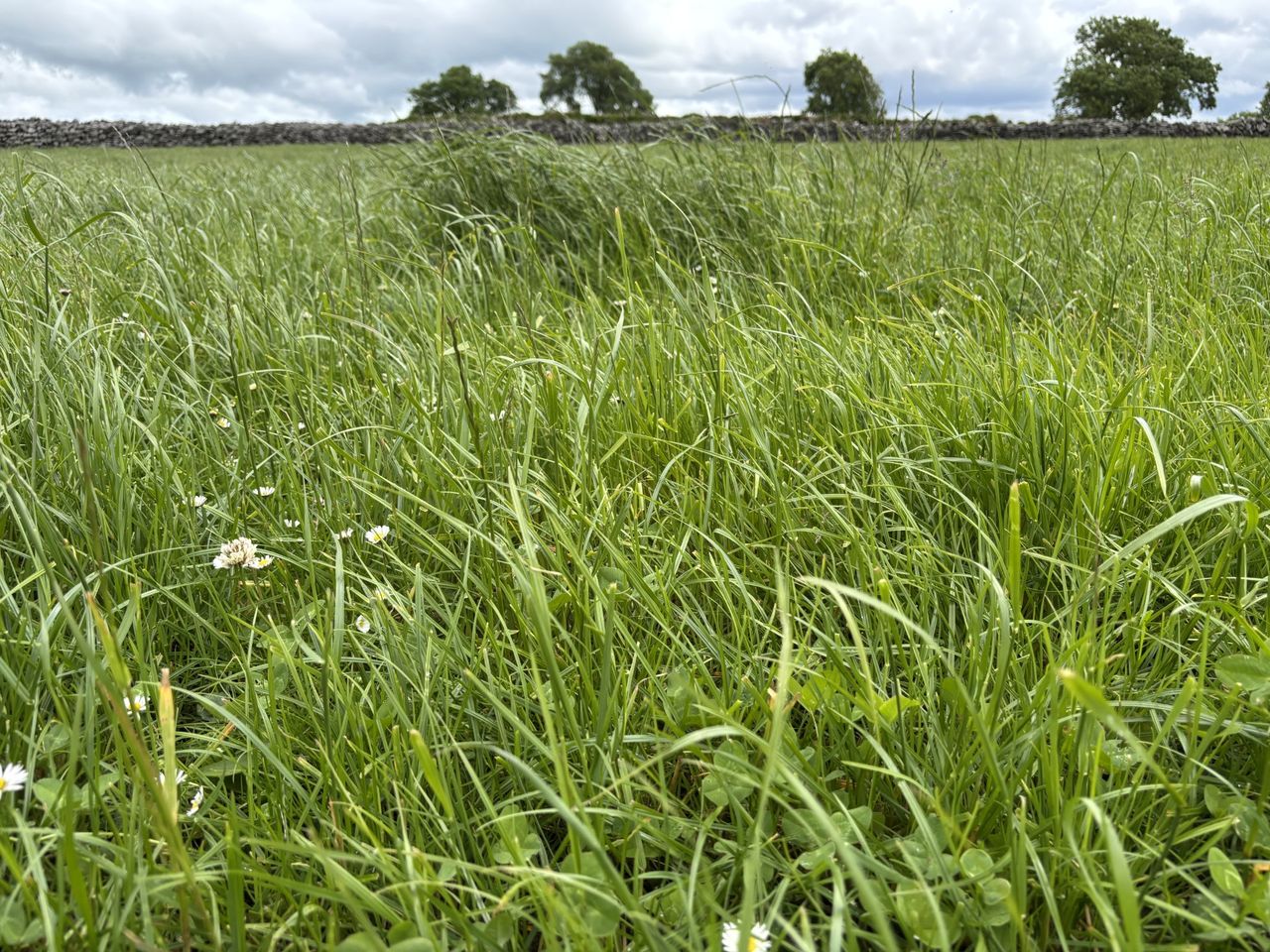
The reseeded grass had remained green and avoided withering, compared to older swards that were hitting dry matters of >25% and withering away with the heat.
Grass utilisation
Soil fertility plays a significant role, with pH closely monitored.
83% of the farm has a pH of >6.3, with 64% of fields having optimalpotassium (K) and 54% having optimal phosphorous (P).
White clover is an integral part of the sward with 73% of the farm having optimal sward clover content. The farm adjusts N in response to clover growth and area.
Grazing management plays a role in utilisation. The calves spend 36-48 hours in each paddock, and graze to 4cm.
Grazing infrastructure is essential for utilising grass.
Good roadways and water networks will reduce poaching and soil compaction in early stages of the year and enable grazing later in the shoulder of the year.
Ballyvadin's layout allows the demo farm to get nine rotations every year.
The farm took its first cut of 2026 on May 12, then got a second on June 23, with a target of 75% dry matter digestibility (DMD).
Training calves to grass
The calves' rumen is often not adapted to grazing at weaning time. Hence the calves are held indoors for up to two weeks post-breeding to allow rumen development.
The calves are fed ad-lib concentrates and are consuming 2kg of meal by weaning.
Ballyvadin Farm boosts the calves' solid intake by feeding small quantities of milk.
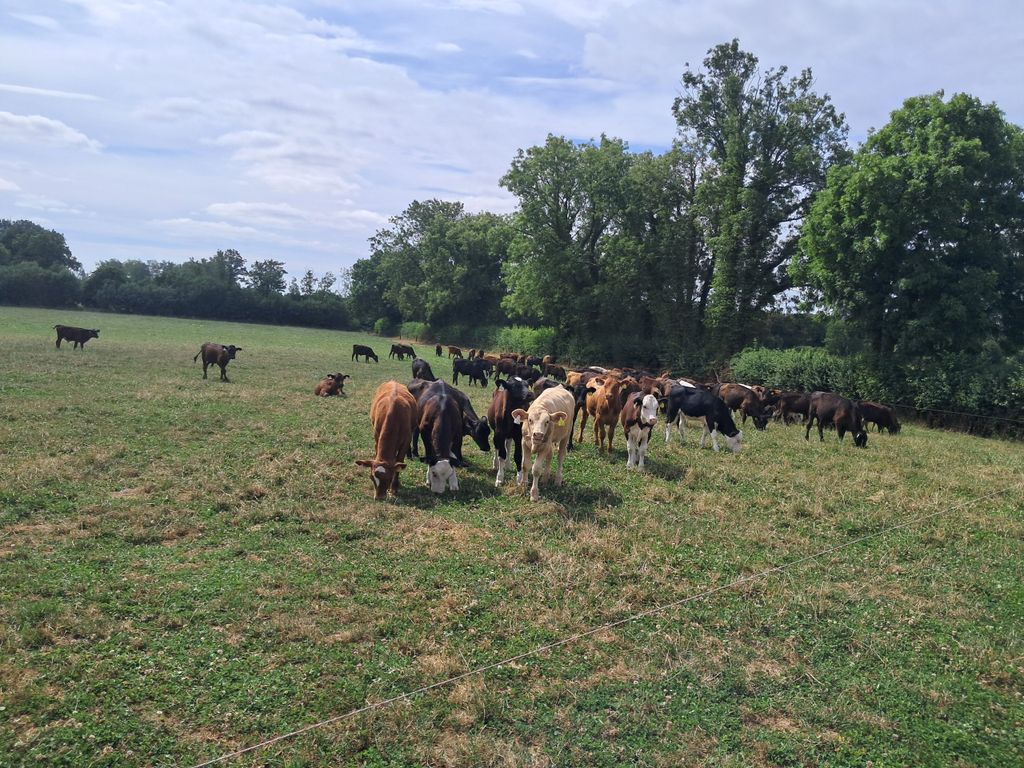
The delay in letting calves out to grass ensures that they are better suited to grazing and the farm sees higher utilisation rates.
The calves are ran in large groups of approximately 150 animals, with good cleanouts in paddocks evident on the open day.
The key take-aways from Ballyvadin are that grazing is the cheapest form of feed on dairy-beef platforms, and increasing days at grass will reduce costs substantially.
Good grass quality and high quality silage are essential for reducing age at slaughter, and increasing soil fertility will boost grass quality and silage yields.
Ballyvadin Farm is the result of a collaboration by Teagasc, Dawn Meats and Shinagh Estates and has been operating since 2022, with its first batch of calves purchased in 2023.
It is located outside Fethard, Co. Tipperary, on well drained land with a target annual grass growth of 13t DM/ha.