Sponsored
How gut worms could be affecting your milk cheque

Sponsored by

The main priority when it comes to gut worms is always youngstock; however, it can also affect mature dairy cows and ultimately impact your milk cheque.
At this time of the year, farmers will be busy looking out for symptoms of gut worms in calves at pasture, especially with the current damp, humid conditions.
Youngstock have no immunity built up against the roundworms Ostertagia and Cooperia, which are commonly found in our pastures.
Because they have no immunity, farmers often focus solely on them and forget about the impact gut worms have on the mature herd.
Impact of worms on the dairy herd
Despite mature animals having built up a level of immunity, the roundworms Ostertagia and Cooperia can continue to affect their feed intake.
With feed intake reduced, the production of milk solids often takes a hit and will be felt when the milk cheque rolls in.
If 10 cows, who were all producing 30L during the month of May, had a 0.2% drop in solids as a result of roundworms, the effect on the milk cheque (average April prices) would be as follows.
| Healthy herd | Worm-affected herd | |
|---|---|---|
| Milk supplied (L and kg) | 9,300L or 9,579kg | 9,300L or 9,579kg |
| Protein | ||
| Percentage | 3.6 | 3.4 |
| Kg | 345 | 326 |
| €7.049/kg of protein | €2,432 | €2,298 |
| Fat | ||
| Percentage | 4.5 | 4.3 |
| Kg | 431 | 411 |
| €4.197/kg of fat | €1,809 | €1,724 |
| Volume adjustment | €372 | €372 |
| A+B-C | €3,869 | €3,650 |
For those 10 cows, that is a difference of €219 in the monthly pay cheque.
That may not seem like much, but if they were down on production for the nine months of lactation, that figure would add up to €1,971 in the year, and can climb much higher if the burden spreads through the herd.
The costs do not stop there either, as Ostertagia is associated with lowered body condition.
This can quickly become costly through related effects such as lameness and infertility, which are both economically stressful on a dairy system.
Diagnosis
Faecal egg counts are generally the best way to diagnose an animal with worms.
However, considering mature milking cows typically have an immunity developed for worms, egg counts can be less accurate when estimating worm burdens.
Therefore it may be worthwhile measuring the Ostertagia antibodies present instead.
These antibodies can be found in both the animal's blood and milk, as they are produced in response to Ostertagia exposure.
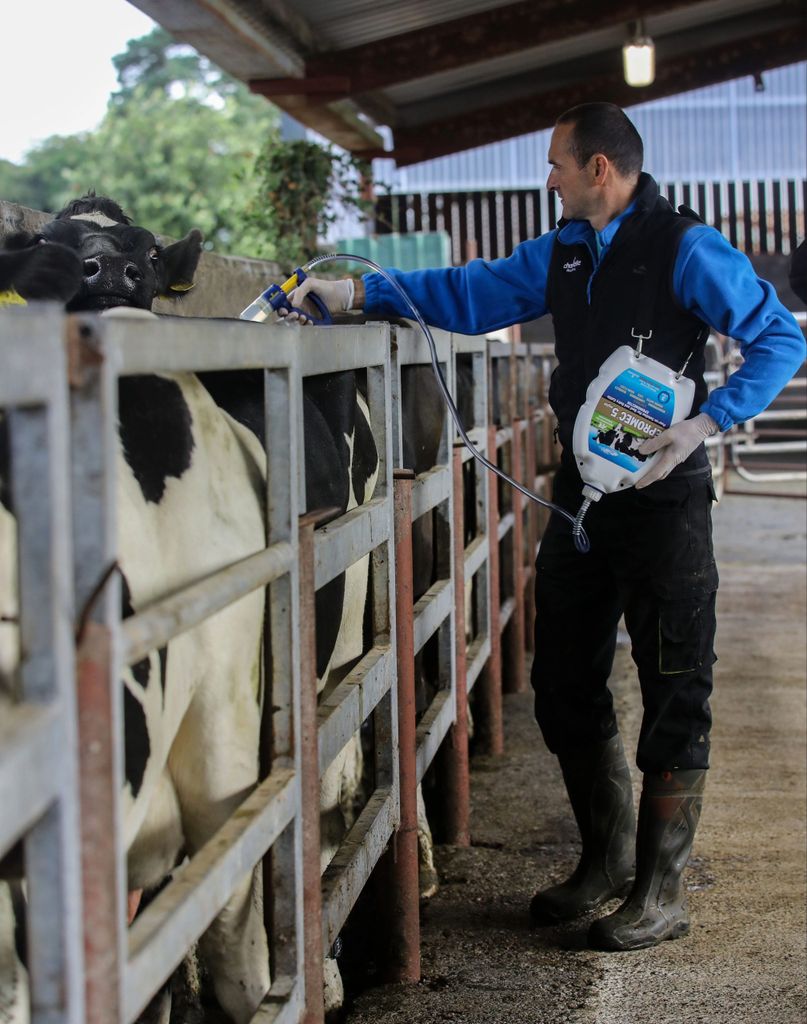
Because the antibodies are in the milk, a milk sample can be taken from the bulk tank and tested to assess the herd's worm burden.
If there are high levels of the Ostertagia antibodies in the tank, the herd is dealing with a worm burden, milk yields will have more than likely already dropped by 1-2kg/cow/day.
It is recommended to carry out these tests during mid-grazing and late grazing while worm burdens are at their peak.
Treatment
Farmers should consult their local vets to discuss the best treatment options.
Products made up of eprinomectin are the most common when it comes to treating gut worms in cows.
That is because eprinomectin is well recognised for offering a zero-milk withdrawal period, which allows farmers to keep milk in the tank while treating.
This allows farmers to keep selling milk fit for consumption, rather than further hindering the milk cheque.
This is critical for herds that are infested with worms in the mid-season while milk is flowing.
Products made up of eprinomectin are also efficient in treating issues such as lungworm and external parasites.
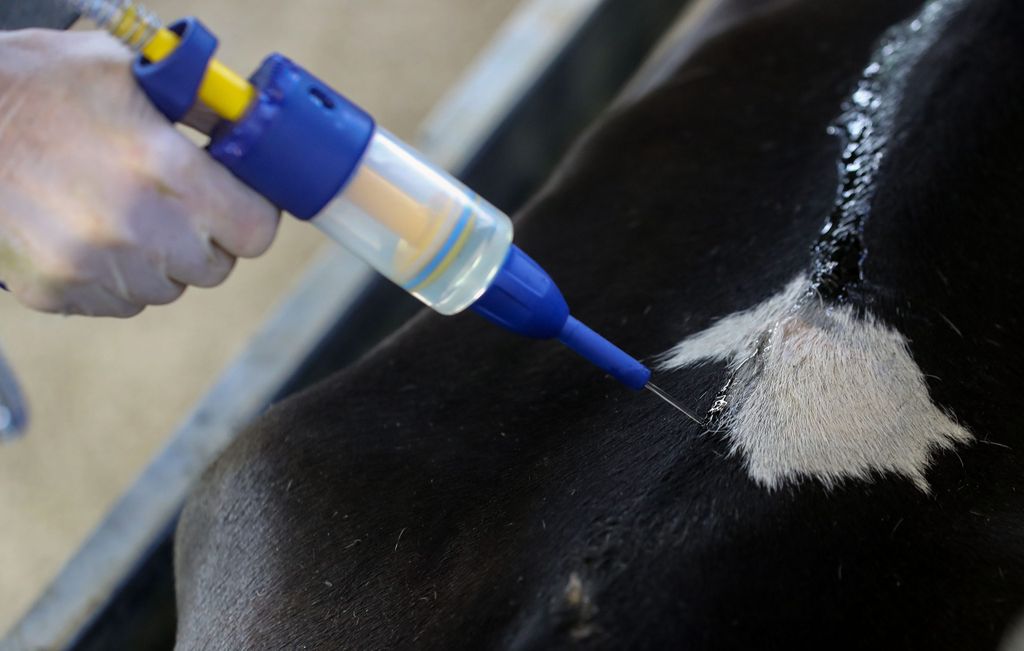
When considering treatment options, it is also advisable to go with an oil-based pour-on.
If we look at the weather over the last few weeks, we have gone from scorching conditions to heavy rainfall.
If the correct dosage of oil-based products is applied along the narrow strip of the cow's back, rainfall should not affect the success of the treatment.
Sponsored by