Global food prices highest since January 2024 – World Bank


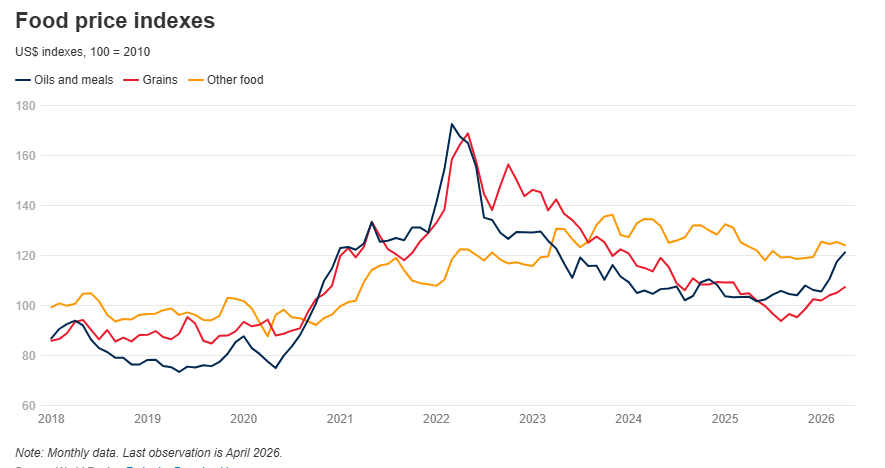
Global food prices in April rose to their highest level since January 2024, according to a new report from the World Bank.
The report found that the food price spike followed “the near-total closure of the Strait of Hormuz after the Middle East conflict erupted in late February”.
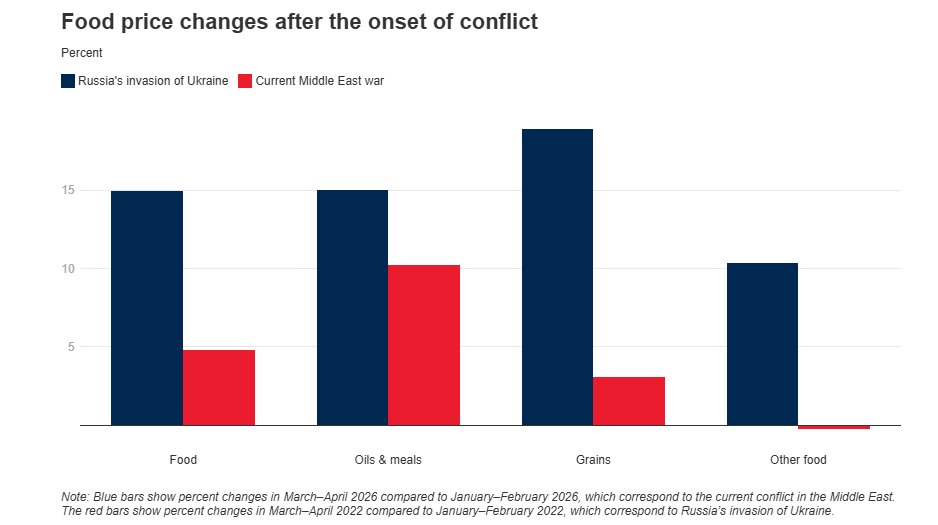
It said: “Over the two months after the conflict began, food prices rose 5% compared to the prior two months, driven primarily by oils and meals, which surged 10% due to higher crude oil prices and expanded biofuel mandates. Grain prices rose more modestly by 3%.
"Year-to-date through April, food prices are 2% above their level a year earlier.”
However, the study found that the food price response has been “far more contained than in early 2022”, when food prices rose 15% in the two-month window after Russia’s invasion of Ukraine.
According to the World Bank, the more muted food price response reflects the ample grain and oilseed supplies available, and the fact that northern hemisphere farmers had largely secured fertiliser for spring planting before hostilities began.
It also indicates "the nature of the current shock, which transmits mainly through higher input costs rather than through an immediate disruption of major food exports”.
“In 2025-26, global grain supply is forecast to reach a record high," the report said.
“Despite this buffer, grain prices rose by 5% in the first quarter of 2026 compared to the previous quarter, led by a 9% jump in wheat and a 4% rise in maize."
It said that, in in 2026–27, “grain production is projected to be lower than in the current season but remain the second-highest on record”.
Fertiliser
The World Bank Group’s fertiliser price index rose by more than 12% in 2026 Q1, marking the sixth increase over the past seven quarters.
“On a monthly basis, [fertiliser] prices in March 2026 reached their highest level since 2022," the report said.
“The recent surge in the index largely reflects the impact on exports of fertilisers and inputs from the closure of the Strait of Hormuz.
“Price increases have been most pronounced for urea, with more moderate gains for other fertiliser types.”
According to the report, the fertiliser price index is projected to increase by more than 30% in 2026, supported by higher input costs - particularly for nitrogen/phosphate-based fertilisers - and resilient demand.
“Prices are expected to ease in 2027 as exports recover and additional global supplies come online," it said.
However, the World Bank warned that risks to the price outlook "remain tilted to the upside".
This is due to the possibility of higher-than-expected energy prices, alongside further production and trade disruptions associated with prolonged constraints on shipping through the Strait of Hormuz, "as well as undetermined damage to production and export facilities of all related materials".