Fire crew in England rescues ram from concrete pipe

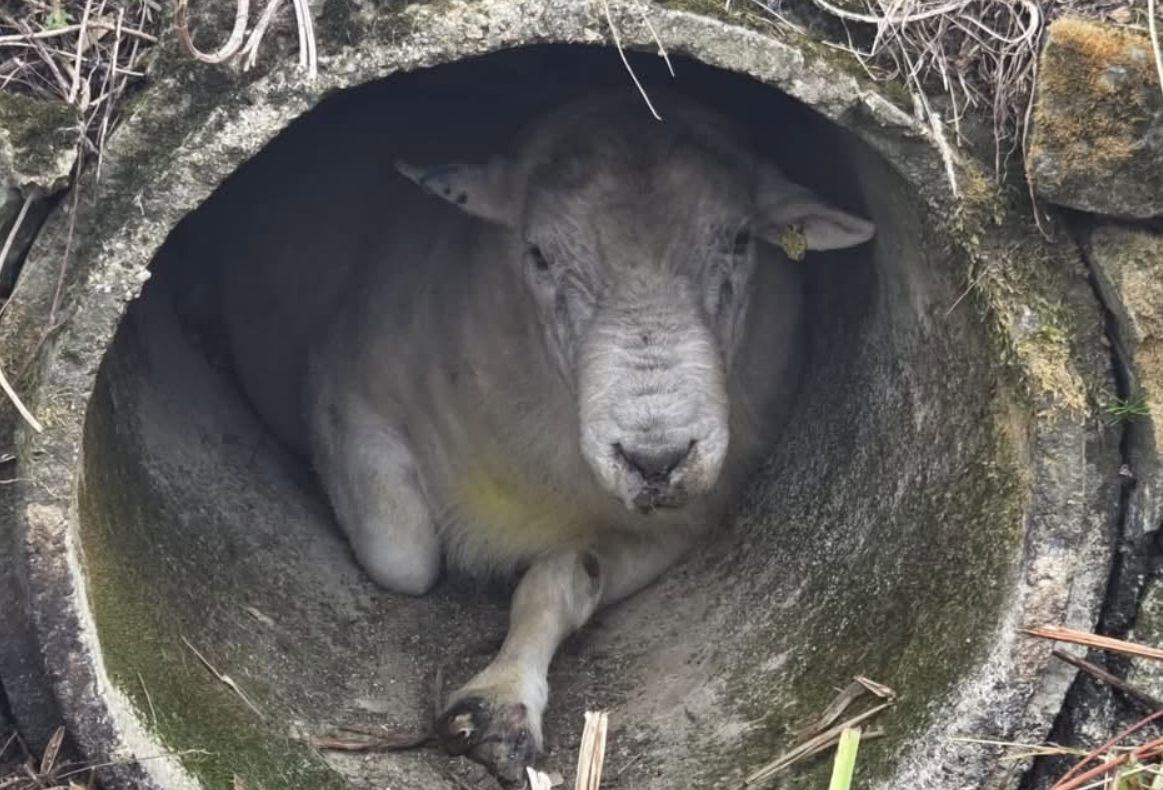
A fire crew in the South West of England had to "think outside the box" to rescue a ram that got stuck in a concrete pipe.
The incident - involving a 100kg ram named 'Rambo' - occurred in the area of Keinton Mandeville in Somerset.
A fire crew from nearby Somerton Fire Station responded to the reports of the trapped sheep.
According to a post on the Somerton Fire Station Facebook page, the fire crew had to improvise with the tools they had on hand to get the ram to safety.
Using a combination of chimney rods, a hearth sheet, and a general purpose (GP) line (a standard issue length of rope fire crews use for various purposes), they eventually got Rambo out of the pipe and back on his feet.
The rescue took place on September 13.
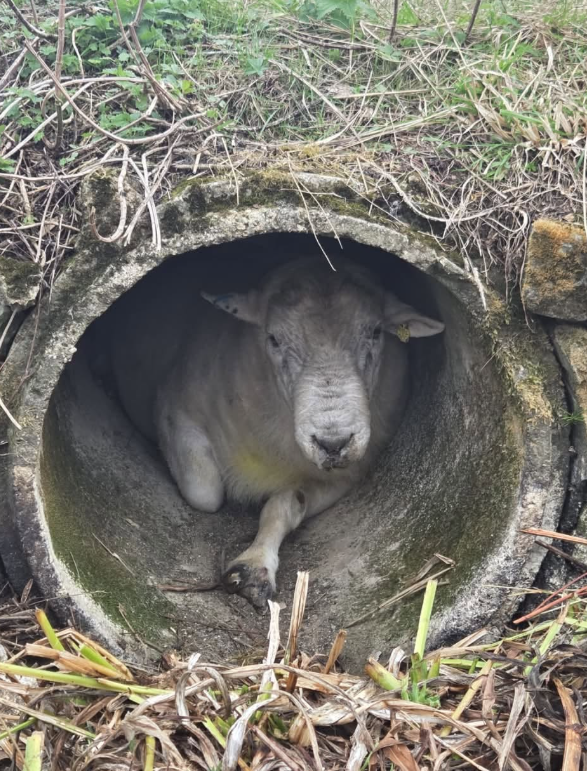
Somerton Fire Station said in the social media post on the day of the rescue: "This afternoon, the crew were alerted to reports of a ram that had become stuck inside a concrete pipe.
"On arrival, the Somerton crew found exactly that - a 100kg ram named Rambo firmly wedged inside the pipe," the post added.
"Due to the unique nature of the incident, the crew had to think outside the box and make use of a number of different pieces of equipment carried on the fire engine," it said.
"Using our chimney rods, the crew were able to feed a GP line around Rambo, while a hearth sheet was carefully positioned underneath him," the social media post explained.
"Once everything was safely in place, the line was pulled, allowing Rambo to slide along the sheet and out of the pipe. A happy Rambo was then left in the care of the farmers," it said.
Shed fire
Closer to home, earlier this month fire services in Co. Tipperary responded to a blaze in an agricultural shed on land farmed by horse breeding business Coolmore.
The shed was used by the business for composting material used for horse bedding.
The fire broke out on the evening of September 2, with two vehicles, plus a water tanker, attending the scene at around 8:20p.m, according to Tipperary County Council fire services.
In a statement to Agriland, Coolmore said the shed was used for composting purposes, and that the fire occurred after the composting materials "overheated as part of the natural composting process".
Coolmore said at the time that the farm "is assessing options to mitigate that risk".