EU agri-trade surplus up €3bn with 'notable' growth to several markets

A rise in exports of wheat and spirits saw the EU agri-food sector expand its trade surplus in the first seven months of 2026 by almost €3 billion.
That is according to the latest EU agri-food trade report published by the European Commission.
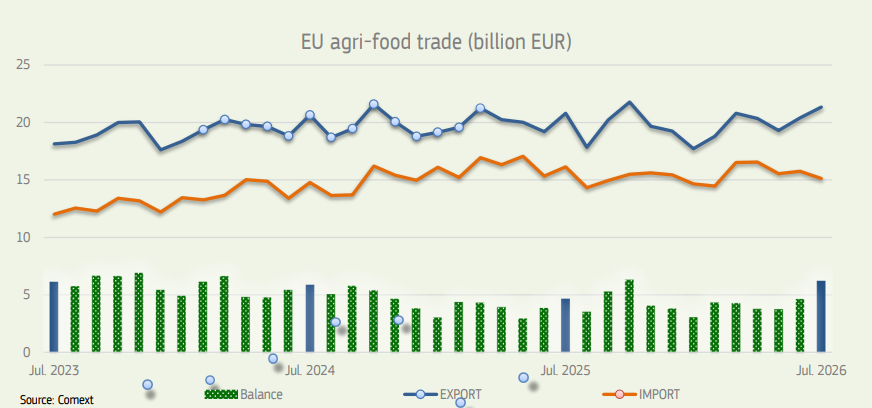
A statement from the commission said: “With a cumulative surplus of €30.1 billion, the balance is €2.9 billion higher than for the same period last year.
“There was notable growth in the value of exports of EU agri-foods to several countries recorded between January and July.
“Exports to Egypt increased by 22%, driven mainly by wheat; exports to Ukraine rose by 10%, with the largest increase in spirits; and those to Turkiye by 7%, driven by veal and beef.”
It also found that exports of other animal products increased by €549 million, about 11%, while spirits and liqueurs rose by €470 million.
Among product categories, exports of coffee, tea, cocoa and spices fell by €1.3 billion (-16%), while pigmeat and olives and olive oil also recorded significant decreases.

Exports of other animal products increased by €549 million (+11%), while spirits and liqueurs rose by €470 million (+10%).
Since January, cumulative exports reached €138.7 billion, 1% below last year (- EUR 1.6. billion), mostly due to reduced exports of cocoa and pigmeat.
Exports to the Middle East have been impacted by blockages in the Strait of Hormuz from March, with exports to the United ArabEmirates down by 23% or €437 million.
However, the latest report noted that from June 2026, export figures were near average levels.
Imports
Looking at goods travelling into the EU, cumulative imports reached €108.6 billion, down €4.5 billion (4%) year-on-year.
Imports from Côte d’Ivoire fell by €1.2 billion (-21%), while imports from Cameroon and Nigeria both decreased by 46%.
By contrast, imports from Brazil increased by €528 million (+5%), mainly due to higher soya bean volumes, while imports from Argentina rose by €240 million (+8%), driven by sunflower seeds.
Among product categories, cereal imports declined by €609 million (-11%) and dairy imports by €308 million (-19%).
By contrast, imports of fruit and nuts increased by €587 million (+3%), while imports of non-edible products for technical use and margarine and other oils and fats also recorded increases.