Ensuring the correct BCS is achieved this winter

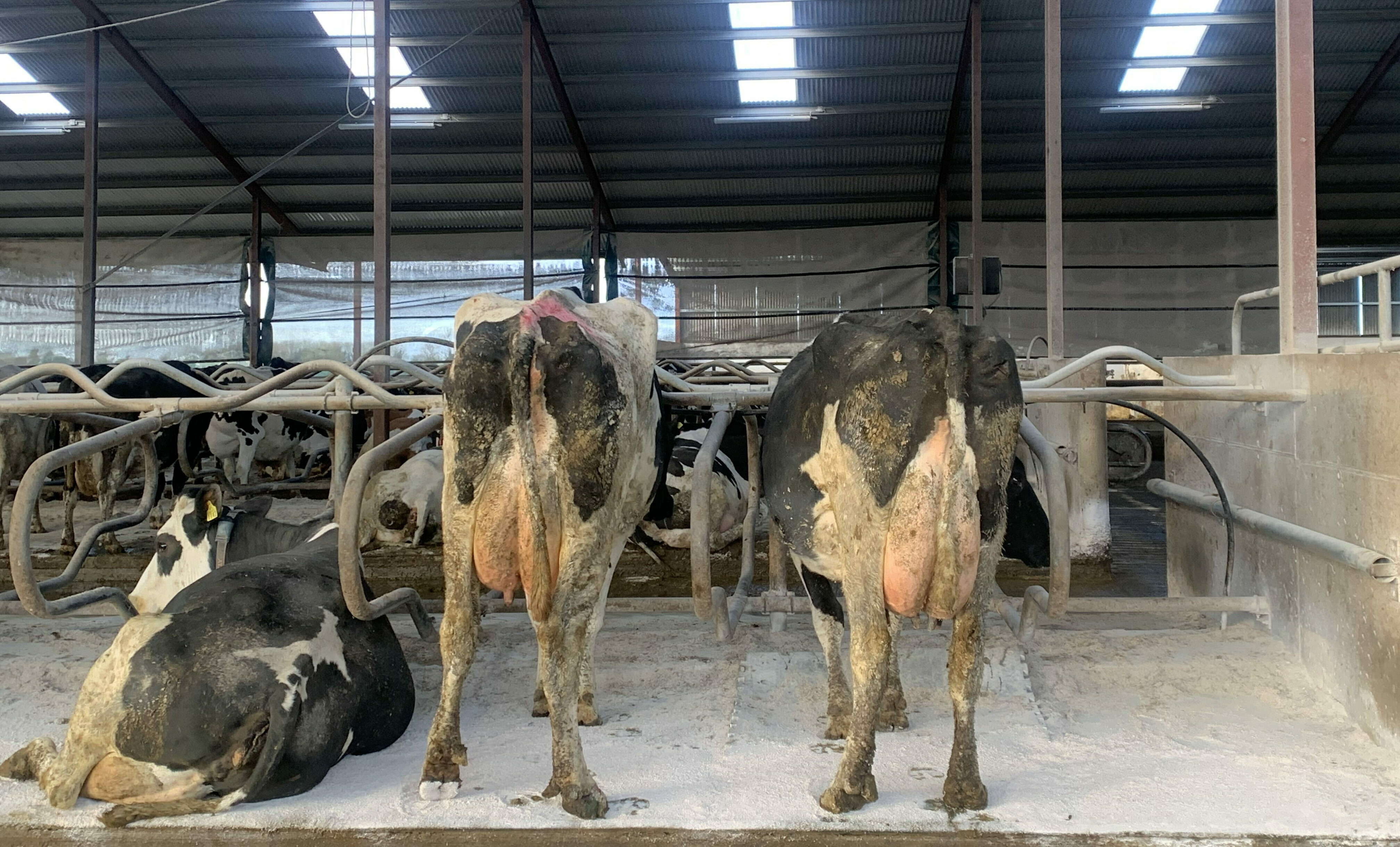
Body condition scoring (BCS) the herd now and throughout the winter is crucial for a successful dry period and to ensure calving goes smoothly next spring.
Given the fact that it is only eight short weeks away from February 1, the start of the calving season for many, farmers will have already begun to dry off thin cows, early calvers, and first lactation heifers.
Rather than becoming complacent now as the year winds down, farmers need to ensure they are picking out any under-conditioned cows to be dried-off, ensuring they get enough time to recover.
Decisions should be based on a cow-to-cow basis, considering their BCS, production performance, and any problems such as climbing somatic cell counts (SCC) rather than going solely off the cow's calving date.
BCS is always a good indicator of long-term energy balance, which is the difference between feed energy and that used for milk and maintenance.
Remember, when assessing a cow’s BCS, you should use your hand to check the fat cover over the loin, plates, and pin bones of the pelvis and tail areas.
Try to have the same person assessing all the cows in a bid to remain consistent, as every person scores cows differently.
Managing BCS
Every farmer formulates their own diet, but good quality silage is the foundation of most Irish diets, acting as a cheap feed source that still helps cows achieve adequate BCS gains over the winter, and can even provide the nutritional requirements of dry cows on its own.
With animals housed, the first thing farmers should be doing is testing their silage.
For the sake of the few quid it costs to get silage tested, it is well worth it, considering the role silage plays in the diet.
Knowing what quality your silage is will help you formulate a diet based off what is available to you.
Decent silage in or around the 68-70% dry matter digestibility (DMD) is often fed as a maintenance diet on most farms, while high quality silage with a DMD of 75% or higher is fed to under-conditioned animals or cows that are still milking.
When formulating a diet, it is important to remember you will be looking for cows to be calving down at a BCS of 3.25 in 60-75 days' time.
It is acceptable to have a range of 0.25 units above or below this point.
Problems may arise when you move the the 0.5 mark or beyond, with cows that are too thin or too fat having difficult calving's and other problems such as metabolic issues.
Overweight cows will need their diets restricted over the next few weeks, while thin cows may need to be fed concentrates on top of silage to build nutritional gaps.
The effects of silage quality on BCS change over an eight-week dry period and the supplementary meal required to achieve a 0.5 BCS gain as per Teagasc, is as follows:
| Silage DMD | 62 DMD | 68 DMD | 72 DMD |
|---|---|---|---|
| 8-week dry period BCS change | -0.16 | +0.20 | +0.50 |
| Extra meal required to gain 0.5 BCS | 3 kg | 1-1.5 kg | 0 |
Correcting BCS over the next month is important to ensure the cows diet is not overly restricted coming into calving, as this may lead to its own issues, such as negative energy balances.