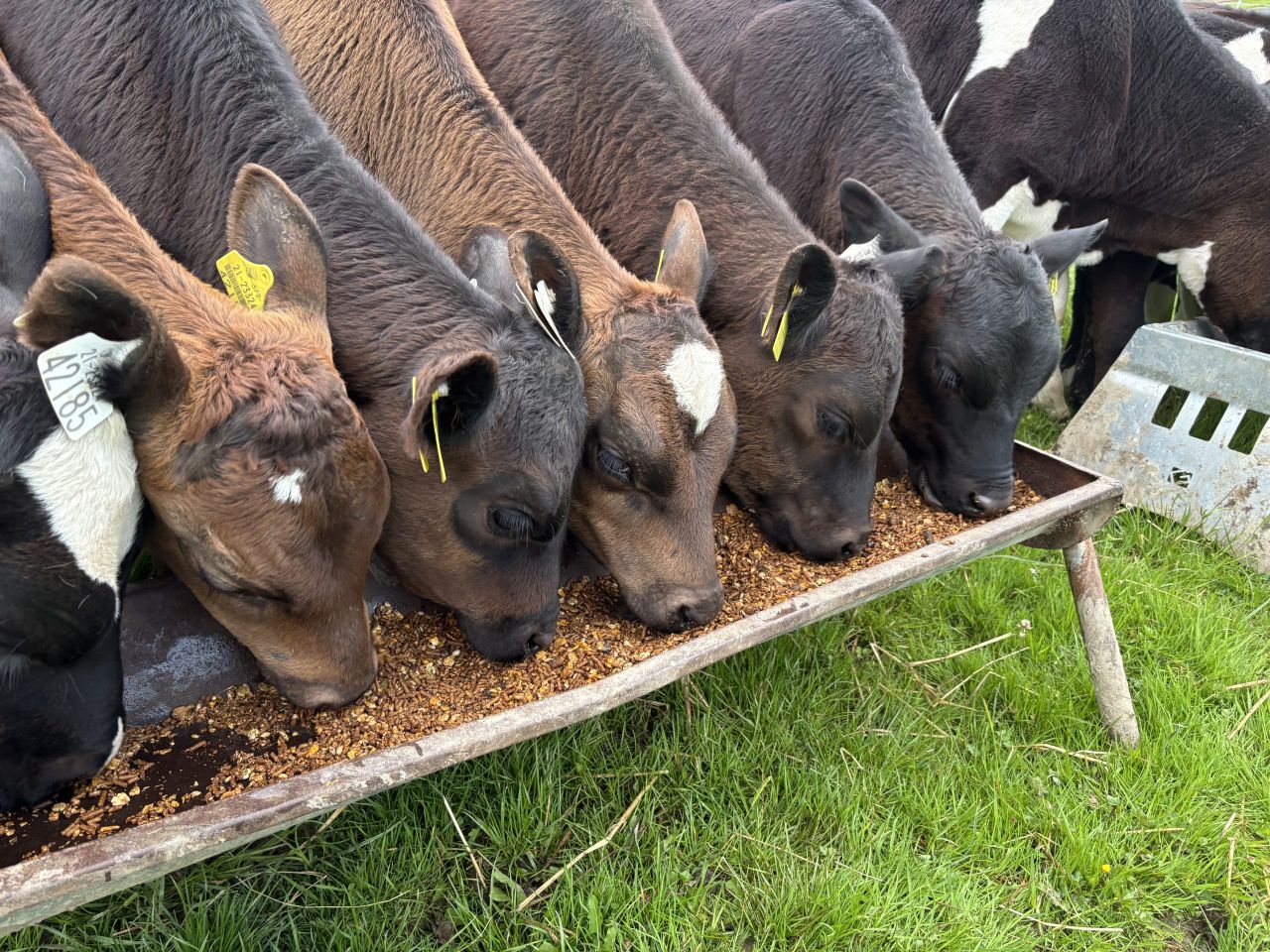
Controlling parasites in calves at pasture


With rain forecast once again after the warm weekend, parasites will be thriving and putting young calves at risk.
Parasites such as gut worms become a real issue when the weather is damp and warm, setting any calves that contract them back.
That is why parasite control at this time of the year for replacement heifer calves is crucial for your next generation of milkers.
If control is inadequate and calves get hit with worms, the life cycle of the parasite can be completed in just three to four weeks which is when you will notice scour, poor growth rates, and reduced production.
Stomach and gut worm problems can be expected to increase during the grazing season.
However, lungworm issues are less predictable, as they can occur at any stage of the grazing season.
If there are any signs of coughing and lungworm is suspected, the group should be treated immediately. so close attention needs to be paid to calves that are out at grass for the first time.
Parasites
It may be worth carrying out a worm egg count six to eight weeks post-turnout in a bid to indicate whether the calves need treatment or not.
Egg counts are usually low in the early season, but counts above 200 along with poor live weight gains are sure signs of clinical disease.
Coccidia is also something to be mindful of, as it can be an issue for calves early in the grazing season.
Faecal samples are generally an effective way of distinguishing what is affecting your calves and will help with treating them accordingly.
Grazing management is the most effective way of reducing the spread and impact of worms on your farm throughout the summer months.
Mapping out low, medium or high-risk paddocks for worm egg contamination might be a way to control the spread and plan your grazing.
The criteria for ranking the fields could be based on the following questions:
- Has there been paddocks with lungworm outbreak in recent years?
- Is there a reseeded paddock available for young stock?
- Are there waterlogged fields that are a risk to liver fluke?
- Has it been a dry summer where worm larvae is less likely to survive?
Pastures that were grazed by calves in the previous season are likely to be contaminated, so grazing calves on these high-risk pastures should be avoided.
Letting your milking cows or older stock graze these pastures first is advisable, as they have more immunity to worms and rarely show signs of stomach or gut worms.
Calves are more likely to develop clinical signs after picking up severe worm infections.
However, lungworm can still pose a threat to cattle if they graze heavily contaminated pastures or have not yet developed strong immunity to the parasite.
Good grazing management will limit the need for wormer treatment throughout the season, though practical decisions such as grass cover, available water, and silage fields need to be considered in the planning.
Targets
Calves getting a setback through parasites can really bring them behind their weight targets and so they should be separated and allocated more feed to give them a chance to catch up.
Underweight heifers will be less likely to go in calf or may end up calving later in the calving season. Even if they do go in calf, they are more likely to have poor production, reproduction, and longevity in the herd.
This is why it is vital farmers aim to have heifers calving down at two years-of-age, at 90% their predicted mature bodyweight.
Having heifers at 60% of their mature weight at breeding is crucial. In order to achieve this, heifer targets have to be monitored throughout rearing.
Weighing heifers with a scales or a weigh band is the best way of keeping up with their performance, and may keep track or indicate parasite issues early if heifers are slipping underweight.
At this stage, replacement calves born in February should be over 20% of their mature cow weight, aiming for 30% at six months of age.
Preferential treatment should be given to calves behind target by running a separate group and allocating this group more meal.