Commission to suspend tariffs in bid to cut fertiliser costs


The European Commission has today (Wednesday, January 7) announced proposed measures in a bid to reduce fertiliser prices for farmers.
The announcement follows an extraordinary meeting of EU ministers for agriculture in Brussels hosted by the commission and Minister Maria Panayiotou for the Cypriot presidency of the EU Council.
The meeting was attended by EU Trade Commissioner Maros Sefcovic, Agriculture and Food Commissioner Christophe Hansen and Commissioner for Health and Animal Welfare Oliver Varhelyi.
Fertiliser
EU Trade Commissioner Maros Sefcovic said he briefed ministers on the commission's work to lower fertiliser costs and support the domestic fertiliser industry.
"Keeping fertilisers affordable is vital for farmers incomes and Europe's food security, which requires both diversifying supply sources and reinforcing our own production capacity.
"While prices have stabilised, fertiliser costs remain around 60% higher than in 2020 and that is simply not sustainable," he told a press conference.
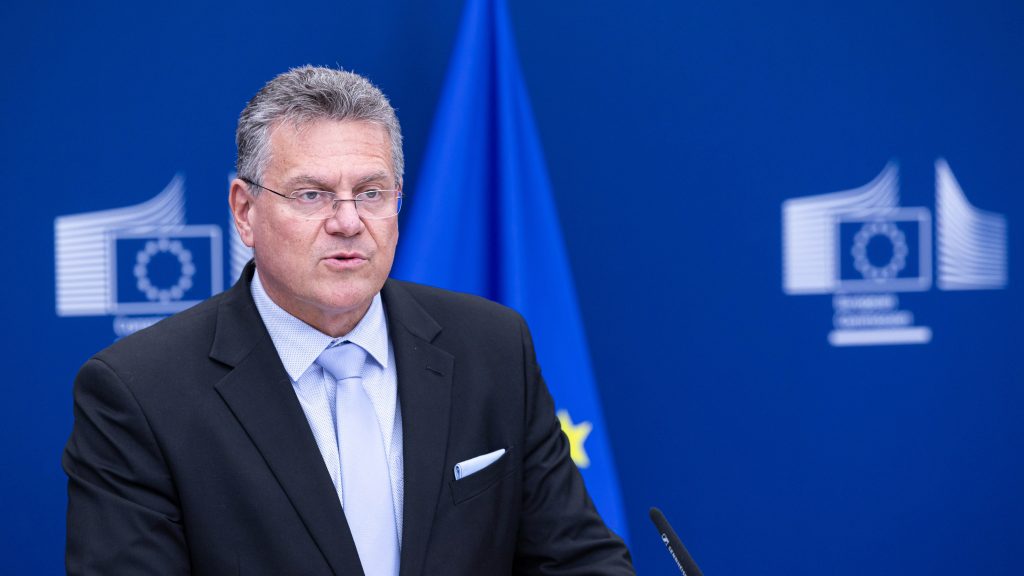
Commissioner Sefcovic said the commission will propose to temporarily suspend the remaining most favoured nation (MFN) tariffs on ammonia (6.5%), urea (5.5%) and where necessary, other fertilisers.
"Robust safeguards will ensure that this relief is well targeted and that its benefits flow directly to farmers. This measure can enter into force swiftly in 2026," he said.
The commissioner said the measure "would broadly offset the costs" linked to the the Carbon Border Adjustment Mechanism (CBAM) which took effect from the start of this year.
"We will also issue guidance on a new measure proposed by the commissionlast December and which needs to be approved by the co-legislators that would allow for a temporary suspension of CBAM on certain goods, such as fertilisers," he added.
The timeframe for this to be implemented will depend on agreement from the European Parliament and the Council of the EU.
Prices
Commissioner Sefcovic said the commission will continue to monitor fertiliser prices closely, including through the EU fertilisers market observatory.
The EU Commission will also present the fertilisers action plan in the second quarter of this year.
"The focus will be on greater market transparency and on scaling up recycled nutrients and alternative inputs supported by regulatory adjustment where needed," Sefcovic added.
The move follows calls from numerous member states, including Ireland, for the commission to exempt carbon tariffs on imported fertilisers.
According to the Central Statistics Office (CSO), fertiliser costs for Irish farmers have rose by 15% year-on-year in 2025 and Teagasc estimates that CBAM will increase fertiliser costs for Irish grassland and tillage farmers by a further 10% in 2026.