Can you have a dairy farming career without your own farm?
Teagasc has been highlighting the paths into agriculture for those who may not come from a family farm background or who may not be set to inherit any land.
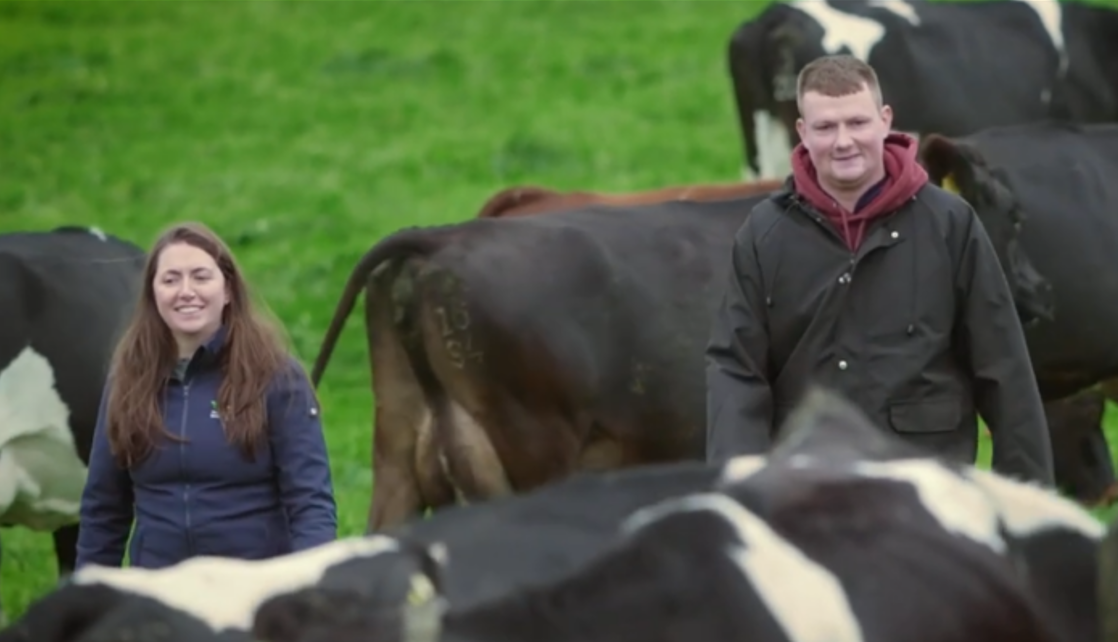
Jason Melbourne, a native of Tramore, Co. Waterford, is a prime example of how structured partnerships can open doors to a full-time career in dairy farming.
Growing up alongside his uncle’s dairy farm, from where he purchased his first heifer calf when he was 11-years-old, Jason always knew he wanted to farm.
After completing his Leaving Certificate, Jason attended Gurteen College for two years before undertaking the Level 7 Professional Dairy Farm Management course at Moorepark, Co. Cork.
With no family farm to inherit, he set his sights on a management role or partnership.
“I wasn’t going to get a farm, so I wanted to be involved with some kind of arrangement," he explained.
Through his local Teagasc office, a connection was made with a dairy farmer seeking to enter a partnership arrangement.
In 2021, he entered a two-way partnership, milking 140 cows.
Two years later, another partnership was formed with a neighbouring farmer, allowing for the formation of a three-way partnership now milking 320 cows on a 109ha milking platform, and operating a profit-sharing arrangement.
"There was no investment required from myself, no capital or that kind of thing. It was just clean and very simple," Jason explained.
"The arrangement was a salary for each of us for our own work and then at the end of the year we'd split up the profits."
This split was 80% to the farm owner and 20% to Jason in the first partnership.
The benefits of dairy farming partnership
Among the benefits outlined as part of the partnership is that each partner only works every third weekend; one day off per week is also facilitated during busy times of the year such as calving.
For any kind of arrangement or partnership to succeed, Jason added, it has to be a win-win for everyone.
Without buy-in from all involved, the partnership structure is unlikely to work, according to Teagasc.
As to the benefits of partnership arrangements, Jason outlined that he sees them as an area of great potential for the next generation of farmers to enter farming, which he said is especially important giving the age profile of Irish dairy farmers.