Bluetongue cases confirmed across several more counties

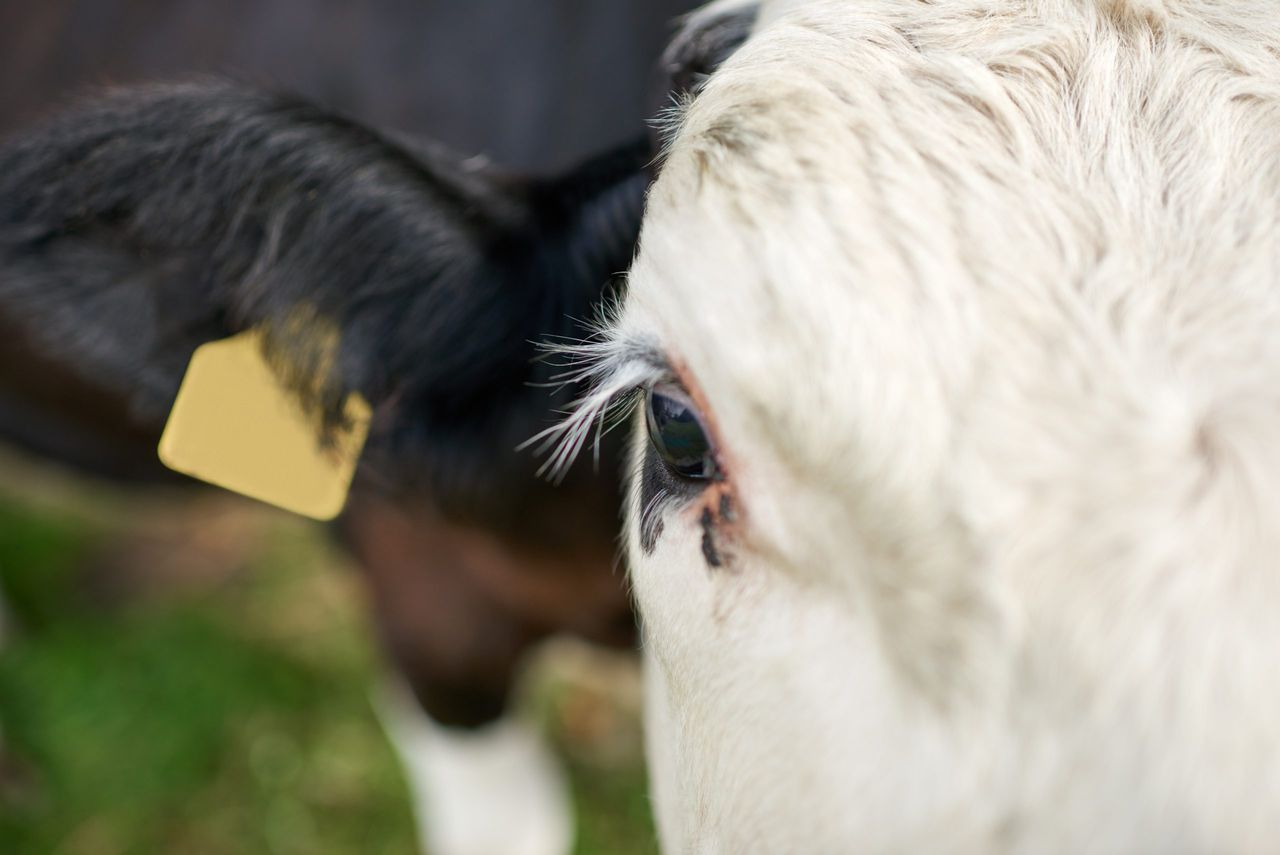
Bluetongue cases have been detected in four additional counties, the Department of Agriculture, Food and the Marine (DAFM) has confirmed.
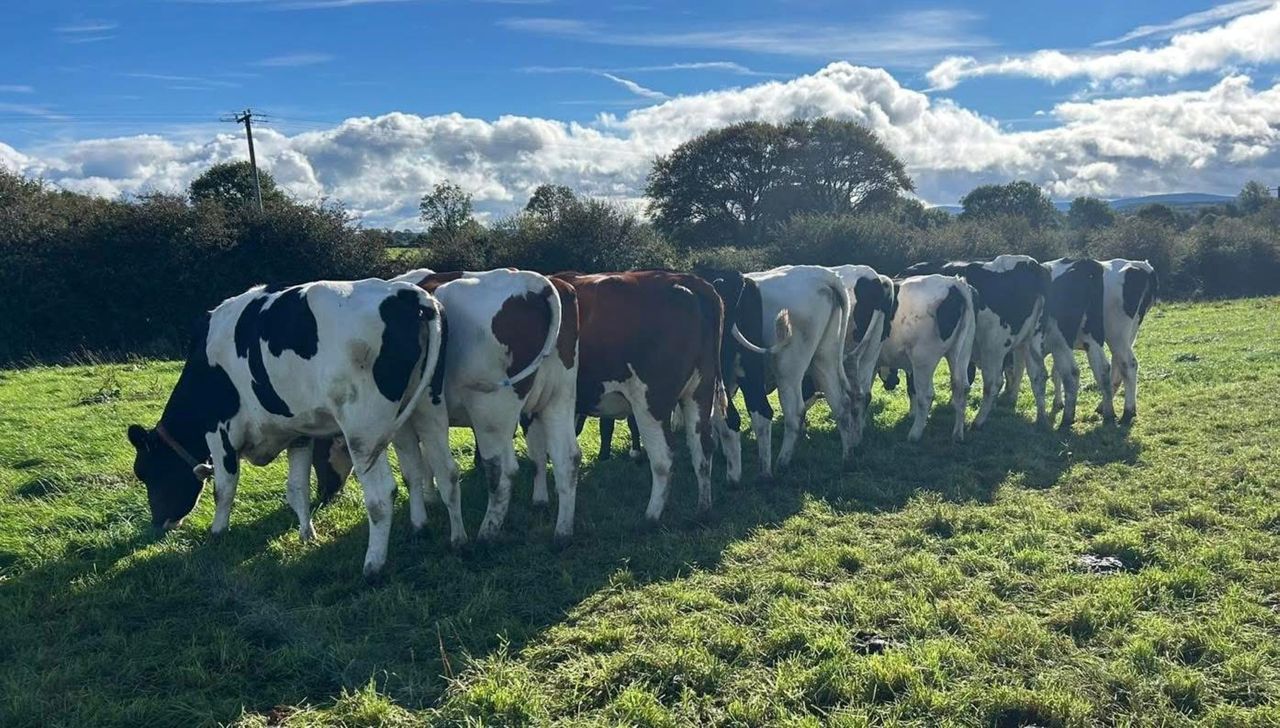
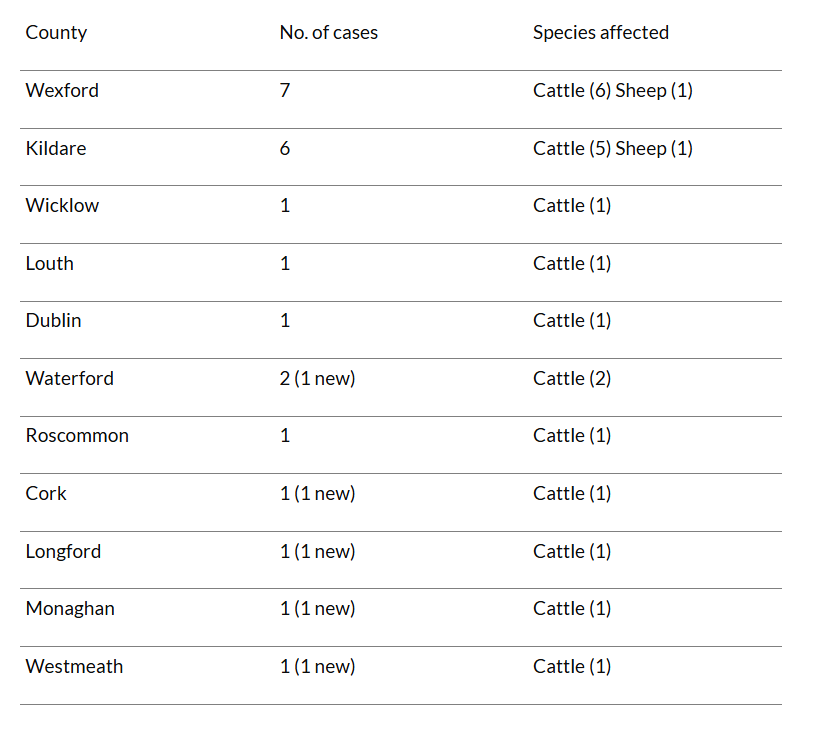
The cases, all of which involve cattle, have been detected in herds in Cork, Monaghan, Westmeath and Longford in recent days.
An update from the department also shows an additional case has been found in a cattle herd in Waterford.
The department did not specify if the animals involved in the new cases had displayed any clinical signs of infection.
This latest development means that bluetongue has now been detected across 11 counties.
The majority of the cases (21) have involved bovines, with 2 cases in sheep to date in Kildare and Wexford.
Bluetongue virus is spread by infected biting midges, many of which are found throughout the island of Ireland.
Transmission of bluetongue primarily occurs when biting midges feed off the blood of an infected animal and then spread the virus to other uninfected animals they bite.
Midge activity levels depend on average temperatures, while wind speed and direction can also affect how far midges can travel and could potentially facilitate the spread of disease.
Infected pregnant animals can also pass the virus to their unborn offspring in the womb, who can be a source of infection when they are born.
The virus can also be spread through germinal products such as semen and embryos, and biological products such as blood.
Bluetongue
The department said that farmers, veterinary practitioners, and other relevant stakeholders should remain vigilant for bluetongue transmission.
Where a case of the virus is suspected, farmers are advised to isolate the animal(s) indoors immediately and report the case to DAFM.
To report a suspect case, contact your local regional veterinary office (RVO) from 9:00a.m-5:00p.m.
Outside of office hours, the National Disease Emergency Hotline can be contacted on (01) 492 8026. This line operates every day of the year.
The department has said that vaccination can reduce the impact and severity of the bluetongue virus on livestock.
Farmers are advised to discuss with the vet whether vaccination may be suitable for their herd or flock.
DAFM has reiterated that there are no public health risks associated with bluetongue as it does not affect human health or food safety meaning that "meat and dairy are safe to eat".
UK cases
Meanwhile, the Department for Environment, Food & Rural Affairs (Defra) has confirmed 2,878 cases of bluetongue serotype 3 (BTV-3) or unspecified serotype have been confirmed in the UK in the 2026 to 2027 bluetongue season.
A case is defined as a premises on which bluetongue has been confirmed, based on risk and following laboratory or clinical diagnosis.
As of October 6, 2,371 cases were detected in England, 461 in Wales and 46 in Scotland.
No cases of the virus have yet been detected in Northern Ireland.