AGCO warns gas shortages could impact European production

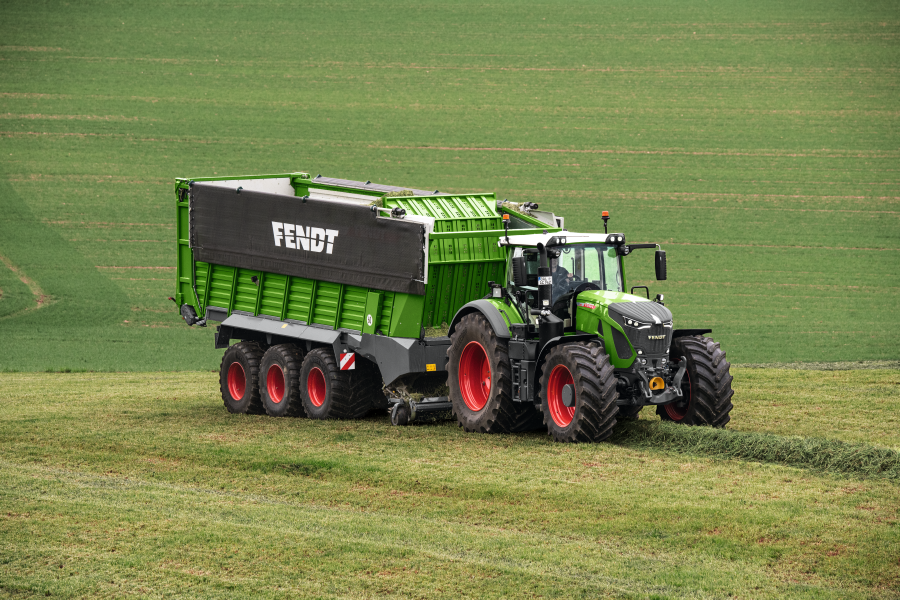
Potential natural gas and other energy shortages across Europe could disrupt AGCO's production by limiting plant operations and interrupt the supply of critical parts and components, it has warned.
In an update on its second-quarter results, AGCO - whose stable of brands includes Fendt, Massey Ferguson, PTx, and Valtra - outlined that it had experienced "a significant shift and mixed market dynamics" so far this year.
According to AGCO, it saw a 14% drop year-on-year in operating income for the second quarter (Q2) of 2026, with sales in Europe proving slow.
Although it reported $140.7 million in operating income for the quarter, AGCO CEO and chair, Eric Hansotia, said sales in Europe and Latin America "progressed below our expectations".
However, he also praised the performance of AGCO brands, which he said had gained "market share in key regions", including the Fendt brand performance in North America.
Market demand
AGCO highlighted that its western Europe industry retail tractor sales were 3% higher in the first six months of 2026 than the same time period for 2025.
According to the group, this was due to strong growth in the UK, Scandinavia, and Germany.
However, Hansotia described industry demand in general as "soft" across multiple markets.
Net sales in Europe/Middle East decreased by 4.7% in Q2 2026 compared to Q2 2025, which AGCO blamed on a sales declines across "most European markets".
AGCO described income from operations in the second quarter of 2026 as "approximately flat" when compared to the same period in 2025, despite lower sales, resulting in an operating margin of 15%.
Hansotia said: "In North America, industry demand remains soft year-over-year, with continued readiness and higher horsepower equipment, as farmers defer larger capital purchases.
"In Western Europe, industry conditions were mixed, as input costs, demand, and capital allocation considerations influenced equipment purchases.
"Tractor demand showed relative stability year-to-date compared to prior year levels, but weakened during the second quarter."
In Brazil, industry demand remained "under pressure", according to Hansotia.
"Higher production costs, interest rates, higher credit availability and currency dynamics continue to impact demand, with the greatest effects seen in larger equipment categories," he said.
The launch of AGCO's mixed-fleet retrofit autonomy kit in Brazil has led to "very strong early customer feedback" and is extending automation into sugarcane, according to Hansotia.
European energy shortages
AGCO has outlined that potential natural gas shortages from ongoing conflicts in Ukraine and the Middle East could negatively impact its brand's production rates in Europe.
It detailed that these conflicts have "already driven increased volatility across global energy, logistics and input markets, leading to higher fuel, fertiliser, transportation and input costs, as well as general uncertainty for farmers".
According to AGCO, there is a potential for natural gas shortages, as well as shortages in other energy sources, throughout the continent "which could negatively impact our production in Europe both directly and through interrupting the supply of parts and components that we use".
"It is unclear how long these conditions will continue, or whether they will worsen, and what the ultimate impact on our performance will be," the group warned.
Weather
The group's CEO said lower sales and production volumes combined with higher input costs (including tariffs) had contributed to the last challenging quarter.
He also pointed to high temperatures and unstable weather patterns in key markets as another issue for AGCO.
"These factors are influencing crop development, yield expectations and ultimately farmers' decision making.
"While commodity prices have improved recently, farmers around the world have a heightened focus on maximising net farm income.
"This environment is increasing demand for solutions that help manage costs, improve efficiency and protect yields," he said.
Hansotia noted that the "double-digit increases on inputs like fuel and fertiliser pricing" that farmers have experienced had not helped the group.
"It is unlikely that farmers will see meaningful relief on these input costs in the near term, which will likely result in many farmers staying conservative on their spending applying less fertiliser, and that increases my optimism for 2027," he added.
But in contrast AGCO has updated its forecast for Brazil from 5% below 2025 levels to 5-10% below.
Despite the current challenging conditions, it views Brazil as "one of the world's most attractive long-term agricultural markets, supported by expanding crop production, rising global food demand, and favourable long-term fundamentals".
Artificial intelligence
According to the group's CEO, Latin America - in particular Argentina - "continues to be a proving ground" for AGCO's artificial intelligence (AI)-enabled planting and sprayer technology.
He said on the factory floor, "AI-based vision and inspection and our Fendt transmission and tractor plants in Germany are lifting quality and throughput".
"In the field, AI-enabled tools and customer and dealer support are reducing downtime," Hansotia added.
The AGCO CEO said the company is deploying tools "responsibly with human oversight", with the aim of applying AI "where it drives both efficiency and growth".