Advice on feeding protein and minerals to sucklers pre-calving

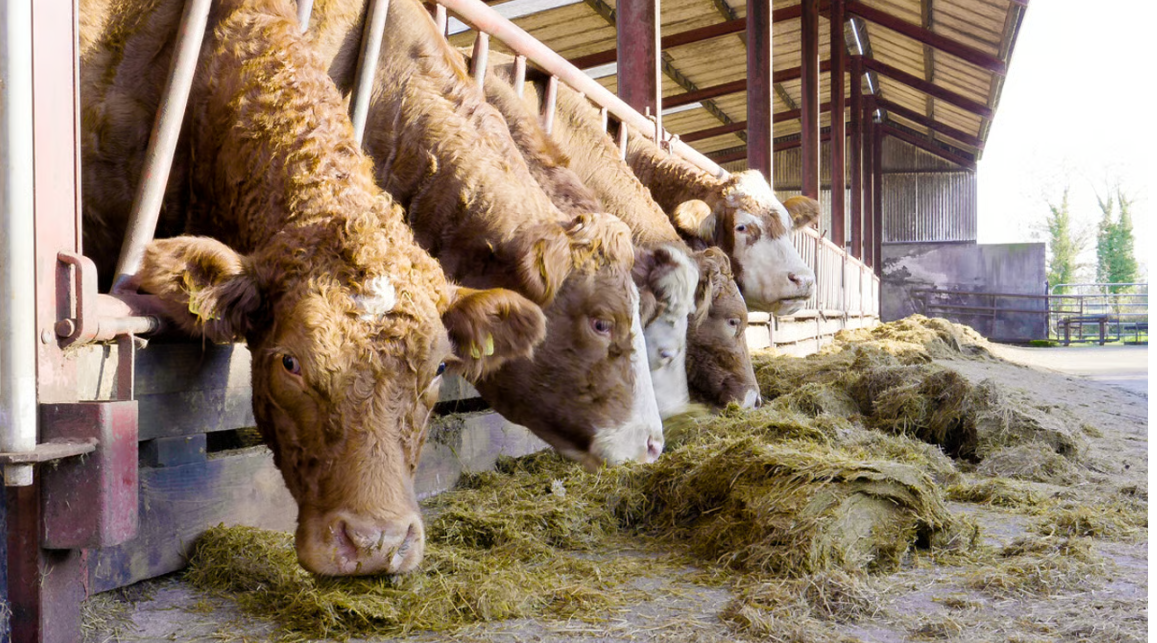
The importance of ensuring in-calf sucklers have access to sufficient protein and minerals in feed was highlighted in a recent Teagasc webinar.
Speaking on the Future Beef webinar which took place on Tuesday night, January 6, Teagasc's Prof. David Kenny gave suckler farmers advice and tips on nutrition for spring-calving sucklers.
He said that 80% of the calf birthweight is in the last three months of gestation and noted this is the period spring-calving suckler herds are in at the moment.
Teagasc's James Mullane noted that silage quality amongst the Future Beef farms is about 3% higher in terms of dry matter digestibility (DMD) this year versus last year.
Prof. Kenny said that generally speaking, suckler cows are in reasonably good condition on farms this year and that cows with a better body condition score (BCS) are in a much better position to be able to deal with shortcomings in their diet than cows that are thin leading up to the late stages of pregnancy.
He highlighted that sucklers being fed on a lower-protein content silage could be offered a small amount of a high protein content concentrate.
Prof. Kenny said: "Certainly, soya bean is top of the range when it comes to amino acids and that's essentially what the cow requires when she's synthesising that colostrum which is rich in immunoglobins and amino acids."
According to the Teagasc representative, the amount of soya bean meal required will depend on the protein content of the silage that the cow is being fed but, with a low protein silage, 700g-1kg for two weeks would be sufficient.
He added that farmers will see less of a response to increased protein in the diet with a cow that is already in good condition.
Dennis Howard from Munster Bovine discussed mineral deficiencies often seen in suckler cows in advance of calving.
The table below gives guideline values of what suckler farmers should be looking for in a good pre-calving mineral:
| Ingredient | Amount on label |
|---|---|
| Macro-minerals | % |
| Magnesium | 17-20% |
| Calcium | less than 2% |
| Phosphorus | 4.5% |
| Sodium | 15% |
| Micro-Minerals | mg/kg |
| Copper | 2,000-4,000 |
| Cobalt | 50-100 |
| Iodine | 200-600 |
| Manganese | 3,350-4,150 |
| Selenium | 40-60 |
| Zinc | 3,350-6,000 |
| Vitamins | iu |
| Vitamin A | >600,000 |
| Vitamin D3 | >120,000 |
| Vitamin E | >5,000 |
Howard said: "You rarely see actual cases of milk fever in suckler cows, but that's not to say that they can't be low in calcium."
The Munster Bovine representative noted that if suckler cows are low in calcium, they can be slower to calve and also it can effect their cleanings.
He continued: "The other two big ones you might see in suckler herds is, one, if they're a bit low in iodine.
"You can get these weak calves or even worse, stillborn calves."
At this point, Prof. Kenny added that the vast majority of Irish farms are low in iodine.
Howard continued: "Another one is selenium. It's an important antioxidant at the time of calving so it's important for the immune system and that cows will clean quickly."
He also said that pre-calving minerals are limited to 2% calcium and the idea of this is to ensure cows will mobilise calcium from their bones post calving. A magnesium content of approximately 17-20% is required in a good pre-calving mineral.