Sponsored Article
Why boosting consumer demand for organics is important
Sponsored Article
Boosting consumer demand for organic products is important for the long-term grown of the sector. In Ireland, significant investment has been given to the promotion of the Irish organic sector in recent years.
In 2020, Ireland was tied with Malta as the EU member states with the lowest proportion of land under organic (2% in 2020).
That situation has changed significantly with the organic land area now standing at 5% and a target of 10% by 2030.
Bord Bia is focused on promoting Irish organics to both trade customers and consumers, both at home and abroad. Bord Bia has also conducted a range of research studies to better understand the organic market in Ireland and abroad.
Organic farming snapshot
- 5,000 Irish farmers are in the Organic Farming Scheme (OFS). The target is 8,500 organic farmers in Ireland by 2030;
- The OFS reopened to new participants on October 16 and is open until November 29;
- There are now 2,750 organic beef farms, 1,750 organic sheep farms, and just less than 100 organic dairy farms in Ireland;
- Nearly 90% of new entrants are livestock farmers;
- Organic cattle numbers have grown from 56,000 in 2017 to 100,000 in 2024 (both in conversion and converted);
- In 2023, Ireland produced approximately 450-500t of organic sheepmeat;
- 19,000 organic sheep are forecast to be processed this year;
- 23 million litres of organic milk was processed in Ireland in 2023;
- The main opportunities for organic dairy is in value-added products such as farmhouse cheese and yoghurts;
- Over 3,522 hectares of organic cereals were grown in 2023 up from 1,764 in 2017;
- An increased budget of €67 million in 2025 was secured for the organic sector in the recent budget.
Irish exports
The Irish market currently consumes 50% of all organic lamb produced in Ireland with the remainder exported, mainly to Germany and Belgium.
Over one third of all organic Irish beef is sold in Ireland with the remaining two thirds destined for abroad. Approximately 50% of organic beef exports go to Germany and the UK.
Less than one third (30%) of organic oats are consumed in Ireland with half of all organic oat exports going to the UK. 95% of organic eggs and 100% of organic milk are sold in Ireland, while over 90% of organic farmhouse cheese is exported.
All organic Irish fruit and vegetables are sold in the Irish market. Of this, 80% is sold in mainstream retail with the remaining sold through farmer markets, online and direct box scheme.
Leakage
Leakage continues to be a challenge for the organic livestock sector, particularly sheep. Estimates for 2022 suggest that 70% of organic lambs and 30% of organic cattle are processed as conventional.
The goal over the lifetime of the current National Organic Strategy is to reduce this to 50% for sheep and 10% for cattle.
The strategy calls out the need to encourage the formation of organic producer groups to strengthen the links between store producers and finishers.
Bord Bia is also focused on educating trade customers about the seasonality of supply in the organic sector.
Bord Bia insight
This year, Bord Bia carried out extensive research in Europe to better understand where the organic category is going and the opportunities and challenges for future exports. A deep dive was conducted for seven markets: the UK, France, Netherlands, Germany, Belgium, Austria and Sweden.
This research included interviews with well-known European retailers, buyers and distributors across the seven markets. Over 10,000 organic shoppers also participated in the research.
According to the research, 68% of all organic shoppers across the seven markets would purchase Irish organic food and drink. Consumers in the UK, Germany and Belgium showed a high acceptance and willingness to purchase Irish organic food.
More importantly, in both the UK and Germany, Irish organic food and drink was seen as the number one import of choice for domestic organic shoppers.
When probed on why they would choose the Irish organic version, being pasture raised and better quality were the top reasons given.
Based on the research findings, the focus for the Irish organic sector is to drive sales in the UK, Germany and Belgium by leveraging the existing consumer preference and awareness of Irish organics.
In markets such as Austria, Sweden and France, which have thriving organic markets, the focus is to increase the awareness of Ireland as a source of organic produce.
EU co-funded organic campaign
Last year, Bord Bia was awarded funding from the EU to deliver a campaign to promote organic beef and sheepmeat across four EU markets: Austria, Sweden, Germany and Belgium.
With a budget of €2.7 million, the business to business focused campaign aims to raise awareness of the positive attributes of pasture raised organic beef and lamb from Ireland.
This will be the first EU co-funded campaign for organic beef and lamb and comes at a pivotal time for the sector, as we look to increase market demand in high potential markets over the next three to five years.
The campaign emphasises Ireland’s pasture and outdoor farming credentials, which are a key differentiator against our export market competitors.
In early October, Bord Bia launched the EU campaign across Germany, Belgium and Sweden.
As part of the launch, Irish organic beef and lamb was exhibited at two trade shows, Rolling Pin in Germany – a trade show for high end restaurants and foodservice, and in Stockholm at the renowned Nordic Organic Food Fair.
In addition, three ‘Organic Meat Academies’ were held, targeting media and trade buyers in Dusseldorf, Brussels and Stockholm.
Over the course of the three year programme, Bord Bia will deliver a further 16 ‘Organic Meat Academies’ across the four markets, exhibit at eight trade shows and bring over 100 journalists and trade buyers into Ireland.

‘More-ganic'
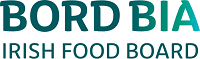
In 2023, Bord Bia embarked on a major campaign to promote organic Irish food, drink, and horticulture products in Ireland.
The purpose of the campaign was to educate the Irish consumer on the benefits of consuming Irish organic food and drink and how easy it is to bring more Irish organic food and drink into your weekly shop.
A second burst of the campaign went live in May 2024. The campaign included TV advertisements across RTÉ, Virgin Media and Sky Players, radio ads, billboards, outdoor digital screens, and social media.
Overall, the campaign has reached 15 million, with 3.2 million online video views, 1.1 million radio listeners and over 400 billboards across the country.

According to shopper research conducted by Bord Bia, 63% of those surveyed were actively looking for organic Irish food and drink, with 84% of shoppers believing that organic food and drink is worth paying more for.
Four in 10 shoppers claimed that they bought more organic Irish food and drink after seeing the campaign.
Sponsored Article