What does new MEP CAP plan say about the 'active farmer'?

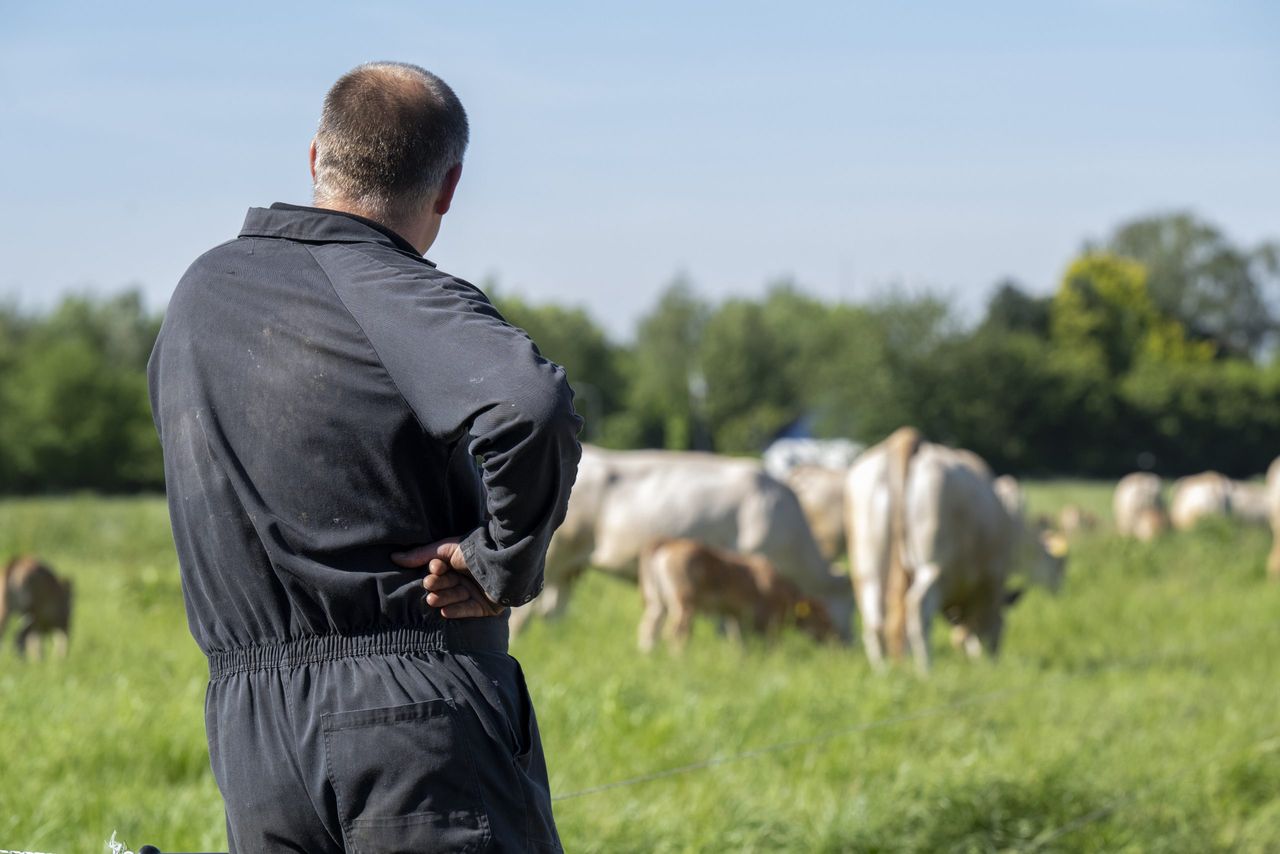
This week saw the publication a key report by the lead MEP in the European Parliament working on the next Common Agricultural Policy (CAP).
German MEP Norbert Lins, who is spearheading the work of the parliament's agriculture committee on the CAP post-2027, formally published his report on the future CAP on Monday (June 29).
This report is set to become the committee's position on the next CAP, and will therefore form the basis of the parliament's position as a whole as it negotiates the next CAP with the EU member states.
Much of the key detail in the report had already come to light, and has again been covered in Agriland's coverage this week, but the lengthy report includes many important details and clarifications that are set to be influential in how the next CAP looks.
For example, Lins' report introduces an amendment to the European Commission's proposals - first published last summer to considerable criticism from both farm organisations and environmental groups - that would create a new sub-article not found in the commission's text.
That sub-article outlines important definitions on terms like 'farmer', 'active farmer' and 'young farmer'.
For the purpose of the CAP regulations, the report outlines that a farmer would be defined as a natural or legal person whose farm is situated in the EU; and whose principal activity is agricultural activity or is engaged in a minimum level of agricultural activity.
What constitutes an agricultural activity would be defined by the member states in the CAP chapters of the National and Regional Partnership Plan (NRPP), which is the commission's proposed framework for dishing out EU money to member states under the bloc's next seven-year budget for 2028-2034.
What constitutes a minimum level of agricultural activity would also be left up to member states to design, according to Lins' plans.
Similarly, he proposed that an 'active farmer' should be determined in such a way as to comprise primarily farmers who exercise an agricultural activity on their holding.
Farmers whose principal activity is not agricultural activity, but who are engaged in at least a minimum of agricultural activity as set out by member states, shall be considered active farmers as well.
Young farmers and new entrants
The text of the potential amendments to the commission's proposals also outlines definitions for young farmers and new farmers that are not laid out in the commission proposal.
The report states that a young farmer should be defined by at least the following conditions: be 40 years old or younger; and be the head of the holding (a holding would be defined as all the units used for agricultural activity and managed by a farmer).
If a person is defined as a young farmer at the first moment of accessing a particular CAP intervention aimed at young farmers, they will retain that status for the full lifetime of that intervention, even if they later exceed 40 years-of-age, as long as they meet other eligibility requirements.
A 'new farmer' meanwhile, under the MEP's proposals, would be defined as a farmer, other than a young farmer, who becomes head of the holding for the first time.
Agricultural activity, area and eligible hectares
The document goes on to outline other important definitions not found in the commission's document.
For agricultural activity, it proposes a definition based on one or both of two criteria.
The first of these is the production of agricultural products, which consists of all activities aimed at obtaining those products.
The second criteria for defining agricultural activity is the maintenance of agricultural areas, which includes all the activities aimed at keeping the land in a state suitable for grazing or cultivation.
Under the second criteria, extensive grazing for animal welfare or environmental reasons, even if it does not result in an increase in agricultural production, would also be considered "maintenance".
Meanwhile, the definition of an 'agricultural area' in these proposals would be defined in such a way to only comprise land which is used for agricultural activities, including land for agroforestry systems.
An eligible hectare would be defined as only areas cultivated by the farmer on which an agricultural activity is performed under the farmer's control; or where the agricultural activity is predominant, if some non-agricultural activity is also performed on the same area.
The eligible hectare definition would also include land receiving support under the current CAP or next CAP, where agricultural activity is not performed due to commitments andobligations arising from those support interventions, or other interventions, which contribute to the environmental and climate-related CAP objectives.
These proposed rules would allow member states to stipulate that landscape features, solar PV installations, and certain other things that do not receive hectare-based CAP support, could be included in an eligible hectare, provided they do not significantly hamper the performance of agricultural activity on that land and do not become the predominant activity on that land.