Watch: What is the potential for Irish dairy and meat in Mexico?

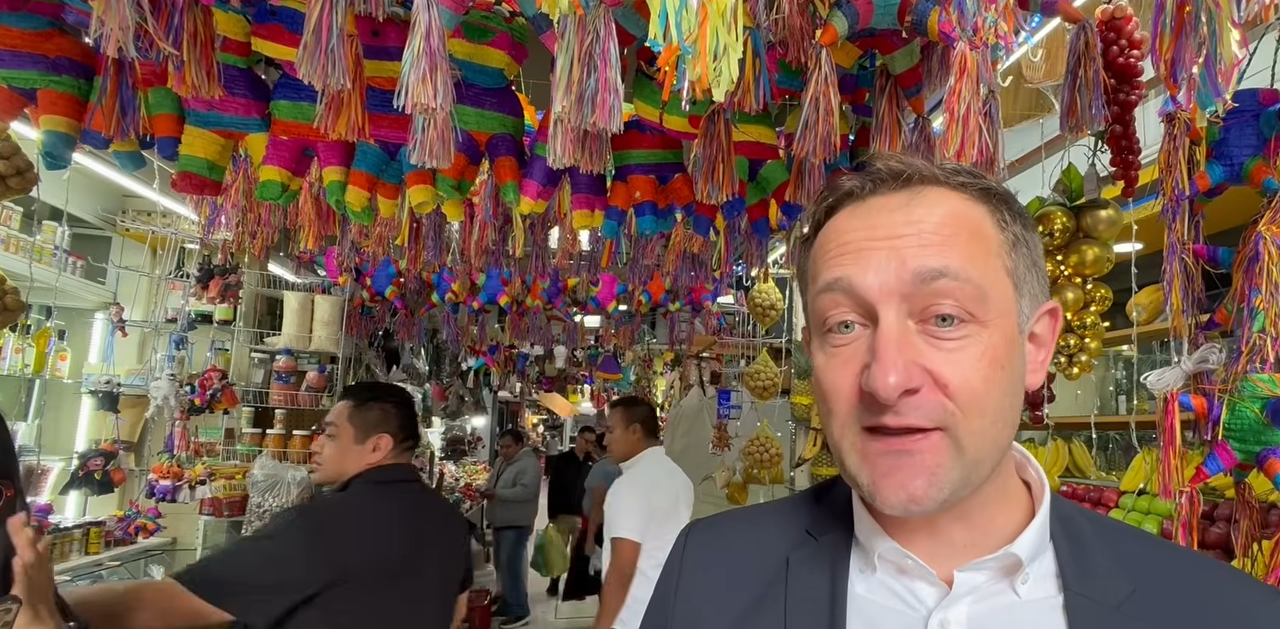
The high-value and premium nature of the EU's agri-food produce is one of the contributing factors to its success in the Mexican market.
European Commissioner for Agriculture, Christophe Hansen is this week leading a business delegation to Mexico City to provide an opportunity for more business ties between the two markets.
It follows the signing of the EU-Mexico Modernised Global Agreement earlier this year, which basically removes about 95% of tariffs on agri-food imports from the EU, such as dairy, pork, olive oil and Irish whiskey.
Watch the video below for a flavour of some of the activities undertaken by the commissioner as part of the promotion of EU-Mexico trade relations.
With a population of 132 million people and about 80% of the country made up of urban centres, there is huge potential to export agri-food to this region from Ireland.
To put it in context, the EU exported €175 million worth of dairy products to the Mexican market in 2024.
The value of the EU's annual food and drink exports to Mexico is €2.5 billion and this looks set to increase.
While the removal of the majority of tariffs is of major benefit to Irish and EU farmers and agri-businesses, the deal between the two markets also has further potential.
It will now be easier for EU companies to bid for government contracts in Mexico as well as invest and provide services in a variety of sectors.
The deal also ensures the protection of 568 EU geographical indications, which means famous EU products can not be imitated or duplicated.
While some of the challenges for agri-businesses hoping to do business in Mexico are often cited as being the slower pace of progress in terms of contracts and approving reciprocal standards, as well as labelling and bureaucracy, the Mexican government is striving to reduce the obstacles.
The deal between the EU and Mexico also includes measures to prevent and combat corruption by:
- Making bribery a criminal offence for government officials;
- Strengthening internal controls, external auditing and financial reporting;
- Tackling money laundering.
Commissioner Hansen told Agriland that there is a growing market for European produce in Mexico.
"We see there is a lot of European products here - cheeses, wines, hams and sausages etc., - they really likes these products.
"But they are still coming in with the high tariffs, so this is an opportunity for our European dairy sector for example, but as well the industry of pork - this is where the opportunities lie."
The commissioner was speaking during a walkabout of Mercado San Juan in Mexico City where he got to experience some of the produce that Mexico will now export to the EU in greater numbers.
He also met business owners and importers to promote the agri-food produced by EU farmers, growers and drinks makers.
The EU sells more than 1% of its total worldwide food and drink exports to Mexican consumers.
Zero duties will ensure that poultry, pork and pork loins can be exported to the Mexican region in larger numbers with less barriers.
Similarly, the tariffs of up to 45% currently on some EU dairy products will be reduced to nil.
The aim of the deal is to build a sustainable and lasting economic relationship between the two markets as both the EU and Mexico seek to diversify their markets in light of a changing geopolitical landscape in recent years.