Tillage farmers urged to join survey on disease-resistant crop varieties

Irish tillage farmers are being encouraged to participate in an EU-wide survey on the use of disease-resistant crop varieties.
Allied to these developments is the potential to apply more meaningful integrated pest management (IPM) systems across the tillage sector.
The survey will be carried as part of the EU’s IPMorama programme.
The project is developing decision support tools that use landscape level monitoring networks to factor in interactions between varietal resistance and pathogen variability/distribution.
This information feeds into decisions on fungicide application that maximise the effectiveness of the resistant variety in an approach called ‘vulnerability mapping’.
The project focuses on rust disease in wheat, late blight in potato, and diseases of grain legumes.
Early experiments in potato have demonstrated the potential for between 45-100% reductions in spray application for late blight, whilst maintaining complete disease control.
BYDV tolerance
Here in Ireland, the use of Barley Yellow Dwarf Virus (BYDV) tolerant varieties of winter barley is now common place.
It has been estimated that also most all of the winter barely varieties planted out over recent weeks have a BYDV tolerant claim made for them.
Meanwhile, research at Teagasc Oak Park is ongoing to ascertain just how much tolerance these new barley varieties have to the specific strains of BYDV-carrying aphids found in this country.
Tolerance is regarded as a half-way house to the securing of full resistance to BYDV for all the cereal crop types grown in Ireland, such as barley, wheat, oats, or rye.
Potatoes
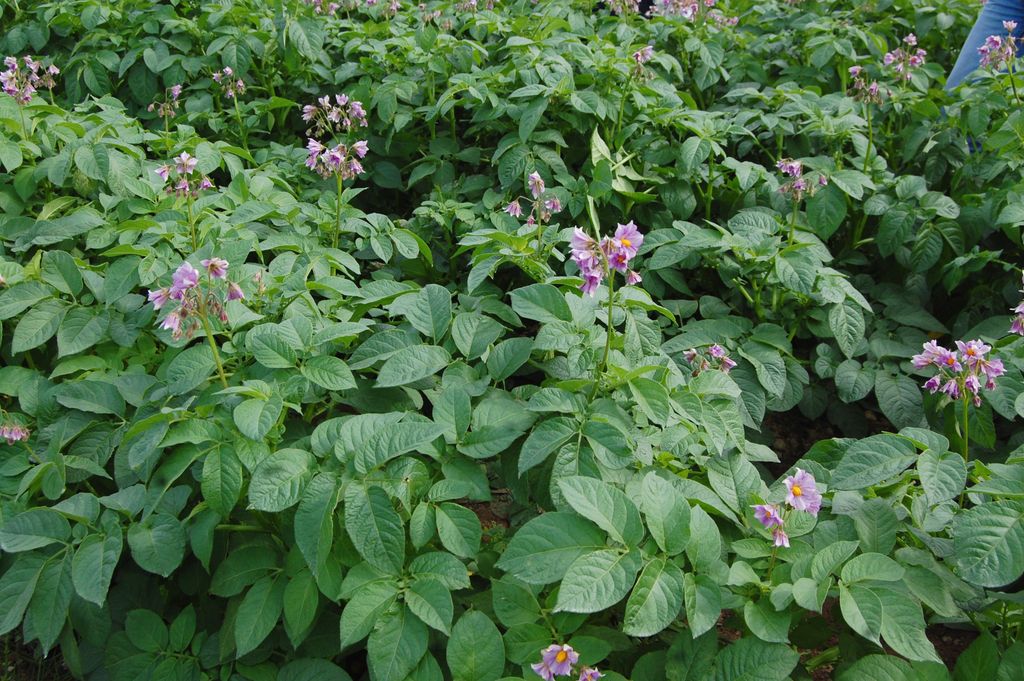
The use of IPM systems has been a cornerstone of Irish potato production for a number of years.
This is a direct response to two, inter-related, issues: the continuing evolution of fungal blight populations and the decrease in the number of effective fungicides available to potato growers.
The clear focus of all blight prevention programmes now implemented in Ireland is that of maintaining the fungicide chemistries that are currently available.
Given the significant costs associated with the development of allternative fungicide products, it is unlikely that new chemistries will be brought to market within the foreseeable future.
As a result, using IMP management strategies is a priority when it comes to growing crops of potatoes.
Developing blight resistant varieties of potatoes will be important in this context. However, efforts to this end are proving difficult as blight populations have a tremendous ability to mutate very quickly.
The other challenge is that of breeding new potato varieties that have the eating characteristics demanded by consumers.