Sponsored
Pre-calving trace mineral deficiency is a reality, is it raising your SCC?

Sponsored by

The transition period in cows is a critical time for herds in Ireland aiming to avoid clinical disease in early lactation.
Milk somatic cell count (SCC) levels above 100,000 mean you are losing money. On average mastitis costs farmers €60/cow/year (O’Brien et al., 2016). The major loss for high cell count is milk yield and milk quality penalties.
Subclinical mineral deficiency can adversely affect immunity in Irish herds leading to increased levels of transition diseases like mastitis. Addressing this issue could improve herd health nationally.
Years of research has documented how trace minerals are vital for disease prevention in cattle. Animals that are in poor mineral status may have poorer immunity.
Reduced zinc (Zn) levels have been linked to increased SCC (Davidov et al., 2013); copper (Cu) deficiency causes a decrease in the resistance to diseases (Paolicchi et al., 2013); Zn and selenium (Se) deficiency has been shown to impair immune response (Pinna et al., 2002) (Hogan et al., 1990); and manganese (Mn) deficiency can result in reduced enzyme levels increasing the risk of cellular damage (Malecki and Greger, 1996).
Understanding subclinical disease
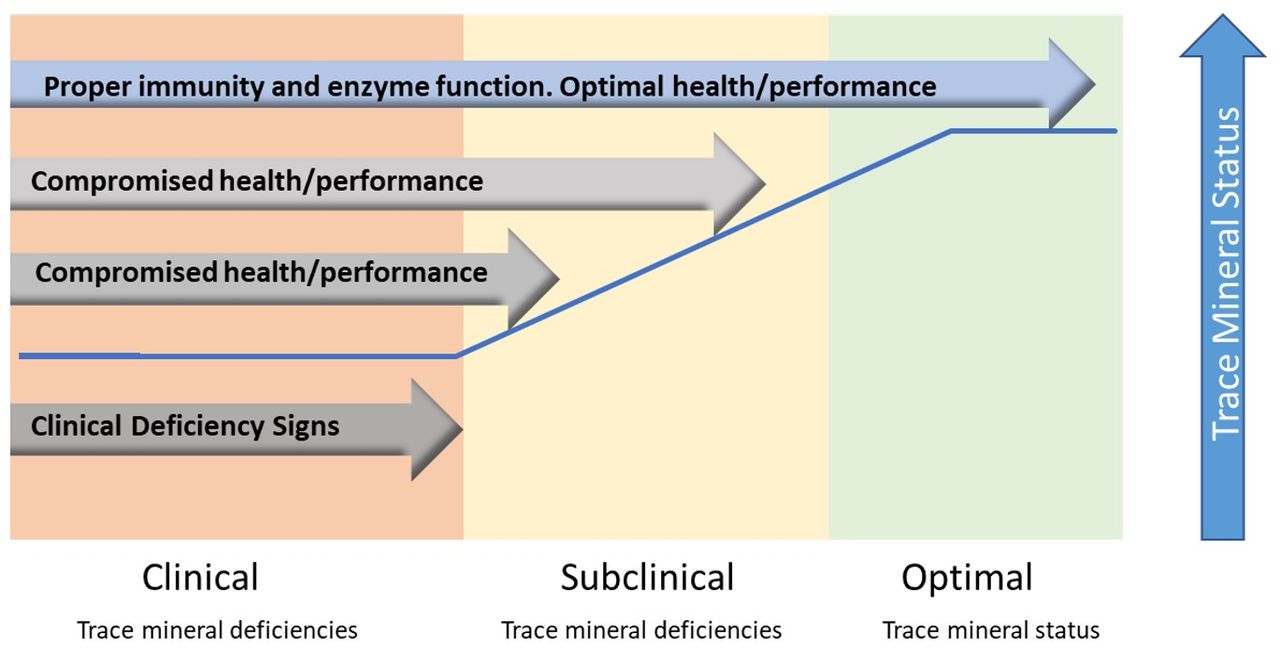
Subclinical disease is illness that is staying below the surface of detection, meaning there are no recognisable signs but the disease can still be adversely affecting the cow.
With subclinical mineral deficiency, cows may appear healthy but reproduction performance and immunity may be impacted meaning increased diseases like mastitis during the transition period (O’Rourke, 2009).
How can subclinical mineral deficiency occur?
Trace minerals are vital for udder health in dairy cows (Hogan et al., 1990), but in Ireland herd cases of trace mineral deficiency arise frequently but are often not reported.
Rogers and Murphy (2000) found that within Irish grass silages, 63% are low in Cu, 69% are very low in Se and 29% are low in Zn. This means a lot of cattle are on the threshold of subclinical deficiency as they are not offered silage with adequate minerals.
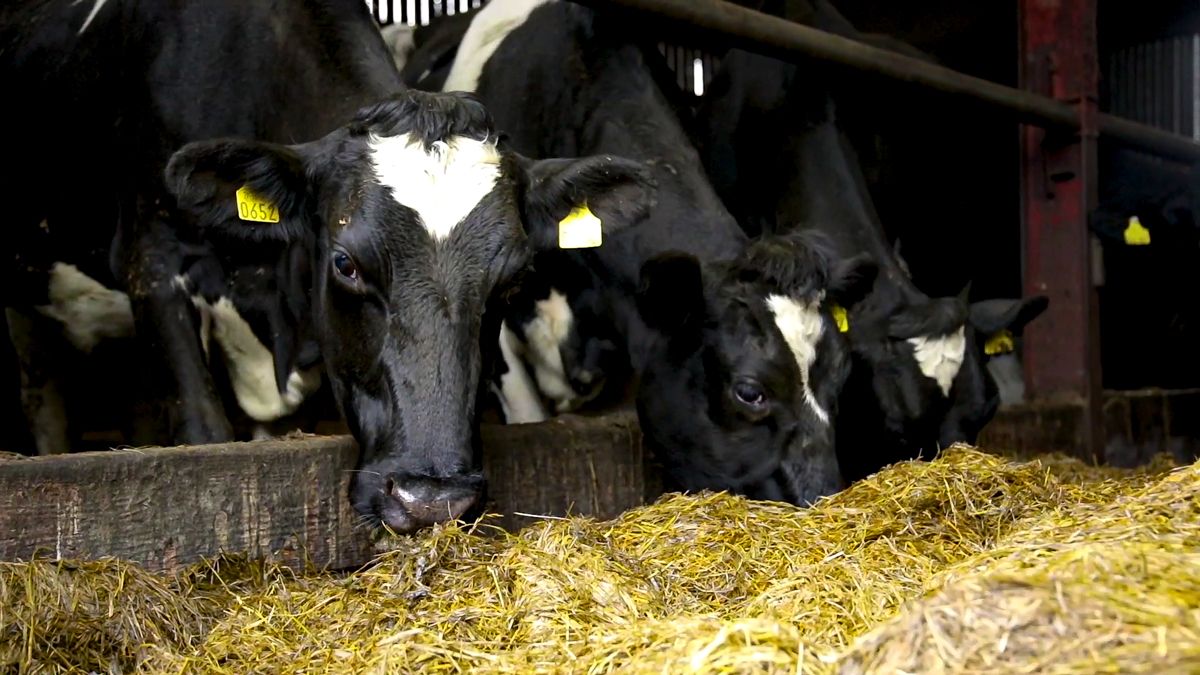
Furthermore, even cattle fed adequate oral mineral requirements may simply not eat enough under times of stress. In the pre-calving period, dry matter intake falls by 30-35% meaning cows do not take in enough trace minerals orally.
For more information, just click here
Depletion of trace minerals before and after calving
Adequate trace mineral levels in cows is essential to prevent mastitis and raised SCC (Davidov et al., 2013), but decreased food intake means cows need to use up their mineral reserve stores e.g. from the liver pre calving.
In the weeks coming up to calving, the unborn calf is growing rapidly and its only supply of minerals is across the placenta from the dam. Unfortunately, during this period there can be an increase in excretion of minerals which can be made worse by stress, but there is also a massive increase in demand for minerals.
In the weeks coming up to calving, the unborn calf will be growing rapidly and its only supply of minerals will be across the placenta from the dam. All these processes mean there is a huge spike in mineral demand while intake is reduced, meaning mineral stores of cows can become depleted.
This is how even seemingly well-fed cows and herds can fall into subclinical mineral deficiency and fail to fight off infections in the transition period.
Low absorption of orally administration minerals
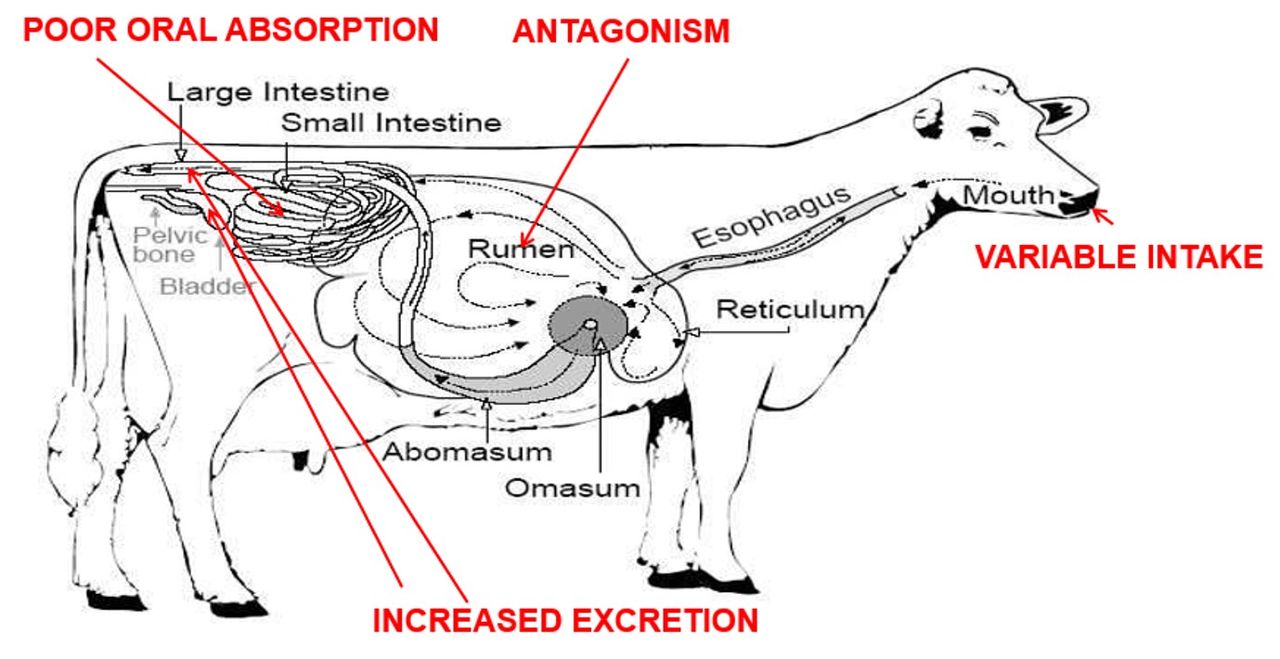
Other issues complicate the situation further at this time. Oral minerals are poorly absorbed by cattle.
Only 1-5% of oral Cu is absorbed by adult cattle, for Zn 10-20% and Mn only about 1% is absorbed (NRC, 2001). Therefore, even using silage that has adequate minerals can take weeks to months to build back up the mineral store in cattle.
Rumen antagonism further hampers mineral absorption. Antagonists are minerals like sulphur (S), calcium (Ca), iron (Fe) and molybdenum (Mo), that despite being essential parts of the bovine diet, when supplied above certain levels, they adversely affect the absorption of other minerals like Cu, Zn, Mn or Se.
This means that even though diets appear to have adequate levels of trace minerals, they may not be effective in maintaining cows’ mineral levels, as the antagonists are blocking the minerals being absorbed.
Cook and Green (2010) reported treatment of trace mineral boluses at dry-off to dairy cattle showed an unreliable trace mineral release. In some situations, they can be regurgitated and lost or, within the rumen, they can become coated with a deposit of calcium phosphate and fail to dissolve properly.
Oral supplements like drenches and boluses are subject to poor oral absorption and antagonism and thus may not effectively improve trace mineral status pre calving.
Strategic trace mineral injections bypass the harsh rumen environment and antagonists, rapidly raise circulating mineral levels in cows within eight-to-10 hours, and after 24 hours, the key minerals are at raised concentrations in the vital storage organs like the liver (Pogge et al., 2012).
From here the minerals can be incorporated into the different body systems to help maintain immunity, fertility and performance.
How to prevent subclinical deficiency pre calving?
Strategic trace mineral injections are a fast and effective way for farmers to enhance their cows’ mineral status in the pre calving window.
Strategic trace mineral injections are a popular way to improve herd performance in the US, Australia, South Africa and New Zealand. Strategic trace mineral injections could help to improve the disease status and transition cow performance in your herd (Machado et al., 2012) (Machado et al., 2013) (Machado et al., 2014).
Years of research from leading animal health and veterinary universities from around the world have demonstrated the potential benefits of strategic mineral injections at key points of demand in the production cycle.
Pre-calving supplementation by injection helps to raise not only the trace minerals, but also the essential enzyme levels rapidly and effectively, which could help farmers reduce mastitis in their herds.
Several studies have researched the potential benefits of injectable trace mineral supplementation in cows in the transition period, with improvements in clinical mastitis, cell counts and uterine disease (Machado et al., 2013).
Ask your vet how an injectable trace mineral supplement could help improve transition performance in your herd.
Further Information
For more information, just click here
Reference
- O’Brien B., Teagasc: Milk Quality Mastitis and SCC Section 5 Chapter 31 p184 https://www.teagasc.ie/media/website/animals/dairy/MilkQandMastitis.pdf;
- Davidov I., Radinovic M., Erdelian M., Cincovic M.R., Stancic I., Belic B. 2013., Relations between blood Zinc concentrations and udder health in dairy cows Revue Méd. Vét., 2013, 164, 4, 183-190;
- Paolicchi F., Perea J., Cseh S., Morsella C., 2013., Relationship between Paratuberculosis and the microelements Copper, Zinc, Iron, Selenium and Molybdenum in Beef Cattle Brazilian Journal of Microbiology 44, 1, 153-160;
- Pinna K, Kelley D S, Taylor P C, King J C, 2002., Immune functions are maintained in healthy men with low zinc intake. J Nutr. 132, 2033-2036;
- Hogan J.S., Smith K.L., Weiss W. P., Todhunter D. A., and Schockey W. L., 1990., Relationships Among Vitamin E, Selenium, and Bovine Blood Neutrophils’ 44691 1990 J Dairy SCi 73~2372-237;
- Malecki E. A. and Greger J. L., 1996., Manganese Protects against Heart Mitochondrial Lipid Peroxidation in Rats Fed High Levels of Polyunsaturated Fatty Acids, Journal of Nutrition 0022-3166/96;
- O’Rourke D., 2009 Nutrition and udder health in dairy cows: a review, Irish Veterinary Journal volume 62, Article number: S15 (2009);
- Rogers P.A.M., and Murphy R., (2000) Levels of Dry Matter, Major Elements (calcium, magnesium, nitrogen, phosphorus, potassium, sodium and sulphur) and Trace Elements (cobalt, copper, iodine, manganese, molybdenum, selenium and zinc) in Irish Grass, Silage and Hay http://homepage.eircom.net/~progers/0forage.htm;
- Nutrient Requirements of Dairy Cattle: Seventh Revised Edition, 2001;
- Cook J. G., Green M. J., 2010: Milk production in early lactation in a dairy herd following supplementation with iodine, selenium and cobalt. Veterinary Record 167, 788–789;
- Pogge D., & Richter E., 2012., Mineral concentrations of plasma and liver following injection with a trace mineral complex differ among Angus and Simmental cattle. J. Anim. Sci. 90, 2692–2698
- Machado V.S., Oikonomou G., Bicalho M.L.S., Knauer W.A., Gilbert R., Bicalho R.C., 2012 Investigation of postpartum dairy cows’ uterine microbial diversity using metagenomic pyrosequencing of the 16S rRNA gene VETMIC-5739; No. of Pages 10 2012;
- Machado, V.S., Bicahlo M.L.S., Pereira R.V., Caixeta L.S., Knauer W.A., Oikonomou G., Gilbert R.O., 2013., Effect of an injectable trace mineral supplement containing selenium, copper, zinc, and manganese on the health and production of lactating Holstein cows. The Veterinary Journal Volume 197, Issue 2, August 2013, Pages 451-456;
- Machado V.S., Oikonomou G, Lima S F, Bichalo M.L.S., Kacar C., Foditsch C., Felippe MJ, Gilbert R.O. Bichalo R.C., 2014., The effect of injectable trace minerals on peripheral blood leukocyte activity and serum superoxide dismutase, The Veterinary Journal Volume 200, Issue 2, May 2014, Pages 299-304;
- O’Brien B, Berry D P, Kelly P, Meaney W J, O’Callaghan E J., 2009, A study of the somatic cell count (SCC) of Irish milk from herd management and environmental perspectives Project Number 5399 Teagasc, Moorepark Dairy Production Research Centre, Fermoy, Co. Cork.
Sponsored by