Planning for clover incorporation ahead of spring

2025 was a great year for both grass and clover growth; however, after a tricky 2024, many farmers remained sceptical of reseeding with clover.
In fact, according to Teagasc's Pasturebase, 2025 grass growth was ahead of the five-year average.
However, in 2024 farmers struggled with clover incorporation as they dealt with poor weather conditions and cooler soil temperatures.
This led to an 8% reduction in clover contents that spring, meaning farmers were forced to spread chemical nitrogen, and when clover started to pick up in summer, many farmers ended up with striping.
This made some farmers lose hope in clover ahead of 2025, but farmers who stuck with clover last year saw great success.
At the end of the day, if you can get your clover incorporation right and the weather plays ball, it will lead to a significant reduction in your chemical N use and improve your farm gate N surplus, all while reducing expenditure.
Clover incorporation
Clover paddocks should ideally be left with light covers over the winter months to ensure light can reach the bottom of the sward, keeping the clover plants alive.
The more stolon that survives that winter, the higher the plant content of the sward, which will lead to more N fixation the following season.
Clover also requires optimum soil fertility to have continued success, with a pH level of 6.5 and index 3 for both P and K.
Coming into the spring, try to graze grass-clover paddocks early in the first rotation at covers of roughly 1,200kg dry matter (DM)/ha, to get light to the base of the sward as soil temperatures are improving.
However, if conditions are wet, going in early will cause more damage to the plant than restricted daylight, so try and be as flexible as possible with the plant.
Farmers should then aim to apply 2,500gal/ac of dilute cattle slurry after grazing these paddocks, as it will replenish the N, P, and K in the sward and promote early pasture growth.
Underperformance
Evaluating the performance of paddocks in 2025 is crucial to decide which fields need to be reseeded.
Ideally, you should be aiming to reseed 10% of the milking platform each spring, as reseeding is the most cost effective investments one can make on a farm.
However, based on the individual farm's performance and tight finances this spring, reseeding may not be viable.
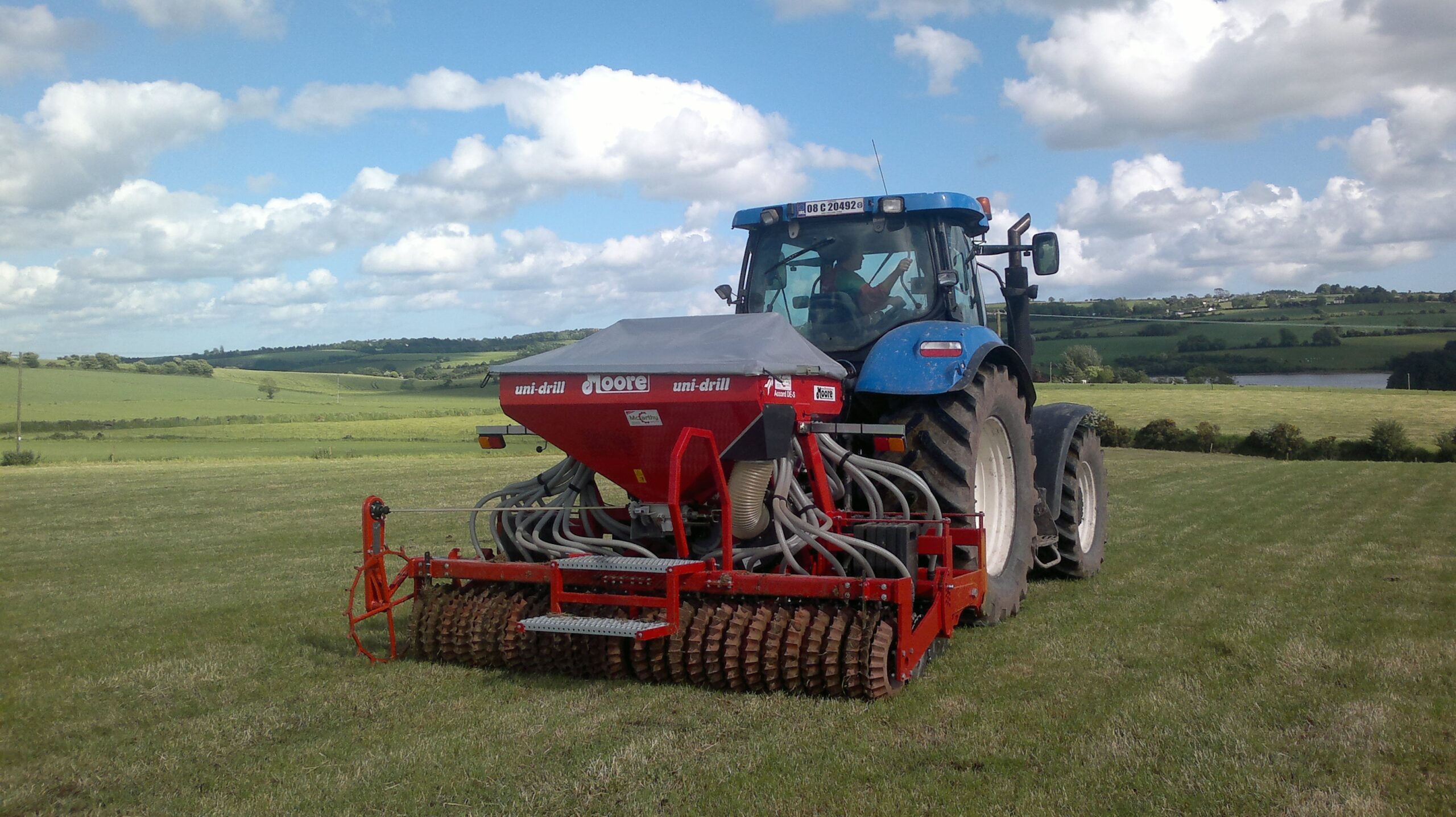
If that is the option, consider over-sowing any swards that have a low/damaged clover content or where the plant is struggling to compete with grass.
A medium leaf white clover on the recommended list should be used at about 2-2.5kg/ac and aiming to sow 10-15% of your farm each year to ensure continued improvements in clover incorporation.
Paddocks that are infested with weeds should also be considered for reseeding this spring.