New report shines spotlight on Ireland's 'nature finance'
'Paying ahead of the proof', a new report on the state of evidence in UK and Irish nature markets was launched today, November 23.
"This report sets out what can and cannot yet be verified in the nature markets of the UK and Ireland, using public sources and two original analyses of public registers," according to the publisher of the report, Vireo Nature.
The report states that it is a "review of the evidence that sits underneath carbon codes, biodiversity net gain, nutrient mitigation, water company environmental programmes, public nature funding, nature finance, and environmental claims".
Vireo Nature, an environmental intelligence platform, said, "carbon credits, biodiversity units and nutrient credits are bought, approved and claimed years before anyone checks the outcome".
Irish scenario
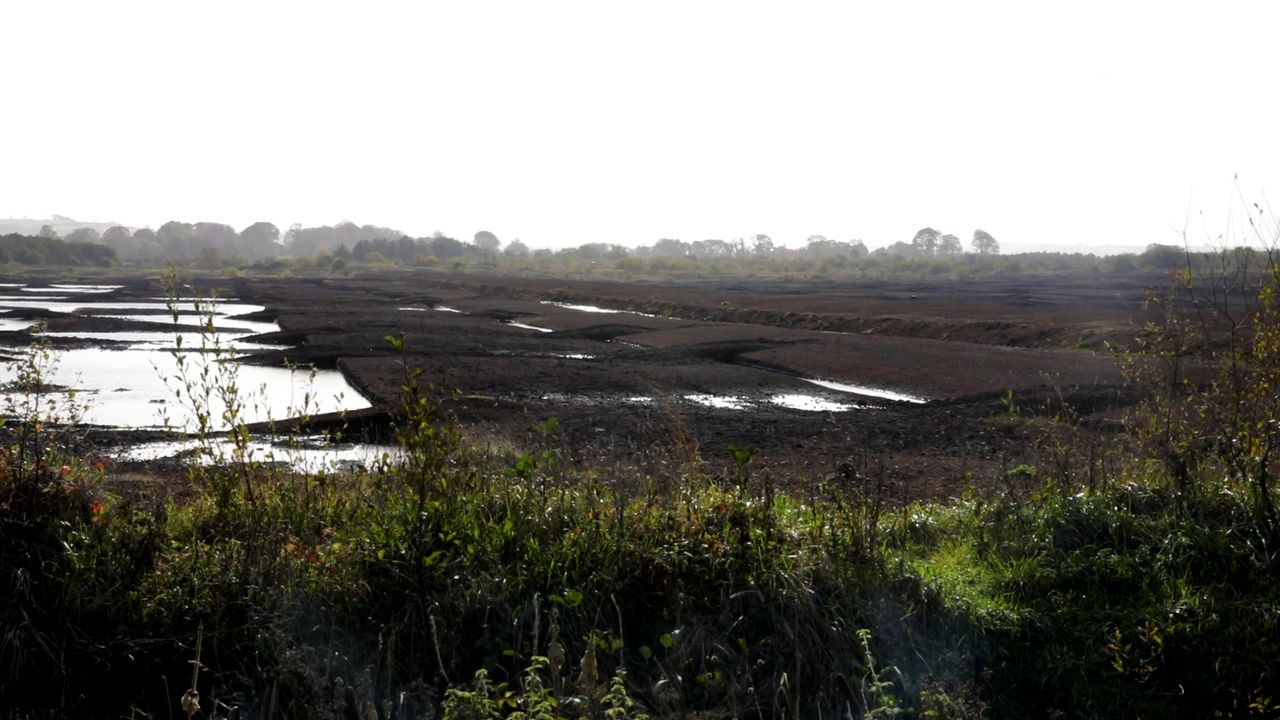
In a chapter devoted to Ireland, the report said that Bord na Móna's peatland rehabilitation, "backed by €108 million of EU recovery funds, is due to reach 24,500ha by 2026, (specifically through Ireland's National Recovery and Resilience Plan and the Climate Action Fund".
The report also stated that Ireland's Agri-Climate Rural Environment Scheme (ACRES) now "gates farm payments on results scorecards".
This means "the level of payment you receive is linked to the quality of environmental services provided.
"The higher the field score, the higher the payment you receive", according to the ACRES website.
The report further explained that Ireland's nature evidence was "mainly state-led and driven by EU law".
"It consists of a national restoration plan under theNature Restoration Law, and a EU Common Agricultural Policy (CAP) scheme that pays partly on scored habitat results."
In addition, it "checks some actions by satellite", and has a "semi-state restoration programme on former industrial peatland, and a private certification standard in pilot".
The report added that results-based payment was institutional in Ireland.
"According to the ACRES scheme, habitat scorecards count towards payment only if submitted by an approved advisor trained that year, and satellite monitoring gates payment on seven actions.
"This is field-scored evidence of outcomes, though from trained advisors rather than independent verification.
Rehabilitation scheme
Bord na Móna's enhanced rehabilitation scheme wasplanned in 2021 to rehabilitate about 33,000ha across82 bogs, according to the report.
"Its June 2026 figure is 24,500ha by 2026, funded with €108m from the EU Recovery and Resilience Facility and €18m from Bord na Móna, and regulated by the National Parks and Wildlife Service (NPWS).
"No funded successor for after-care monitoring was found."
EU law sets the next evidence demands: "Ireland's draft National Restoration Plan was consulted on from June 3 to July 1, 2026, for submission to the European Commission, under the EU Nature Restoration Regulation EU) 2024/1991".
Ireland was required to submit its draft National Restoration Plan (NRP) by September 1, 2026.
Following a formal dialogue and feedback process with the European Commission, a second public consultation will take place in 2027 ahead of the final plan's submission to the Commission by September 1, 2027.