Irish Dairy's Grass-fed Strength
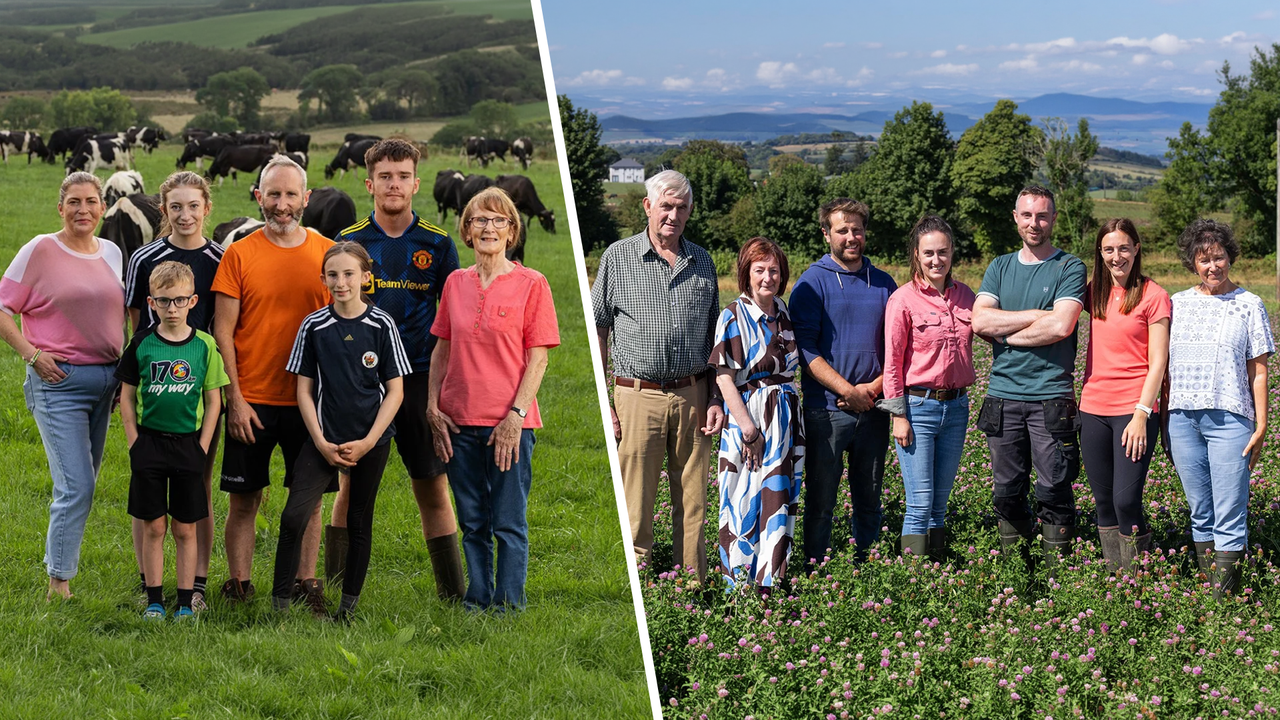
In this final episode in the NDC & Kerrygold Quality Milk Awards: Meet the Finalists series, we are introduced to the Dennehys from Kilbrin, Co. Cork, nominated by North Cork Creameries.
We also meet the Fitzgeralds from Portlaw, Co. Waterford, who were nominated by Tirlán, and took home the award for Environmental Stewardship and Biodiversity on the night.
Dennehy Farm - North Cork Creameries
Kilbrin is not so much a village as a parish, a church, a GAA pitch and farms scattered across the rolling dairy country of Duhallow.
Turn off the Kanturk road and follow one of the narrow cul-de-sacs to the end and you arrive at Pat and Audrey Dennehy’s home at Coolmahane.
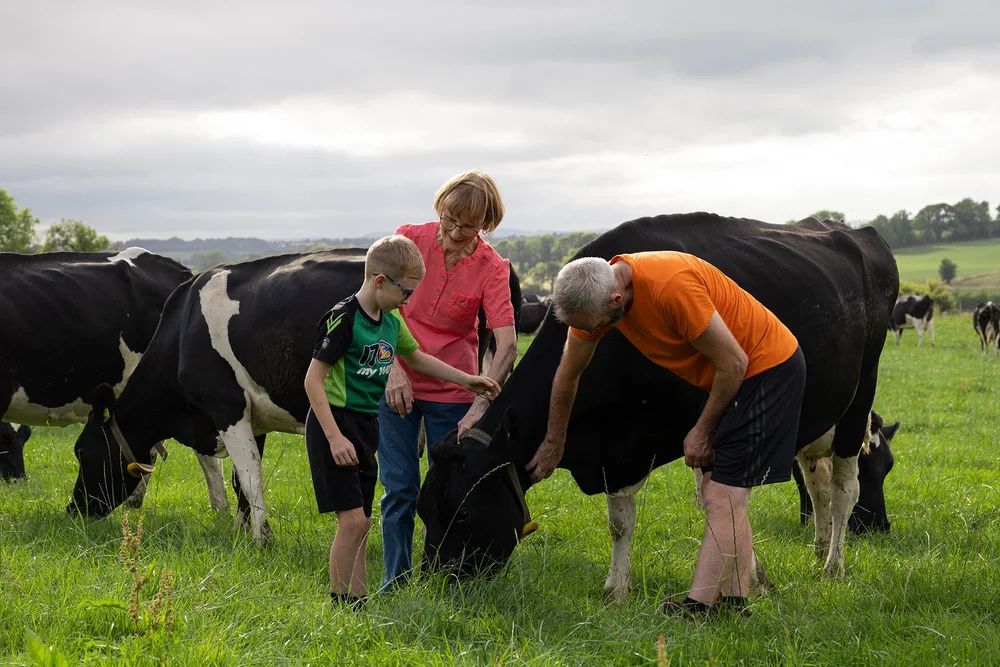
Around the yard, 172 cows go quietly about their business, and Pat Dennehy does much the same.
There is an easy, unhurried manner about Pat that quickly puts a visitor at ease.
But spend a little time walking the farm with him and it becomes clear that the relaxed atmosphere has been earned.
Pat's father and his uncle Michael farmed side by side for some 30 years, sharing a 10-unit milking parlour.
Pat came home from agricultural college and joined them, and when Michael retired following a back injury in 2002, the family rented his land.
Pat now farms here with his wife, Audrey and three children, Marie, Lily and Micheál.
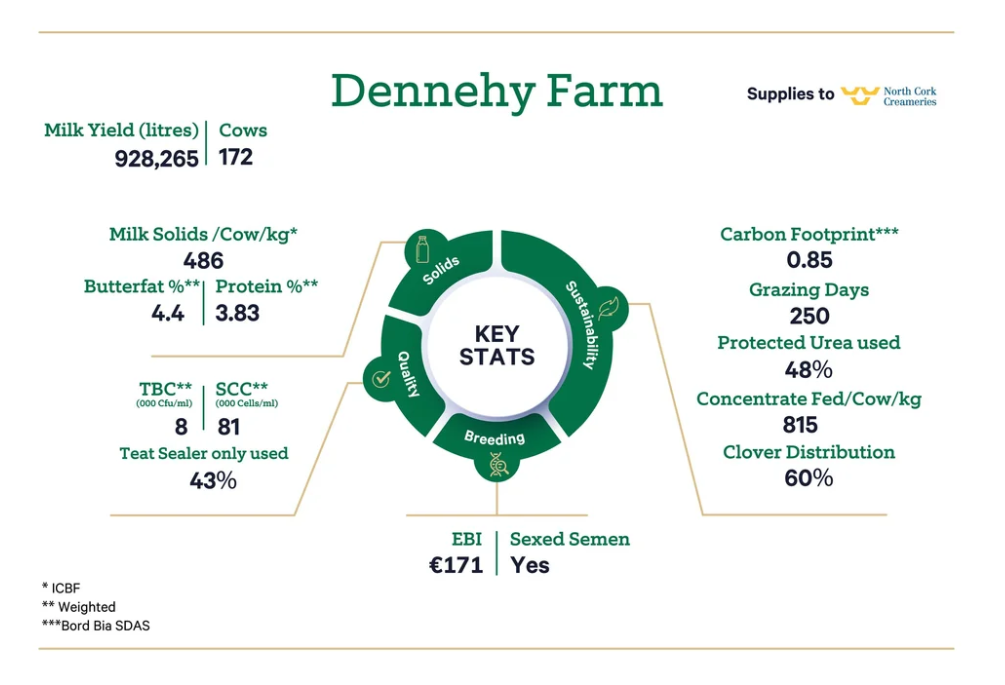
Milk quality starts with the cows. Milk recording is carried out seven times a year, and Pat has gradually embraced selective dry-cow therapy.
He started cautiously, gained confidence from the milk-recording data, and has increased the proportion of cows receiving teat sealant alone.
In 2025, 43% of the herd was dried off without an antibiotic with a threshold of never having a somatic cell count (SCC) greater than 100.
Across 2025, monthly SCC remained remarkably consistent, while total bacteria count (TBC) was routinely in single figures or low double figures.
The 172 cows milked that year delivered 78,724kg of milk solids, averaging 486kg of solids per cow.
There are no magic ingredients. It is the accumulation of small jobs done consistently well.
The breeding programme is similarly uncomplicated but precise.
The herd has an Economic Breeding Index (EBI) of €171 rising to €203 among the replacements.
The entire herd is genotyped, and bulls are selected for milk solids, fertility and health, while sexed semen is used selectively.
Pat has put considerable thought into what happens to water as it moves across the farm.
Watercourses have been fenced, roadways cambered away from them, and water bars installed to divert runoff onto fields.
Below the yard, runoff is directed through vegetated bunded drains planted with hundreds of willow trees, designed to intercept nutrients before water moves onwards.
Slurry is tested so Pat knows the nutrient value of what he is spreading; low emission slurry spreading (LESS) is used throughout; soil is tested every three years; protected urea has replaced conventional urea; and clover is now incorporated into around 60% of the grazing platform.
The cows were at grass for around 250 days last year; the farm is producing a substantial volume of high-quality milk, and Pat wants a system that remains manageable rather than one that consumes the family operating it.
Pat is heavily involved beyond the farm gate.
He coaches under-10 hurling and football and helps a local group maintain the church and graveyard grounds.
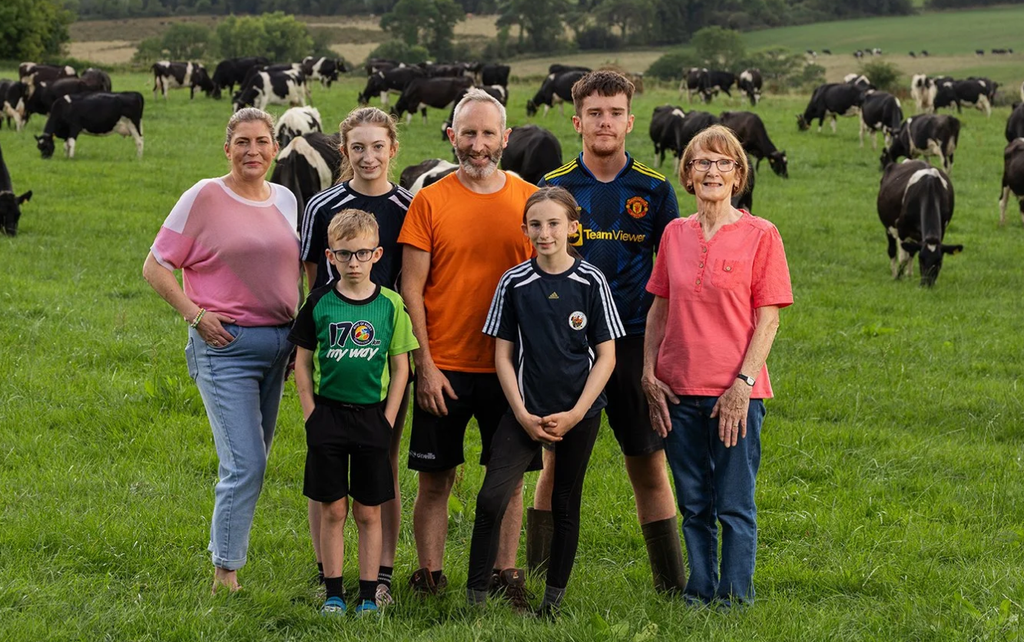
Behind the relaxed rhythm of Coolmahane is very much a family effort, with Audrey at the heart of family life and supporting Pat and the farm in all the ways that keep a busy dairy household running.
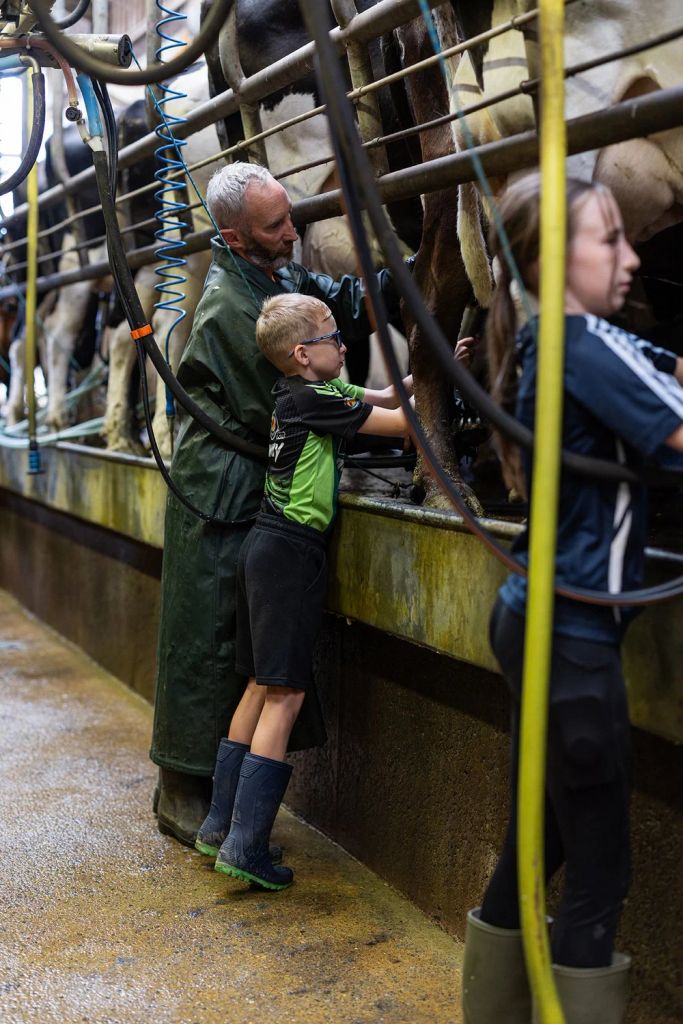
Their children are already familiar faces around the yard, with Pat's 81-year-old mother remaining close by.
Pat believes the family farm remains one of Irish agriculture's great strengths. His own experience explains why.
His father and uncle farmed together. His own family now contributes.
He rents 50ac from a neighbouring farmer, and around him are friends and neighbours who understand that farming occasionally produces a problem that cannot wait until morning.
Fitzgerald Farm - Tirlán
Winner: Environmental Stewardship and Biodiversity award
The Fitzgerald farm, owned by Shane and Kate Fitzgerald, is very much a family enterprise.
Shane finished school in 2009 and studied business and accounting at Waterford Institute of Technology before working in Canada.
He later completed the dairy business programme at Kildalton, including six months in New Zealand, and returned home full-time in 2016.
At the time there were around 110 cows. Shane was 26 and his father John was 66.
Rather than one generation simply replacing another, their different strengths complemented each other.
Kate's route into dairying was different again. Raised on a beef farm, she trained in childcare before working shifts with Abbott.
She met Shane in 2019 and during Covid came to stay at Kilmagemogue “for two weeks”. She never left.
Shift work initially gave her time to help with milking and calves.
Dairy farming caught her interest; she completed her Green Cert by distance learning and immersed herself in discussion groups and Dairy Women Ireland.
Her childcare background may also have found an unexpected second use: Kate has a particular enthusiasm for bringing schoolchildren onto the farm and explaining where their food comes from.
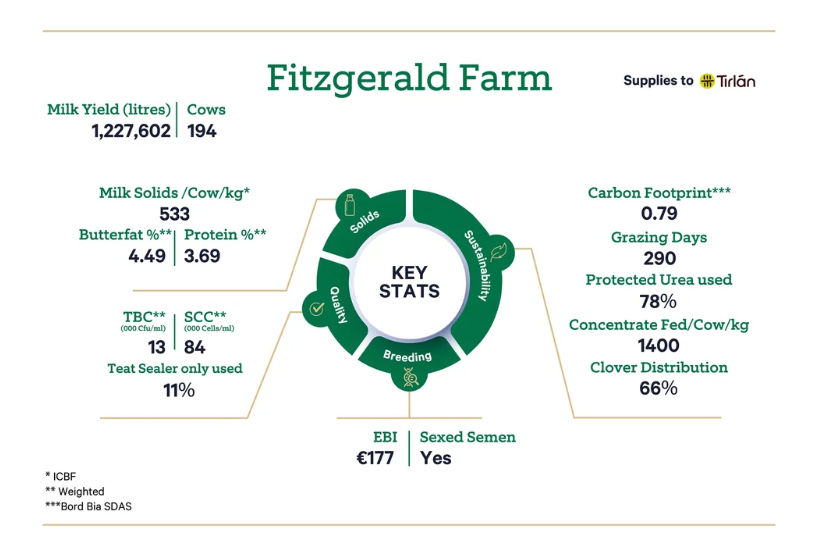
The herd is just over 200 predominantly Holstein Friesian spring-calving cows in a grass-based system, producing in the region of 533kg of milk solids per cow.
But the impressive part of Kilmagemogue is not a single headline figure.
It is the accumulation of small disciplines behind them.
Grass is measured weekly, around 40 measurements during the year, and spring and autumn budgets are prepared on PastureBase.
Milk quality is approached with the same attention to measurement.
Technology helps, but it has not replaced stockmanship.
SenseHub collars assist with heat detection and health monitoring and have already provided early warning of problems including an E. coli mastitis case and a displaced abomasum.
Shane has also completed hoof-paring training so that a lame cow does not have to wait for attention.
The Fitzgeralds have reached close to the number of cows the land can comfortably support.
The next phase is therefore not about introducing more animals onto the platform but improving what they already have.
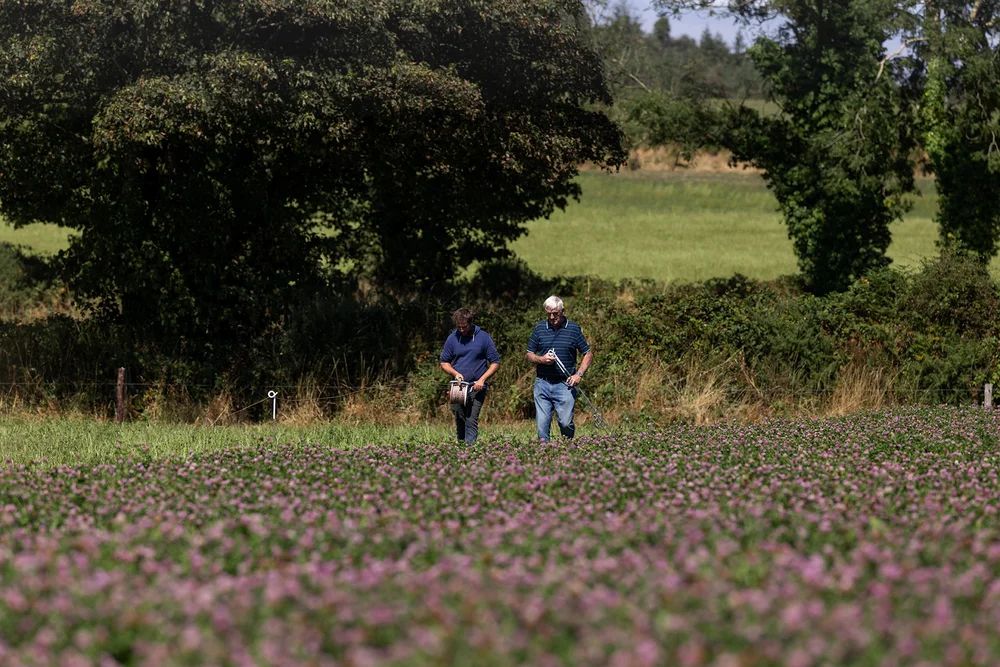
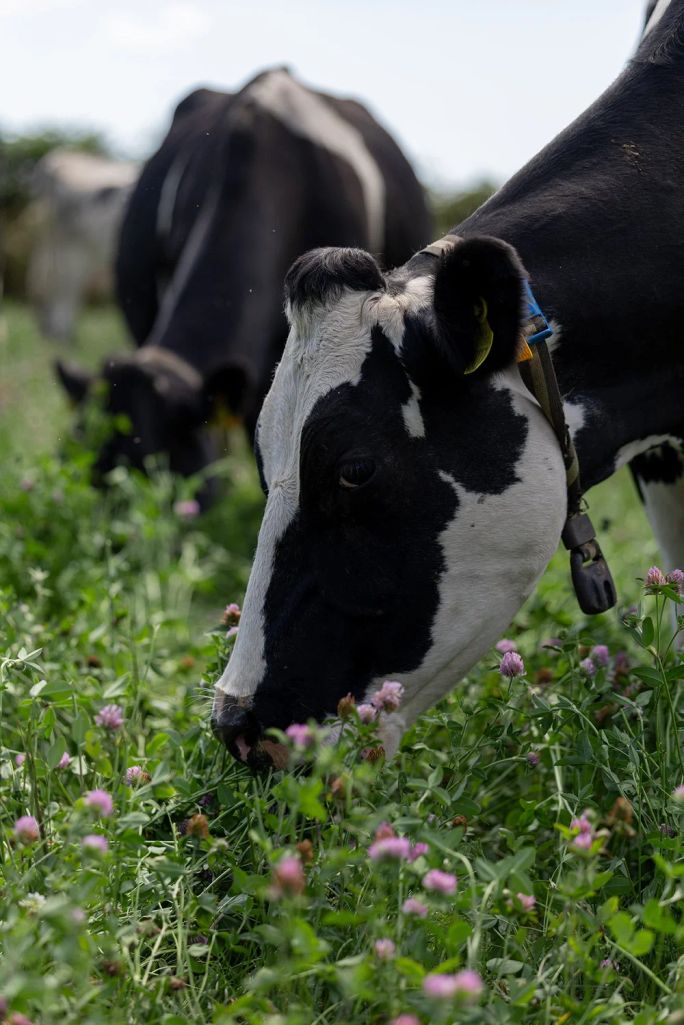
Multi-species swards have been trialled, clover is increasingly important, protected urea and low-emission slurry spreading are routine, and chemical nitrogen use has fallen substantially from previous levels.
Watercourses have been fenced back beyond minimum requirements.
New hedgerows have been planted. A wildlife pond has been dug and owl boxes erected.
The Fitzgerald's definition of sustainability also extends beyond carbon and biodiversity.
A farm must be economically viable, environmentally responsible, and an enjoyable place to work.
If one of those pillars disappears, they argue that the system will eventually fail.
There is little point building a technically perfect farm if nobody in the next generation wants to live on it.
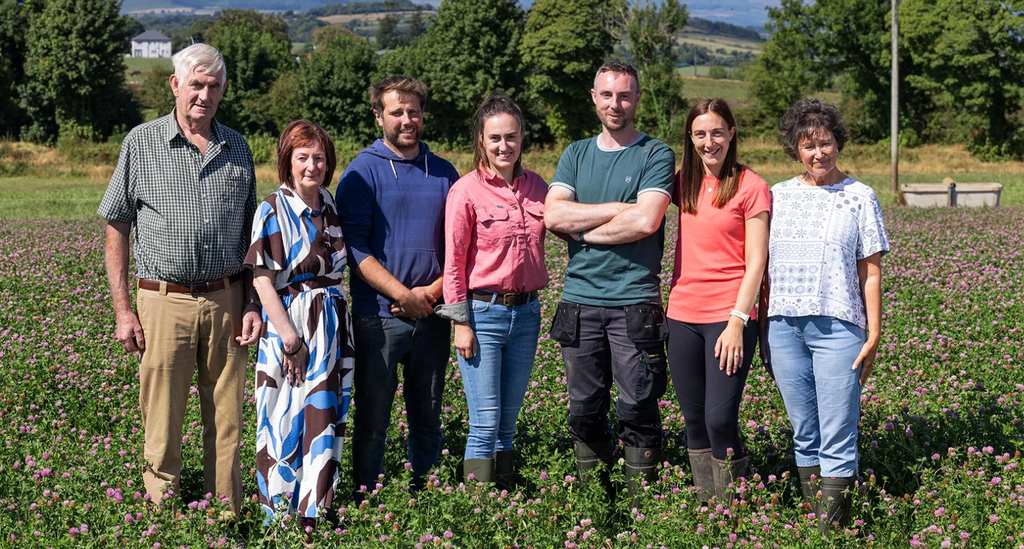
Shane first became conscious while at college of how little many people outside farming understood about food production.
Kate has reached the same conclusion through her work with children and as an ambassador for dairy farming.
Their response has not been to complain about the disconnect between farmers and consumers. It has been to invite people in.
More than 1,000 people came through the yard for an Agri Aware open day.
And in March 2022, there was a rather more unusual visitor when the then Prince of Wales, now King Charles III, came to see first-hand the environmental measures being adopted on the farm.
The Fitzgeralds want a productive farm capable of supporting a family, producing excellent milk, treating animals well, reducing its environmental footprint, and leaving room for nature.
Just as importantly, they want people outside agriculture to understand how that is being achieved.
More information on all the finalists is available on the Quality Milk Award YouTube page.
The Inside the 2026 Quality Milk Awards: Meet the Finalists series is a collaboration between Agriland, the National Dairy Council and Ornua.