Inside the 2026 Quality Milk Awards: Meet the Finalists Series
This Inside the 2026 Quality Milk Awards: Meet the Finalists series introduces the farms nominated by each of the dairy co-operatives and their stories.
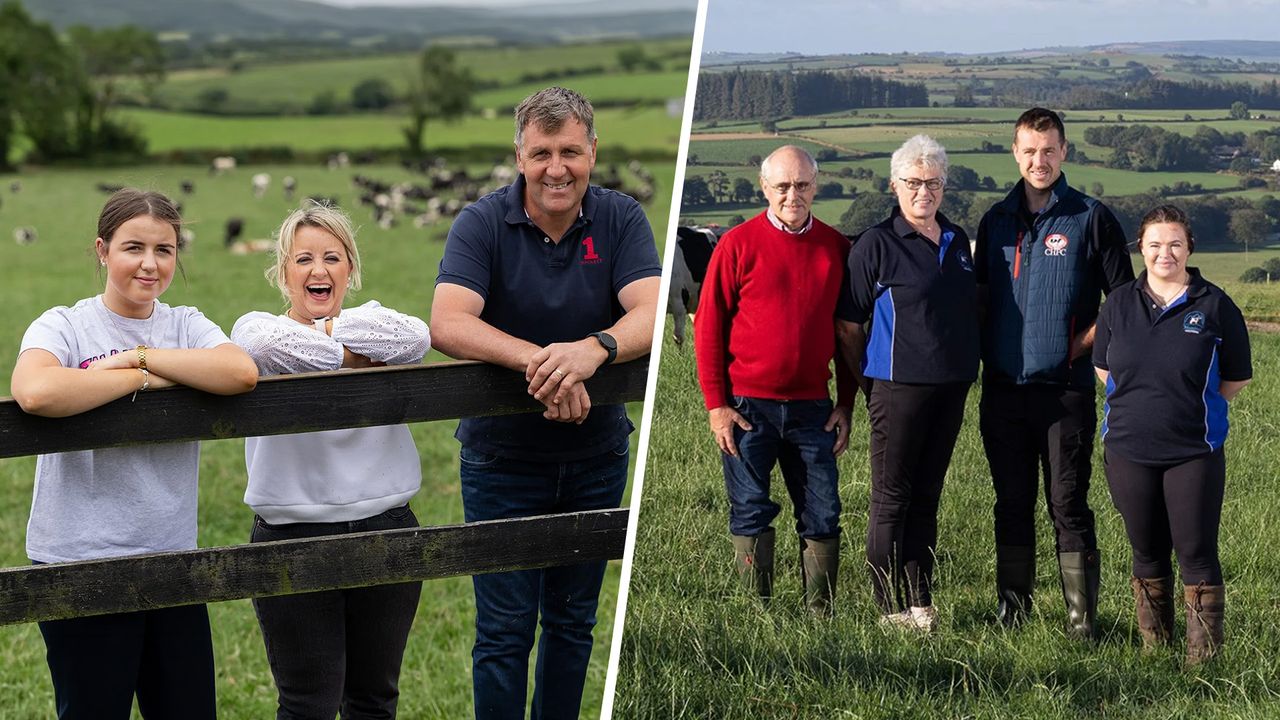
In this second episode of the series, we meet two farming families from Co. Cork, the Kellehers from Tullyland, who were nominated by Bandon Co-op, and the Kirbys from Ballinascarty, who were nominated by Barryroe Co-op.
Kelleher farm - Bandon Co-op
The case for Irish dairy farming begins before a word is spoken at Springpark.
The drive into the Kelleher farm has that rare, immediate wow factor: ordered, welcoming and unmistakably cared for.
The Kelleher farm is run by Mark and Elmarie Kelleher, alongside their 15-year-old daughter Josephine.
When Mark took over in 2008, Springpark was an outfarm carrying about 30 beef animals.
He had never milked cows.
The opportunity provided by the new-entrant scheme allowed the Kellehers to convert to dairying in 2010.
Sixteen years later, 94 cows produced 573kg of milk solids per cow in 2025 from 7,170L - placing the herd above Bandon Co-op's top 10% benchmark for solids.
This is not an inherited dairy system polished at the edges; it is a dairy business conceived, learned and built from the ground up.
The clearest expression of that control is a number: two.
Only two quarters required treatment for mastitis during all of 2025.
Every cow is dry-wiped and visually checked before the cluster is attached.
BouMatic health collars, a "game changer" in Mark's words, help identify an animal going off form, while milk-recording results are studied rather than merely filed.
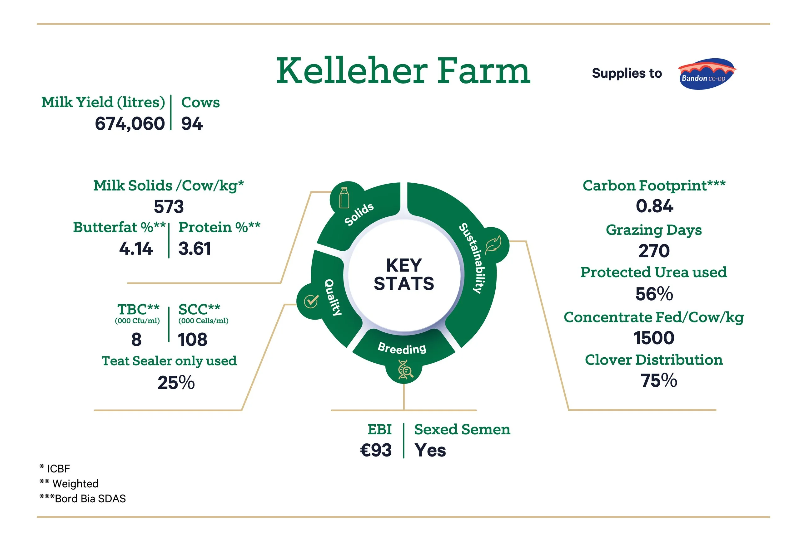
Through much of the main 2025 season, the TBC remained in single figures, while the ICBF performance report recorded a weighted annual SCC of 108,000 cells/ml.
Selective dry-cow therapy is equally targeted: 25% of cows received teat sealer only.
Mark's breeding policy carries the same evidence-led stamp.
The original herd included extreme Holstein genetics sourced from good herds, but fertility problems prompted a deliberate change of direction towards British Friesian influence and a more functional cow.
The whole herd was genotyped three years ago, and Mark carries out his own artificial insemination (AI).
All dairy semen used is sexed so that replacements come from the best cows.
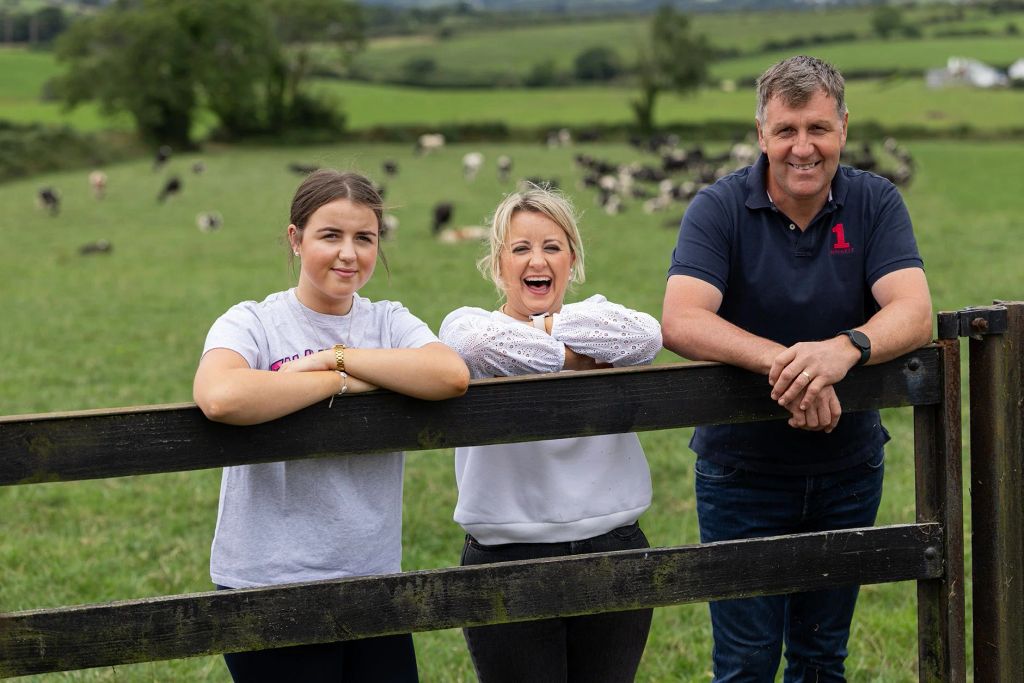
The farm's appearance is matched by caring for the landscape around it.
Native trees and hedgerows have been planted or strengthened every year since the Kellehers took over.
Waterways are fenced and buffered; rainwater is harvested for parlour washing; slurry is applied by low-emission equipment; protected urea and GPS-guided spreading reduce avoidable losses.
Clover is incorporated across 75% of the grazing platform; cows have a 270-day grazing season, and participation in the European Innovation Partnership (EIP) Water project and Carbery's Biodiversity Mapping Initiative extends the focus from compliance to measurable improvement.
The carbon footprint stands at 0.84kg CO2 equivalent per kg of fat and protein corrected milk.
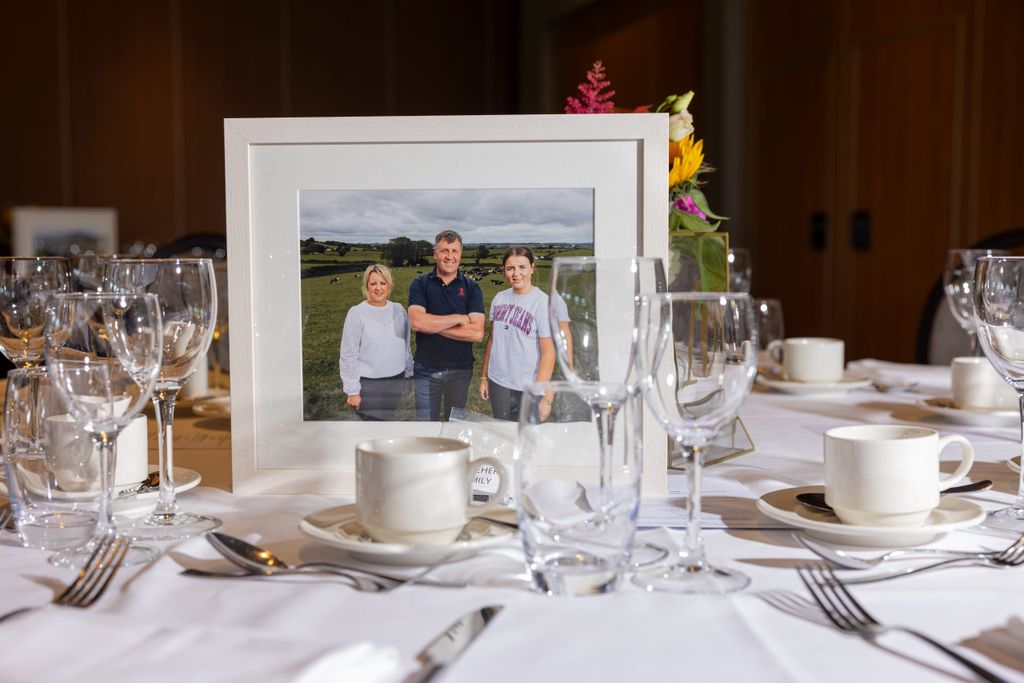
Elmarie's recent retirement as a bank manager opens a new chapter, although nobody expects it to be an idle one.
Her professional eye is reflected in the farm records, paperwork and measured investment, while her contribution reaches far beyond the office: she is active in the Cork Holstein Friesian Club and co-ordinates local choirs.
Mark, meanwhile, serves on the Bandon Co-op board and agricultural show committee and coaches two under-16 ladies' football teams.
At 15, Josephine calls herself the farm 'calf manager', and the title is well earned.
She milks, feeds and trains calves, contributes ideas on future genetics, serves with Cork Young Members Association (YMA) of the Irish Holstein Friesian Association (IHFA) and has won the Cork Young Handler title. She hopes to study agricultural science.
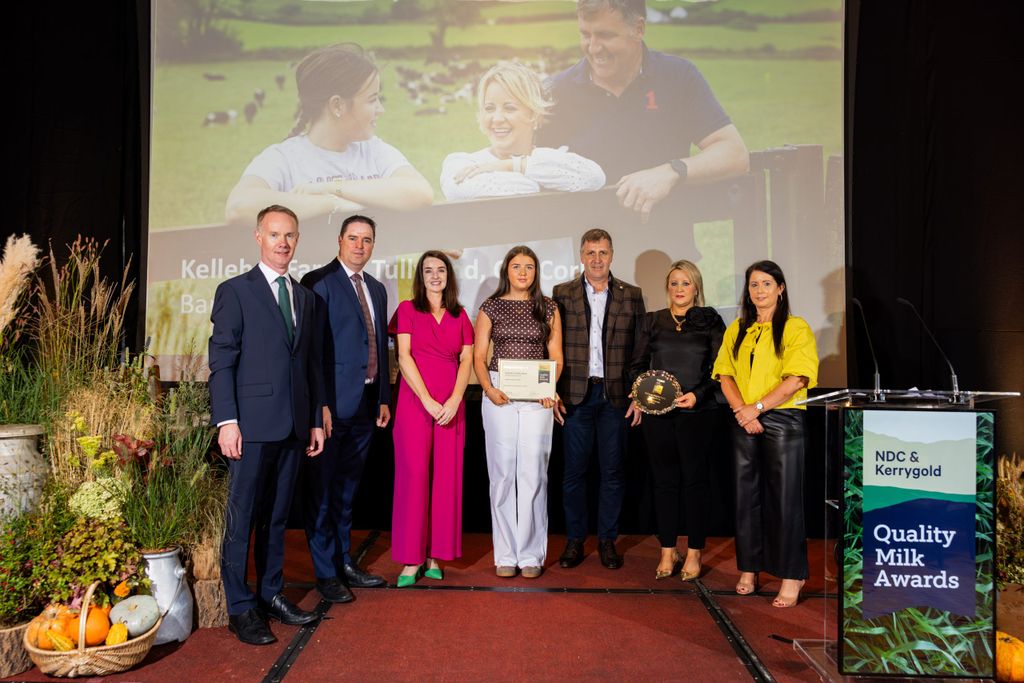
Springpark's first impression is powerful, but the lasting impression is deeper.
Here is a farm created by a man who had never milked a cow, strengthened by a woman whose banking career brought rigour and perspective, and enlivened by a daughter whose eye for cattle and horses links ambition with inheritance.
It produces excellent milk, protects the place in which that milk is made, and gives its family a life beyond the yard.
Kirby Farm - Barryroe Co-op
The Kirby farm, located in Mounteen, Ballinascarthy is run by John and Theresa Kirby, their son Gerard, along with daughter Claire and her partner Darragh.
Looking down towards Courtmacsharry, the Kirbys milk 86 pedigree Holsteins.
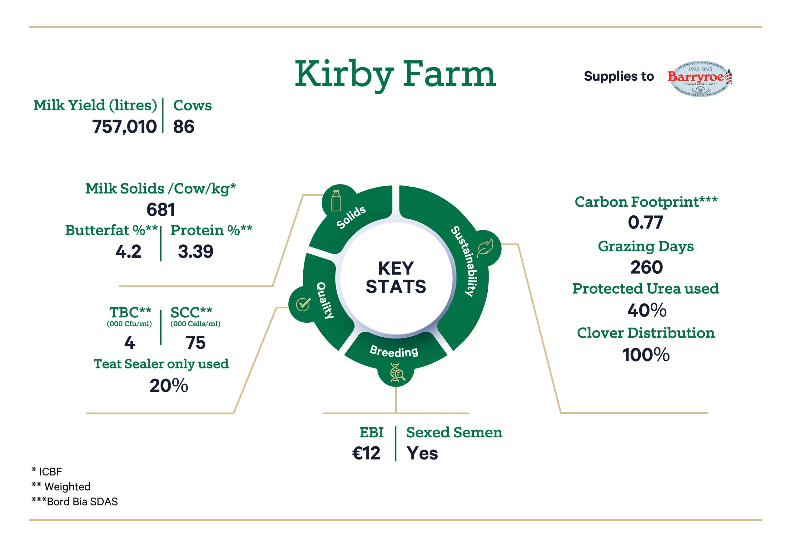
They are big-capacity cows bred to produce, averaging close to 8,900L, with 681kg of milk solids per cow.
Sixth, seventh, and eighth lactation cows are nothing unusual here.
The current herd averages around five lactations, and the ambition is to push that towards six.
Longevity matters economically, but it also says something about the way animals are managed.
Cows rarely grow old in a herd unless fertility, feet, health, housing and stockmanship are all working with them.
If breeding is the thread running through Mounteen, daughter Claire brings another dimension to it.
A graduate in Dairy Herd Management from Clonakilty Agricultural College, she now works as an evaluator with World Wide Sires while remaining heavily involved at home.
Her eye for cattle has also been tested well beyond the farm gate.
She was National YMA Champion Handler in 2018, has won major showmanship and heifer titles, represented the IHFA internationally and represented Ireland in European young breeder competition.
The Mounteen cows perform every bit as impressively.
Throughout 2025, TBC results were consistently between 3,000 and 5,000/ml, while SCC was frequently in the 50,000-60,000 range and remained at remarkably low levels throughout the year.
The same pattern continued into 2026. That does not happen by accident.
Pre-spraying and wiping, post-milking disinfection, and a disciplined plant-washing routine are standard.
The 16-unit BouMatic parlour is only four years old, with capacity already built in for 20 units.
Selective dry cow therapy was approached cautiously rather than embraced because it was fashionable.
The family initially tried teat sealer alone on selected cows, satisfied themselves that it worked and expanded its use.
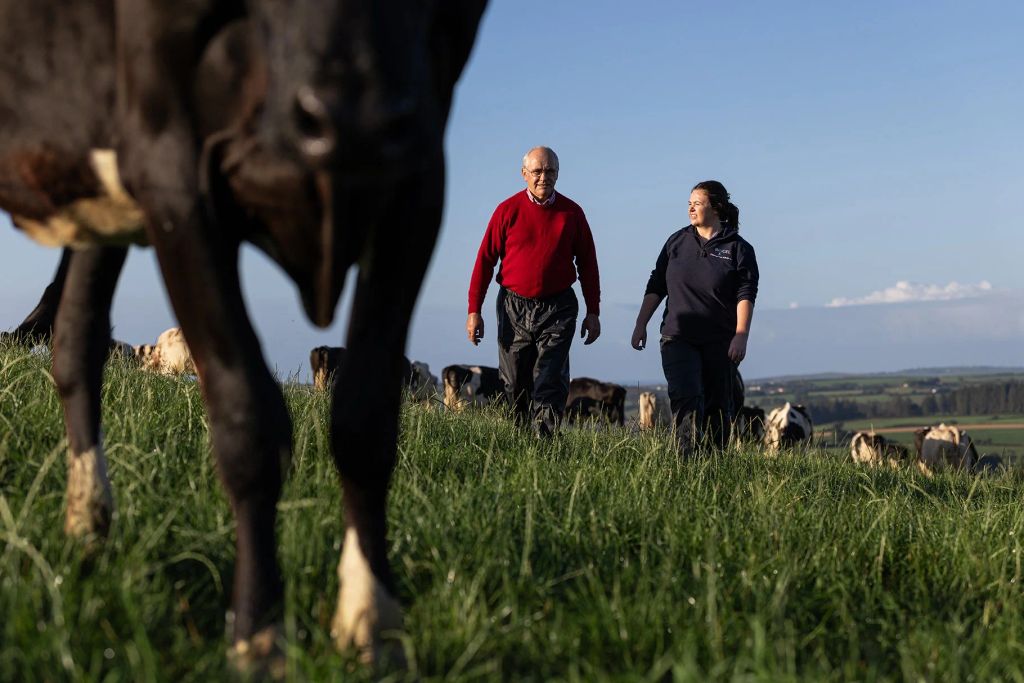
The Kirbys know their cows individually, but they are perfectly happy to let technology help.
CowManager collars monitor heat, health and temperature around the clock.
The family's description of them is better than anything in the sales brochure: "It is like having an extra person in the yard."
First-cut silage comes early - around May 10 - targeting 75-78 dry matter digestibility (DMD), with additives used to preserve quality.
Approximately 4-5ac of maize are grown, and beet is bought in to complement the winter diet.
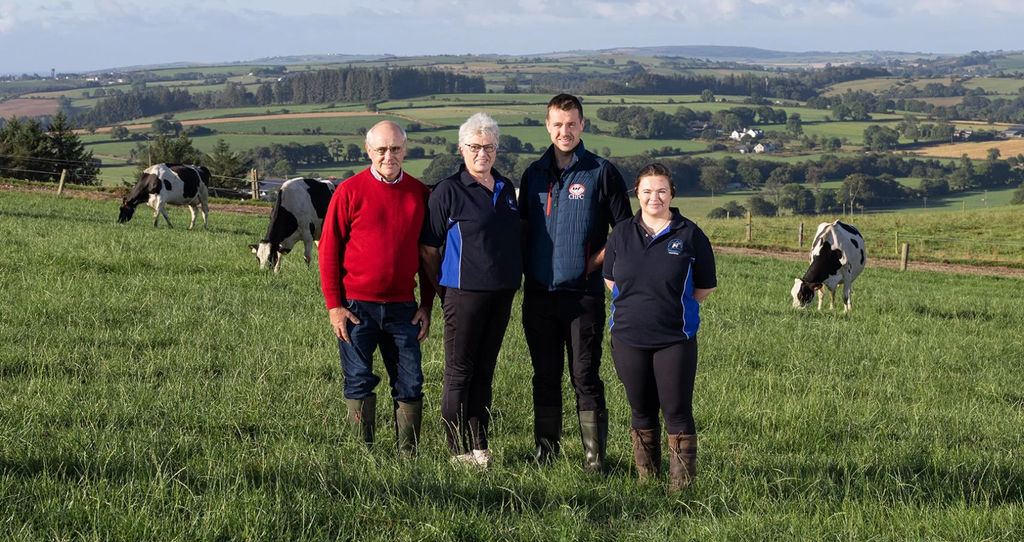
Grass remains central. The farm is measured around 25 times a year, 6ha were reseeded in 2025, and clover has been incorporated throughout the grazing platform.
The Kirbys record around 260 days on grass.
The farm's carbon footprint is 0.77kg CO2 equivalent per kg of fat and protein-corrected milk, reduced from 0.91 the previous year.
And again, it has not come from one grand gesture.
Protected urea, low-emission slurry spreading, soil testing, lime, GPS-guided nutrient application, variable-speed drives on the vacuum and milk pumps and LED lighting all contribute.
But some of the nicest environmental work requires no technology at all.
Some 350 hedging plants and 100 trees have been planted; bird boxes dot the farm; 4.5ac have deliberately been left wild; biodiversity mapping has been completed; and the family is exploring a reed bed to filter water.
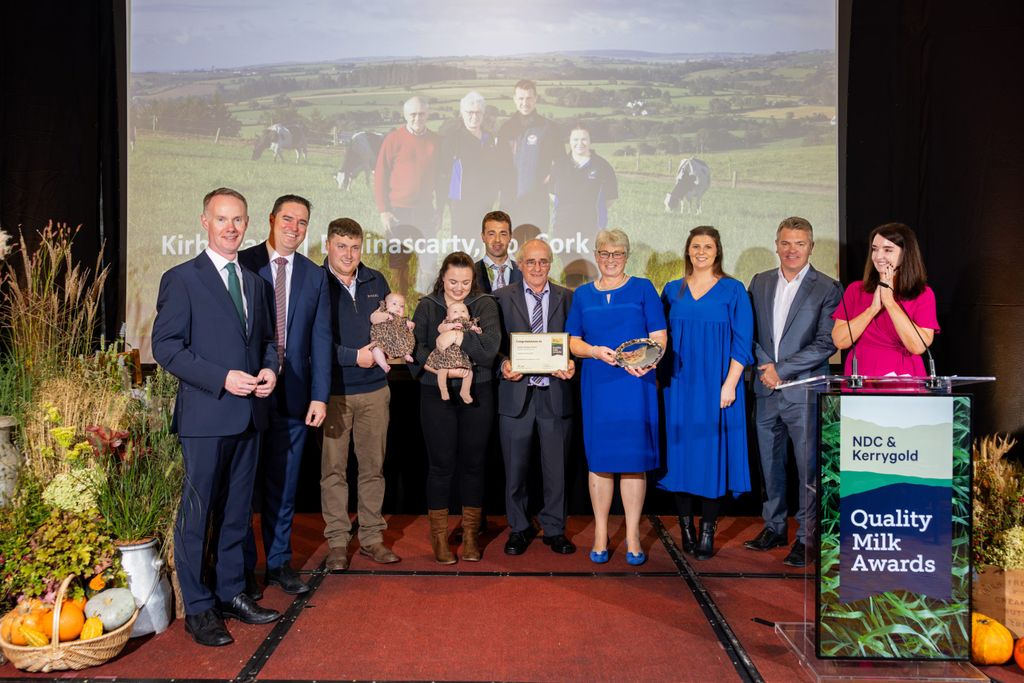
Perhaps the strongest impression of Mounteen, however, is that there isn't one Kirby farm manager.
John looks after much of the breeding and tractor work. Theresa is central to the milking.
Claire brings her professional breeding knowledge home with her.
Gerard combines the farm with his work at Barryroe Co-op and machinery work, while the wider family steps in as required.
And their interests extend well beyond the yard.
John and Gerard are involved in competitive ploughing; Gerard has achieved considerable success and both volunteer at ploughing events.
The family helps at the Clonakilty Agricultural Show, while GAA and Macra feature prominently in life away from the parlour.
More information on all the finalists is available on the Quality Milk Award YouTube page.
The Inside the 2026 Quality Milk Awards: Meet the Finalists series is a collaboration between Agriland, the National Dairy Council and Ornua.