Inside the 2026 Quality Milk Awards: Meet the Finalists Series
In this Inside the 2026 Quality Milk Awards: Meet the Finalists series, we meet the farms nominated by each of the dairy co-operatives and discover their stories.
In this first episode in the series, we meet the Breen family from Co. Tipperary, who were chosen by ArraTipp Co-op and came away with the gong for Lowest Carbon Footprint.
We also meet the Kelly family from Co. Donegal, who were chosen as the Aurivo Co-op finalist for the awards.
Breen Farm - ArraTipp Co-op
Winner - Lowest Carbon Footprint
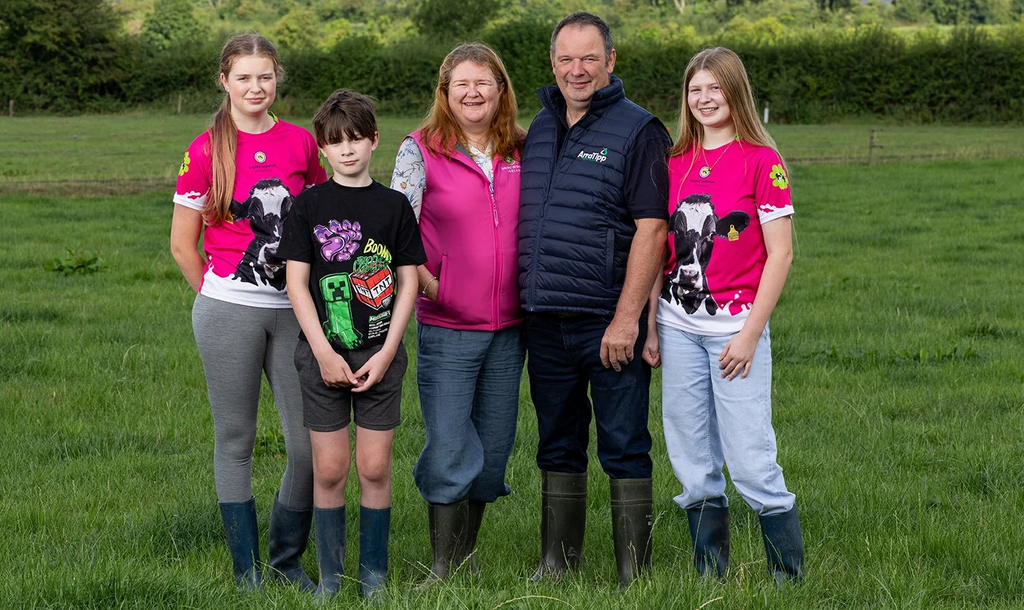
Simon Breen, his wife Carol and their children Julia, Sarah and Peter farm alongside Simon's parents, Peter and Sheila, on their 243-cow farm in Emly in the west of Co. Tipperary.
Simon is the second generation farming the land, after his parents bought the original 56ha hectares in 1979.
Three generations have since grown it into a 127ha business that comfortably supports two families.
This spring they were chosen to be the first Milk Supplier of the Year for ArraTipp Co-op, an honour the family describes as representing not just their own yard but their parish.
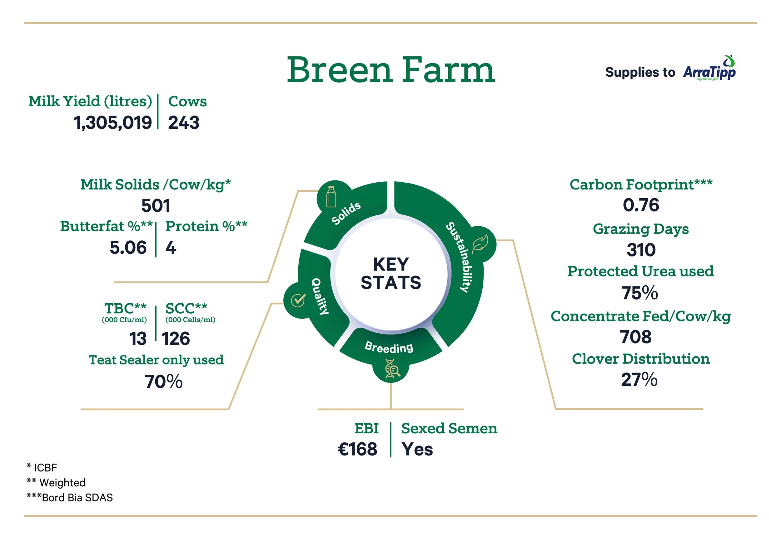
The herd delivered 501kg of milk solids per cow in 2025 off 708kg of meal ,and sits in the top 1% of the co-op for both butterfat and protein.
Most telling of all is a single ratio Simon keeps in his head: 1.03kg of milk solids delivered for every kilo of cow.
Simon said: "Every farmer needs to work out his own system.
"If you can't explain that system in less than five minutes, it's too complicated."
The herd Simon wanted was built on 12 years of crossbreeding.
The last pure Friesian, a remarkable 13th-lactation cow, left only this year.
Friesians were crossed first with Jerseys, then with New Zealand Kiwi-cross genetics, chasing fertility, high solids, and a low carbon footprint.
This has been a chlorine-free dairy since 2017, years ahead of the requirement.
Total bacteria count (TBC) results spend most of the year in single figures, and the somatic cell count (SCC) is held comfortably inside target through the season.
Grass is the engine behind the solids. The herd is out for 310 days a year, from early February to mid-December.
Simon walks the farm and measures grass 50 times a year on PastureBase.
He said: “You can't manage something you don't measure".
He has pushed clover to 27% of the grazing platform, with 77% of the silage ground now with red clover taking zero chemical nitrogen.
"Technology is useful only when it earns its place," Simon said.
Cow collars have been used for a decade to support heat detection and daily health surveillance.
The environmental work runs well past the paddock gate. The farm's carbon footprint sits at 0.76kg of CO2 equivalent per kilogram of fat and protein corrected milk (FPCM).
A 1.25ha reed bed polishes grey water from the yard; two hectares of new native woodland, alder, birch, rowan, oak and whitethorn, and a fresh kilometre of whitethorn hedge have gone in, with a solar application pending.
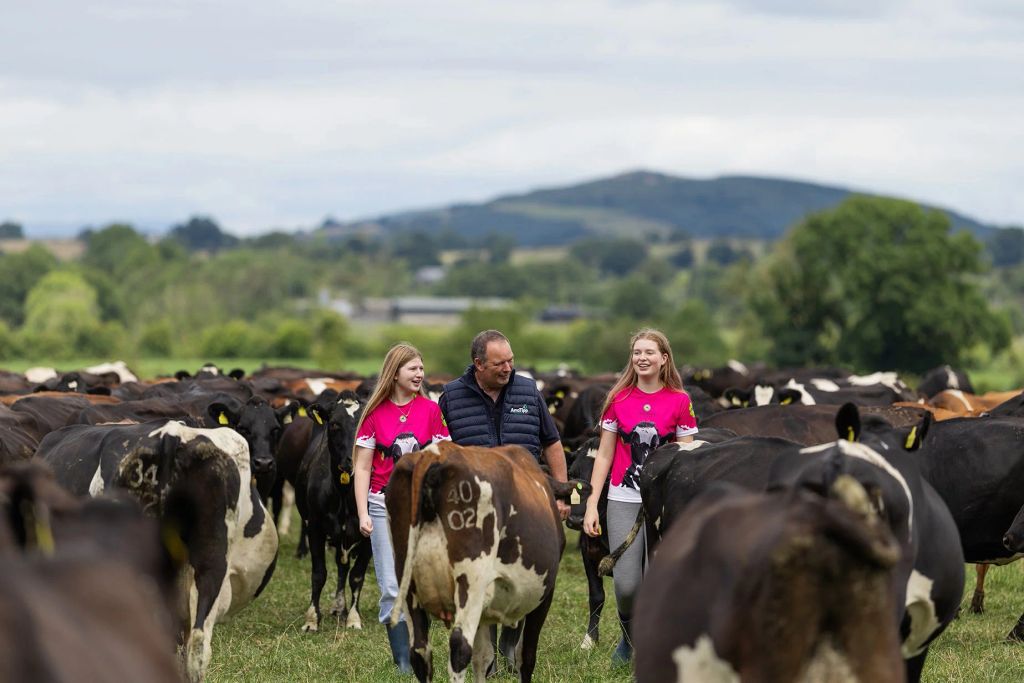
However, none of it would work without the people.
Peter and Sheila are still hands-on with calves and herding; Carol runs calf-rearing and the grassland discussions, and the three children all have jobs on the yard, alongside a settled outside team led by full-timer Gleidson.
Family life is protected as deliberately as the herd.
Beyond the farm gate, Simon never misses his daughters' GAA matches, and he chairs the parish text-alert group, sings in the Emly church choir, brings farm-safety talks to the local pre-school.
Simon Breen breeds a cow that looks like nothing special but performs like everything.
It is little wonder ArraTipp chose this Emly family to carry its colours in its first year.
Kelly Farm - Aurivo Co-op
Winner: Advocacy (Community and Industry) Leadership
The Waterwheel Farm in Ballyarrell, Co. Donegal is run by Patrick Kelly and is located on the edge of Aurivo's Killygordon processing site.
The connection with the co-operative movement is almost as old as the farm itself.
The Kelly family has worked at Ballyarrell for more than 200 years, and Patrick's great-grandfather was the first vice-chair of Finn Valley Co-op in 1898, part of the lineage from which the modern dairy business developed.
Patrick's father helped establish Donegal's first dairy discussion group in 1990.
Patrick has carried that instinct for collective progress onto the national stage - first through Macra na Feirme, where he became national chair, and later through the Teagasc Authority, Donegal Creameries, Progressive Genetics and the Irish Cattle and Breeding Federation (ICBF).
He served for 12 years on the ICBF board, eight of them as vice-chair.
Patrick studied agricultural science at University College Dublin (UCD), gained experience on farms in the Netherlands and France, and then spent a year working in New Zealand and Australia.
When he returned, he established a separate dairy herd to secure milk quota before later merging it with the home enterprise.
The farm has changed enormously since then, but his enthusiasm has not become complicated.
He said: "The reason I am farming is that I love farming."
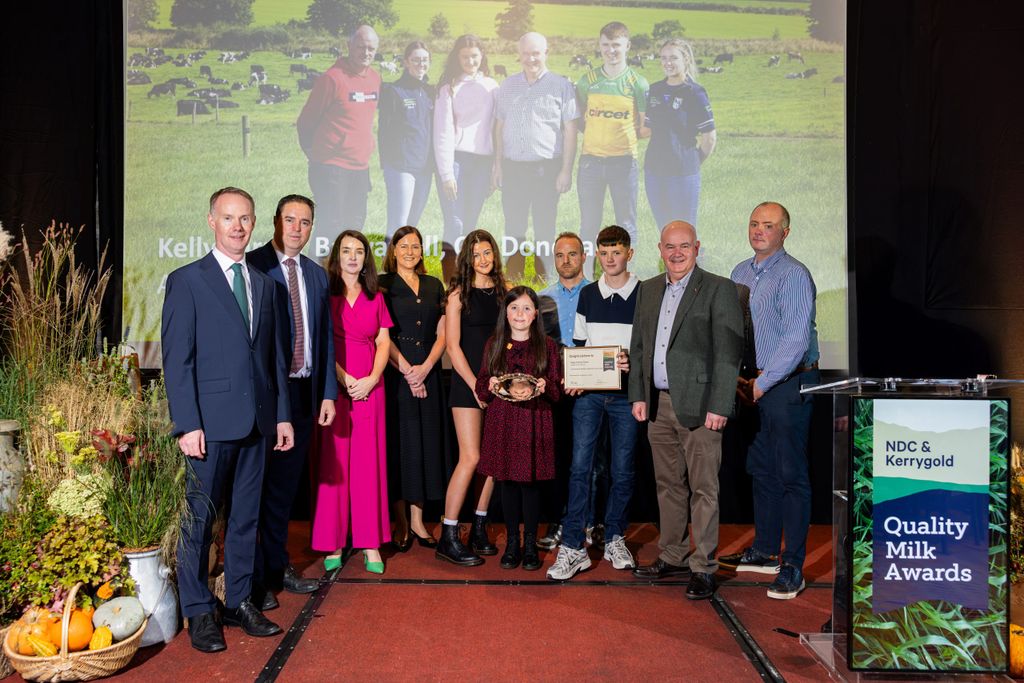
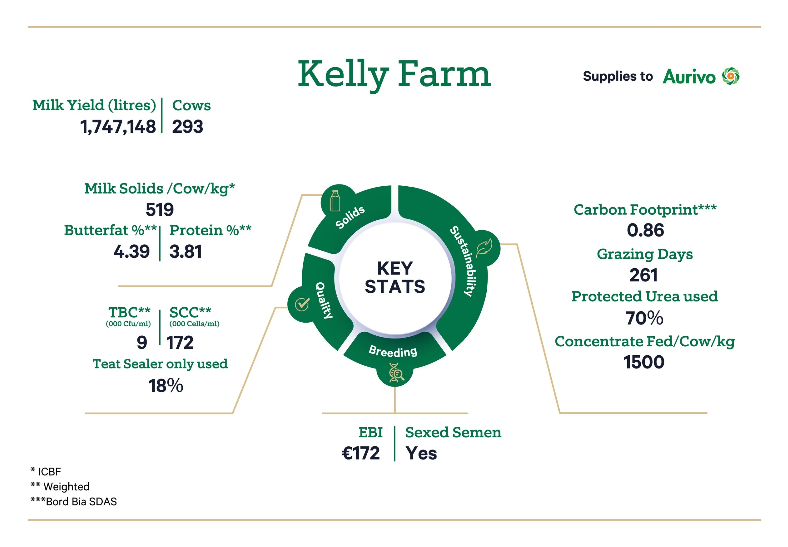
Patrick milks 293 high-Economic Breeding Index (EBI) Holstein Friesians on 145ha, supported by his brother-in-law Mark Sammon and Thomas Doherty.
The herd delivered 150,484kg of milk solids in 2025, or 519kg per cow, while also supplying a small winter milk contract.
The 2026 milk-quality figures are particularly impressive: somatic cell count (SCC) fell to 91,000 cells/ml in March and 77,000 in April, while total bacterial count (TBC) has generally remained around 9,000 to 12,000cfu/ml.
The same care is evident in antibiotic stewardship.
In 2025, 18% of the herd was selected for teat sealer only at drying off.
Patrick began cautiously, using milk-recording history to exclude any cow that had shown a cell-count spike and arranging enough help so that no more than one row was treated at a time.
Cow comfort is built into the physical farm.
A major shed completed in 2022 brought total accommodation to 400 cubicles for about 360 cows and heifers.
It provides light, airflow, wide passages, generous feed space and several crossing points, reducing competition and allowing cows to move naturally.
Roadways have been resurfaced with hoof health in mind, and cows are allowed to come to the parlour calmly in their own time.
Waterwheel Farm is equally strong beyond the yard.
The River Finn, a Special Area of Conservation, runs along the farm.
Its banks have been fenced with a 5m-10m margin and planted with 3,000 native birch, rowan, willow, alder and oak.
Some roadways were moved away from watercourses, and others were resurfaced to fall away from drains.
Low-emission spreading, protected urea, annual soil sampling, 40 grass walks a year and precision fertiliser application all contribute to a carbon footprint of 0.86kg CO2 equivalent per kilogram of fat and protein corrected milk (FPCM), an excellent result for a herd of this scale that also carries a winter contract.
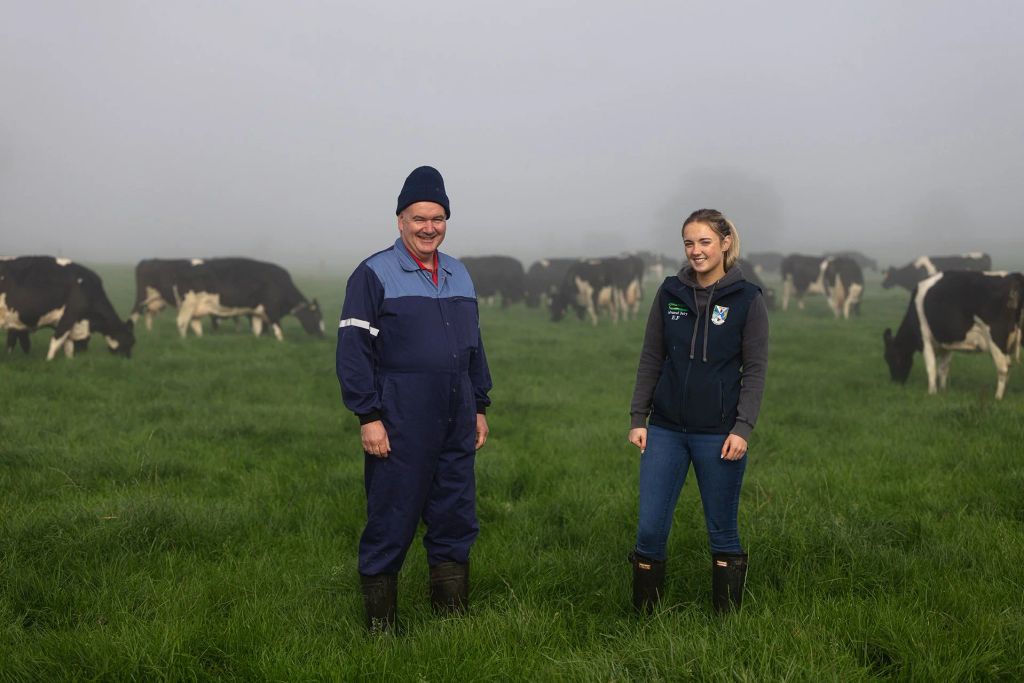
The next target is not more cows.
Patrick is reducing stocking pressure so that more ground can be reseeded, and the herd's genetic potential can be expressed through better grass allocation.
His aim is to sell the same volume of milk from fewer cows.
Replacement heifers have an EBI of 208 and the 2026 calves average 227.
Waterwheel also invests in its people.
Patrick's dad, as an employer, retained one member of staff for 54 years; today the farm employs two full-time workers, and he regularly takes students from Ballyhaise Agricultural College and ATU Letterkenny.
Patrick also guest lectures on genetics and hosts students for practical classes, while local schoolchildren are invited to see how milk is produced.
More information on all the finalists is available on the National Dairy Council's YouTube page.
The Inside the 2026 Quality Milk Awards: Meet the Finalists series is a collaboration between Agriland, the National Dairy Council and Ornua.