Managing the transition period ahead of spring calving


Now that we are in the new year, the transition period for your cows will need to be managed before cows begin calving down.
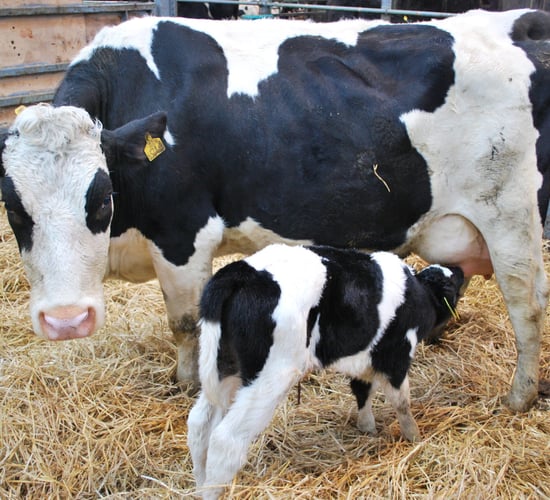
A cow's transition period is the three-week period prior to calving to the three weeks post-calving.
That means farmers who begin the calving season in mid-late January will currently have cows entering this transition.
It is a crucial time in determining the cow's productivity and performance this spring, there for managing it correctly with minimum stress and maximum comfort is vital.
Poorly managed transition periods can lead to higher disease incidence, poorer production and reproduction and higher herd removal rates.
The majority of farmers observe the highest incidence of disease within the first three weeks after calving, with milk fever posing the biggest threat post-calving.
The transition period
Ensuring cows are calving down at the correct body condition score (BCS) of 3-3.5 is one of the main factors during this time.
This is done through feeding the herd a well-formulated diet, consisting of high quality silage with at least 68% dry matter digestibility (DMD).
BCS during the transition period will have to be actively monitored prior to calving, so farmers can intervene on time if certain cows have appeared to fall behind.
However, in the short time ahead of calving, you cannot expect a miracle turnaround if cows were not given an adequate dry period to build condition.
Later calving cows will have to be checked regularly for BCS, as they will more than likely have a longer dry period and may need their silage restricted three to four weeks prior to calving, as you do not want them over a BCS of 3.5.
Overfat cows will have a higher risk of milk fever and metabolic disorders arising.
Minerals
Feeding minerals to the herd during this period is also essential to avoid any metabolic issues.
The herd should have a constant supply of pre-calving minerals, dusting 120g/cow/day onto silage.
Ideally these minerals should be spread twice daily, with 60g/cow in two feeds six to eight weeks pre-calving.
Cows need adequate phosphorus (P), magnesium, trace elements, and vitamins to be supplied to the cow during this period of rapid foetal growth.
Dry cows will require 0.4% of dry matter (DM) magnesium in the diet from at least four weeks pre-calving.
Once calved, the lactating cow will require 0.3% of DM magnesium for approximately four months post-calving.
High levels of of potassium (K) in grass silages can be common due to the timing and volume of slurry application.
High K silage can interfere with the absorption of magnesium, which can result in milk fever cases.
Silages with a K level of above of 2.4% should not be fed to cows two to three weeks before calving to minimise the risk.
It is important to keep an eye out for any indications of sub-clinical milk fever, retained cleanings, mastitis, or any metabolic issues this spring, as they can be overlooked during the busy time of calving and negatively impact the farm's performance.