Macra's Make the Moove campaign at centre of WRC dispute

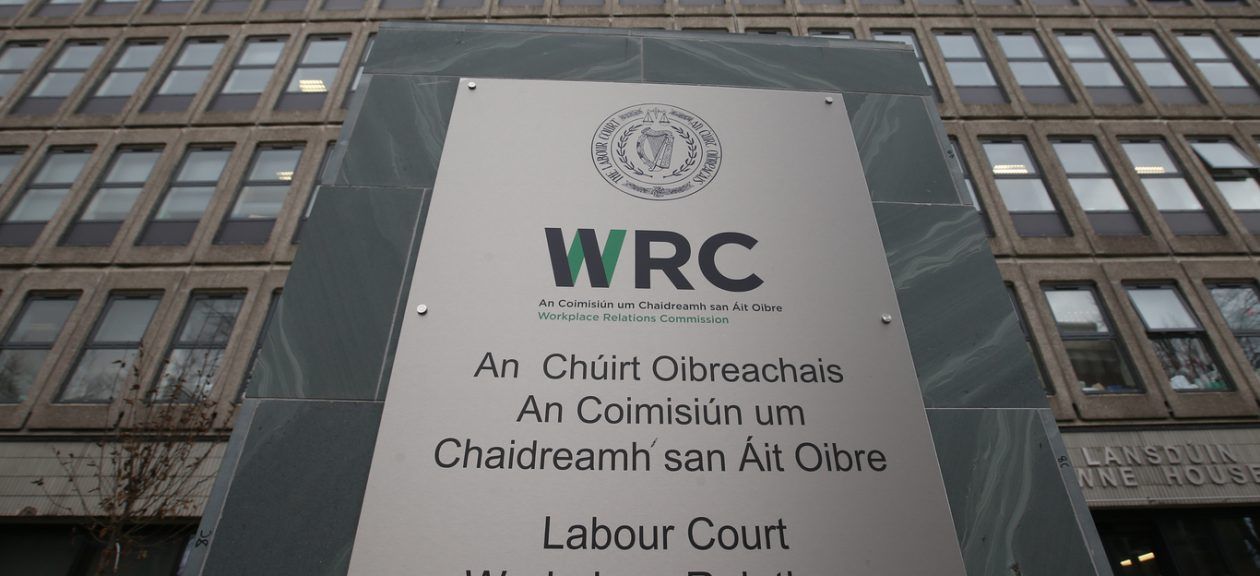
Macra's farmer mental health and suicide awareness campaign 'Make the Moove' (MTM) was at the centre of a dispute that came before the Workplace Relations Commission (WRC).
In October 2024, the complainant, Conor Holohan, started work as the MTM programme manager, with his title later changed to programme director.
The dispute revolved around what he claimed was penalisation for a complaint he made against the then-president of Macra (who was not identified by name in the WRC decision).
The WRC adjudicator, Catherine Byrne, ultimately found against the complainant, rejecting the case that the cumulative effect of the treatment he complained about led him to no alternative but to resign from his job.
The WRC decision stated that the complainant "had a difficult relationship" with the then-Macra president.
Six months into his tenure, in March 2025, the complainant submitted formal complaint to Macra regarding what he alleged was "bullying, mistreatment and undermining behaviour" on the part of the president.
He went absent due to stress in April 2025. He didn’t return to work but handed in his notice in June. His employment ended two weeks later, on July 11.
Making a complaint to the WRC, he claimed that sustained mistreatment and a failure of Macra management to act forced him to resign.
The complainant said that his resignation was not a voluntary decision, but that it was "the direct and foreseeable consequence of the cumulative penalisation” to which he claims he was subjected after he submitted his formal complaint about the president.
In his submission to the WRC, he said that he made the decision in the interest of his health and well-being. He claims therefore, that his constructive dismissal was an act of penalisation.
The adjudicator decided that the complaint of penalisation was not well founded.
Complaint
The complainant had alleged that he was subject to a number of acts that he claimed were in retaliation for his complaint against the president.
These include a decision to extend his probation period, a reduction in sick pay by 50%, and loss of access to his work emails.
He was also requested to attend a medical assessment, which he claimed was "coercion or intimidation".
The complainant said that the cumulative effect of these events "placed him under significant pressure"; that his mental health continued to deteriorate; and that he experienced anxiety, low mood, insomnia and significant distress in relation to his employment situation.
He claimed that these actions "directly contributed to the deterioration in his mental health and ultimately, led to his resignation".
The complainant had sought compensation for the reduction in his earnings to 50% for a period of about three weeks, as well as a loss of earnings while he was unemployed for three weeks from the date of resignation until he started a new job.
He also claimed redress of non-financial losses, including the impact on his mental health, the cost of counselling, and the loss of professional fulfilment.
In responding, Macra said that the Make the Moove programme was "floundering", and that the difficulties arose because of interpersonal issues between the complainant and the president.
Macra's representation said that none of the acts which the complainant claimed were penalisation occurred because of the complaint against the president.
According to the WRC decision, the CEO of Macra "agreed that there was substantial merit" in the initial complaint against the president, and that "the conduct of the president was inappropriate".
The CEO also gave evidence that the tension between the complainant and president "was becoming apparent" to Macra members, and that the relationship between the two had become "toxic".
Macra's representation said that the MTM programme was struggling because of the relationship between the president and the complainant, and that there was "potential for fault on both sides".
Macra's representation said that the complainant's access to work emails was blocked because he was out sick.
It was also Macra's case that the request for medical assessment was in line with the organisation's policy on sickness absence.
Macra's representation said that the organisation "has no control over how the assessment was carried out or the conclusions reached by the doctor".
Decision
In coming to a decision, the WRC adjudicator said that it was not her role to investigate the initial complaint against the Macra president, but to decide if the actions taken by Macra after the complaint were taken "wholly or mainly" because he submitted the complaint.
The adjudicator also said she was required to determine if it was reasonable for the complainant to assert that the cumulative effect of those actions led to his resignation, and if his resignation was a constructive dismissal.
Ultimately, the adjudicator found in Macra's favour, stating: "I have concluded that the decision of the CEO to extend the complainants probation was done for reasons related to his performance and was not caused by his having made a complaint about the president.
"I have also concluded that the actions taken by the CEO in the weeks after the complainant went absent due to work-related stress were consistent with the complainant’s contract and was reasonable treatment of an employee on long-term sick leave," the decision stated.
"Finally, I reject the complainant’s case that the cumulative effect of the treatment he complained about led him to a position where he had no alternative but to resign from his job. I decide therefore, that his complaint of penalisation is not well founded," the adjudicator said.
Update: The complainant Conor Holohan has contacted Agriland to state that he intends to appeal this WRC decision to the Labour Court.