Sponsored
'It’s small money to stay on top of quality' - tackling SCC in Tipperary

Sponsored by
When Co. Tipperary dairy farmer Brendan Phelan noticed his bulk tank SCC beginning to rise unexpectedly this spring, he knew he needed answers quickly.
Rather than waiting for his next scheduled milk recording, Brendan decided to use Genocells - the bulk tank SCC testing service from Munster Bovine and Progressive Genetics in association with the Irish Cattle Breeding Federation (ICBF) - to help identify the cows contributing most to the issue.
Within days, he had the results.
Brendan explained: “It was a very quick process and the information you get back is very valuable."
Watch Brendan Phelan’s Genocells farmer testimonial video below to hear how he used the service to quickly identify high SCC contributors in his herd and why he plans to use the service as part of his yearly herd management routine.
Brendan farms alongside his wife Margaret on Beechmount Farm, a 245ac leased farm milking 200 spring-calving cows.
The farm was established in December 2023 using cows sourced from several different herds, with Brendan saying herd health and milk quality were major priorities from the beginning.
“We started out with 100 heifers and 100 cows and because we were bringing cows in from several different herds, we knew we needed good information from the beginning,” Brendan explained.
One of the first steps taken on the farm was to genotype the entire herd through the National Genotyping Programme (NGP), helping Brendan build a clearer breeding and herd management strategy.
“We use the genetics alongside the milk recording results. The genetics are one part, but you also want to see are the cows actually performing,” he said.
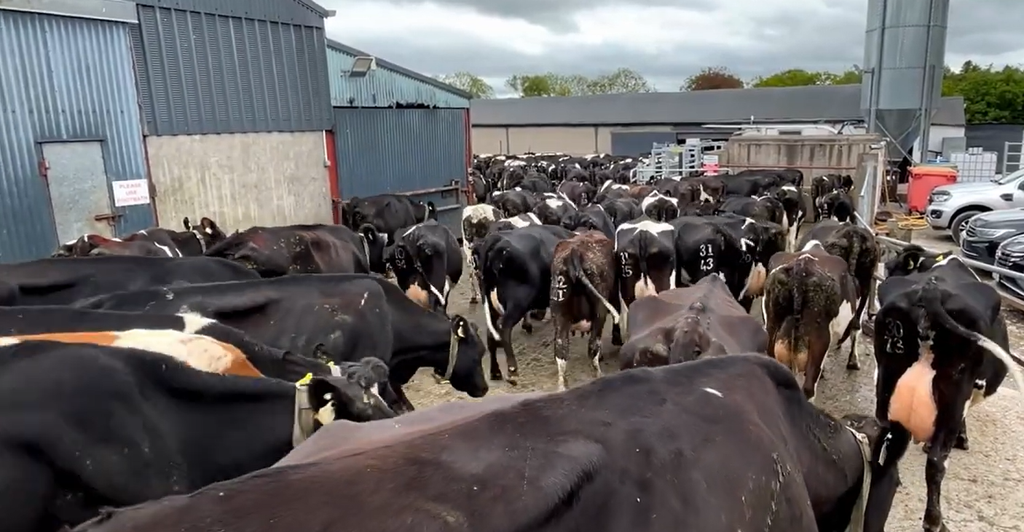
Like many Progressive dairy farmers, Brendan milk records four times annually and closely monitors SCC trends throughout the year.
However, during the spring he noticed his bulk tank SCC begin to rise unexpectedly.
“Last year the cell count was hovering just above 100, but this spring it started climbing into the 230-240 range. I knew there was an issue there.
“So we've done the milk recording the second week of March, which is about three weeks earlier than we normally would,” he explained.
Rather than waiting for the next milk recording, Brendan decided to act quickly.
“I took the sample from the tank after the milk recording and within a few days the results were back.
What stood out most for Brendan was the level of detail provided within the report.
“When I compared the milk recording and the Genocells report together, I could actually see the percentage each cow was contributing to the problem in the tank.
"Some cows were contributing almost nothing while one cow was contributing over 40%.”
This ability to quickly pinpoint problem cows gave Brendan confidence to act fast and avoid a more significant SCC issue developing in the herd.
“It might only be one quarter in one cow causing the issue and you wouldn’t necessarily spot it straight away. Genocells helped us identify it quickly.”
Ease of use was another major advantage highlighted by Brendan.
“The bottle arrived with simple instructions. I took the sample, filled in the cows contributing to the tank on the ICBF app and posted it away. The whole process was straightforward.”
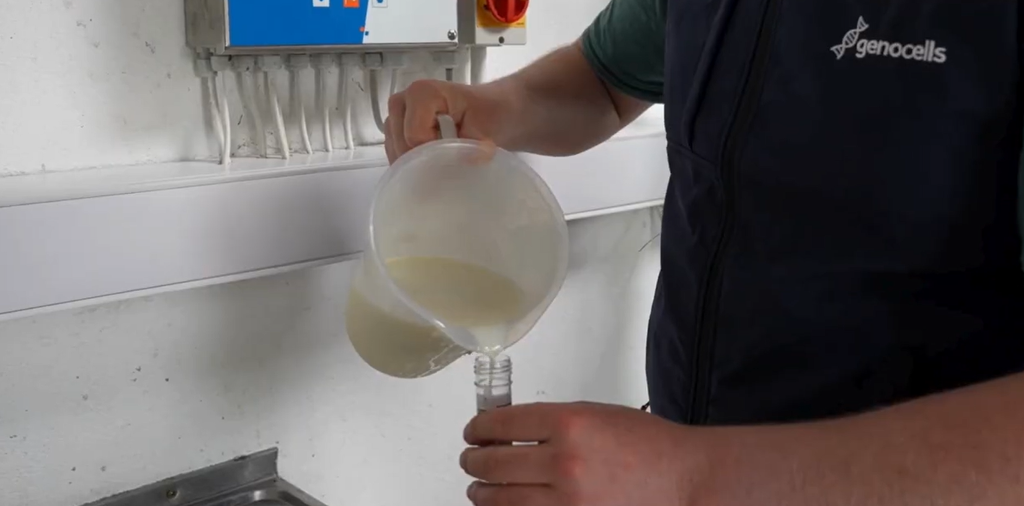
Brendan now sees Genocells becoming part of his routine herd management plan going forward.
“I’d definitely use it again. I can see it fitting in three times a year - between milk recordings and again before dry-off.”
He also believes it provides an important additional layer of information ahead of selective dry cow therapy decisions.
“It’s another tool to help make better decisions before dry-off and to stay on top of milk quality.”
At a cost of €180 per sample, Brendan believes the service represents strong value for farmers trying to protect milk quality and avoid SCC penalties.
“For me, it works out at less than €1 per cow. It’s small money to stay on top of quality.”
Brendan also encourages other farmers to trial the service for themselves.
“I would recommend farmers to give it a try and see how it works for them.”
Genocells delivering confidence on farm
One year on from the launch of Genocells, dairy farmers across the country are continuing to see the benefits of this innovative technology as an additional tool to help manage somatic cell count (SCC) and support milk quality on farm.
Launched by Munster Bovine and Progressive Genetics in association with ICBF, Genocells uses a single bulk tank milk sample to identify the cows contributing most to the SCC in the tank.
The technology works by extracting DNA from somatic cells present in the milk and matching it against the genotypes of the cows contributing milk to the tank.
Using milk recording yield data and bulk tank SCC results, Genocells can identify the percentage contribution each cow is making to the overall SCC level.
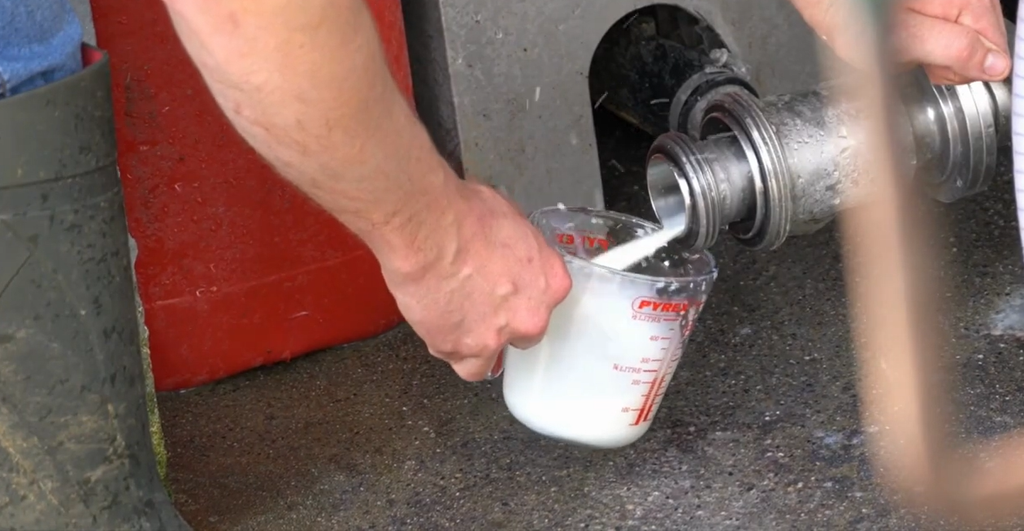
As somatic cells are the only milk components that contain DNA, the percentage of DNA that each cow contributes to the overall DNA volume in the bulk tank is equivalent to the percentage of somatic cells that each cow contributes to bulk tank SCC.
This is known as percentage cellular responsibility.
Individual SCCs are then calculated using the percentage cellular responsibility, the percentage of the milk volume that the cow contributed to the tank (calculated using milk recording yields) and the bulk tank SCC result.
Genocells SCC results are reported using bands: 0–50; 51–199; 200–249; 250–499; 500–999; and 1000+.
Results are made available through the ICBF HerdPlus app and website, providing farmers with a clear indication of the top cows contributing to the bulk tank SCC.
For many farmers, this has become an invaluable management tool, particularly during periods where SCC spikes unexpectedly between milk recordings.
Who is Genocells suitable for?
Genocells will provide more points of information over and above milk recording results to manage herds with high or fluctuating cell counts.
Genocells is also suitable for low cell count herds that experience spikes in cell count as it is a simple and convenient way of identifying high SCC cows relatively quickly.
Genocells can also provide more points of information about individual cows before dry-off to make better decisions regarding dry cow therapy and cow retention.
What does a dairy farmer have to do to avail of Genocells?
- All cows contributing milk to the bulk tank must be genotyped. If a nongenotyped cow contributes milk to the bulk tank, this will affect the accuracy of the results for other cows;
- The herd must be a member of ICBF HerdPlus;
- The herd owner must download the ICBF HerdPlus app. There is no cost associated with this;
- The herd must be signed up to complete four milk recordings annually and the first milk recording must be completed before a Genocells test can take place, as milk yield is essential to calculate individual SCC contributions.
Genocells is available now to Munster Bovine and Progressive Genetics milk recording customers.
For more information contact Munster Bovine on 022 43228 or Progressive Genetics on 046 954060.
Sponsored by