Irish MEP warns EU budget will test farming support

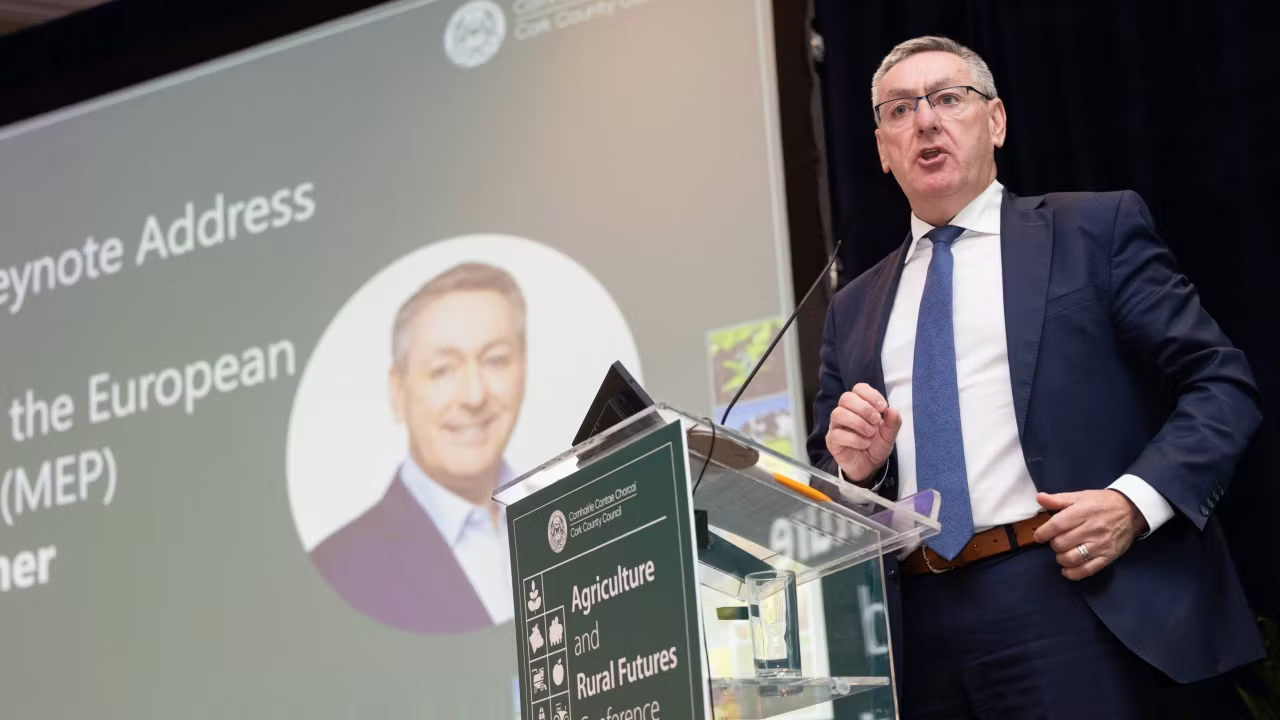
The outcome of the ongoing EU budget discussions will indicate whether there is a deep commitment across Europe to sustain agriculture and rural communities into the future.
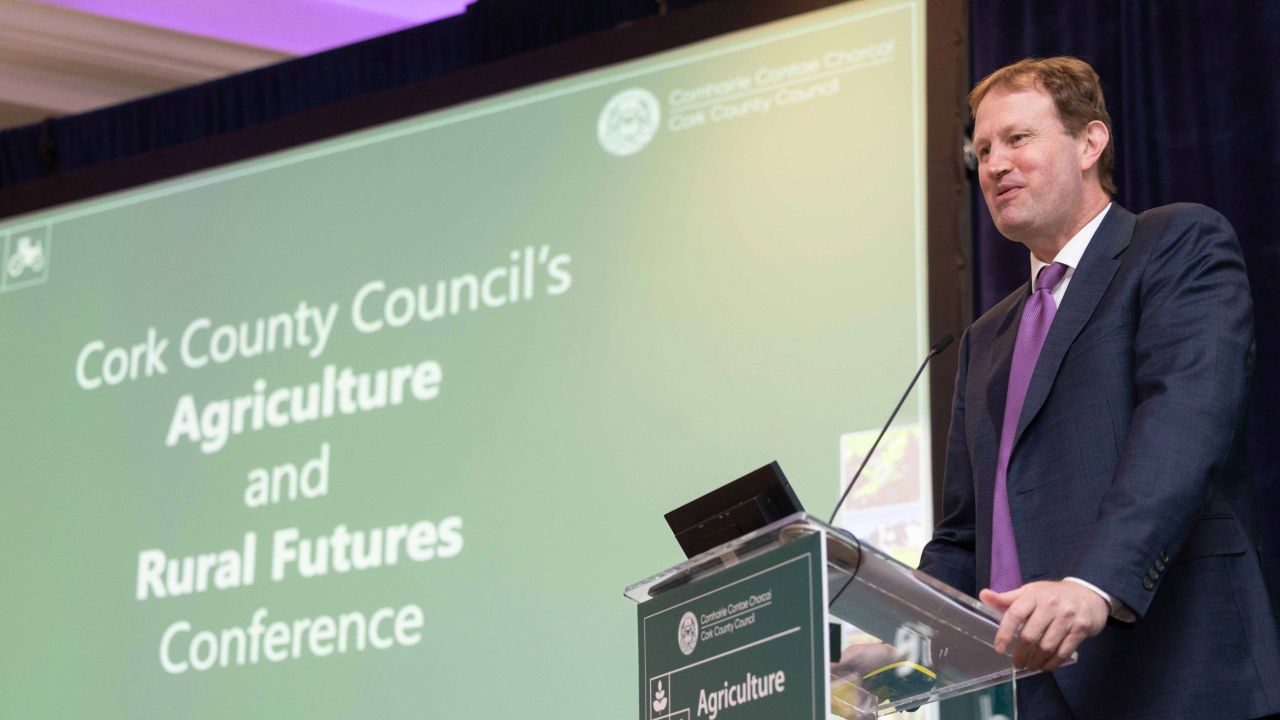
That’s according to Ireland South MEP Billy Kelleher who was speaking at Cork County Council’s Agriculture and Rural Futures Conference at the Charleville Park Hotel today (Friday, November 27).
MEP Kelleher said there are “significant headwinds” facing the agriculture sector in the coming years, with the most immediate being the next EU long-term budget, or Multiannual Financial Framework (MFF).
EU leaders met in Brussels this week to try to strike a deal on the bloc's 2028-2034 budget, but the process has been far from straightforward.
Some member states, who are net contributors, are calling for the overall budget to be reduced, while others, including Ireland, are seeking to protect agricultural and regional development funding.
Speaking after a Special European Council meeting the President of the European Council, Antonio Costa, said that while political leaders had a "very interesting discussion in plenary and also in different working groups. We didn't reach an agreement".
Costa also acknowledged that "a large majority of member states asked not to compress funding for agriculture and cohesion".
EU budget
Billy Kelleher told today’s conference that he believes there is a “very legitimate argument” from some member states to prioritise defence capabilities in the EU.
“But equally we have to convince those that will be deciding on their budgets that rural communities in Ireland and right across Europe need to be supported as well not just from an emotional perspective but from a strategic perspective.
“We have to have food security, we have to be able to know that in the event of there being geopolitical circumstances that undermine the global system as it is that the European Union can feed itself,” he said.
The MEP noted that agriculture, unlike many other industries, “is not something that you can turn on and turn off”.
Generational renewal
Kelleher said that the age profile of farming and of farmers across Europe is “rising dramatically” which is “becoming an existential crisis, if it's not addressed in the next number of years”.
“That's why the negotiations that are happening at the moment are of huge importance not just for the immediate income of farmers themselves, but for the long term viability of agriculture rural communities and the agri-food sector that is dependent on the quality of produce being produced” he said.
The MEP told the conference that intergenerational renewal should be put “front and centre of every policy to underpin agriculture and rural communities”.
“The only way you can have intergenerational renewal is if young people see a future in agriculture, if they see a future in residing in rural Ireland.
“A vibrant agricultural sector in an empty rural Ireland isn't an exciting place to live for farmers and equally a desolate despondent rural Ireland with poor agricultural output and incomes isn't a great place for others to live either,” he said.
The MEP said planning is also a key issue for rural communities to be able to continue to intergenerationally sustain themselves.
“If there's a shortage of young people in rural Ireland, they move elsewhere and we've witnessed that in our history,” he said.
Policy
Kelleher said he believes that farmers can farm in a “very sustainable commercial intensive way” if they are given a reward for their output and confidence around investing in upgrading facilities.
“We can't have farmers and the agri-food sector in general not knowing next week next month what type of policy is going to be pursued in the next number of years,” he said.
Although Ireland has secured an extension of the nitrates derogation, Kelleher said uncertainty still persists around the future.
“We've got to stay on that for a period of time, but again we're expecting farmers co-ops right across the agri-food sector to look into the future without knowing whether or not that will be there in a number of years.
“It undermines the confidence of the individual farmer themselves to invest not knowing what output they will have in the years ahead and then it undermines the viability of the broader agri-food sector,” he said.