How to work out a cow's water requirement

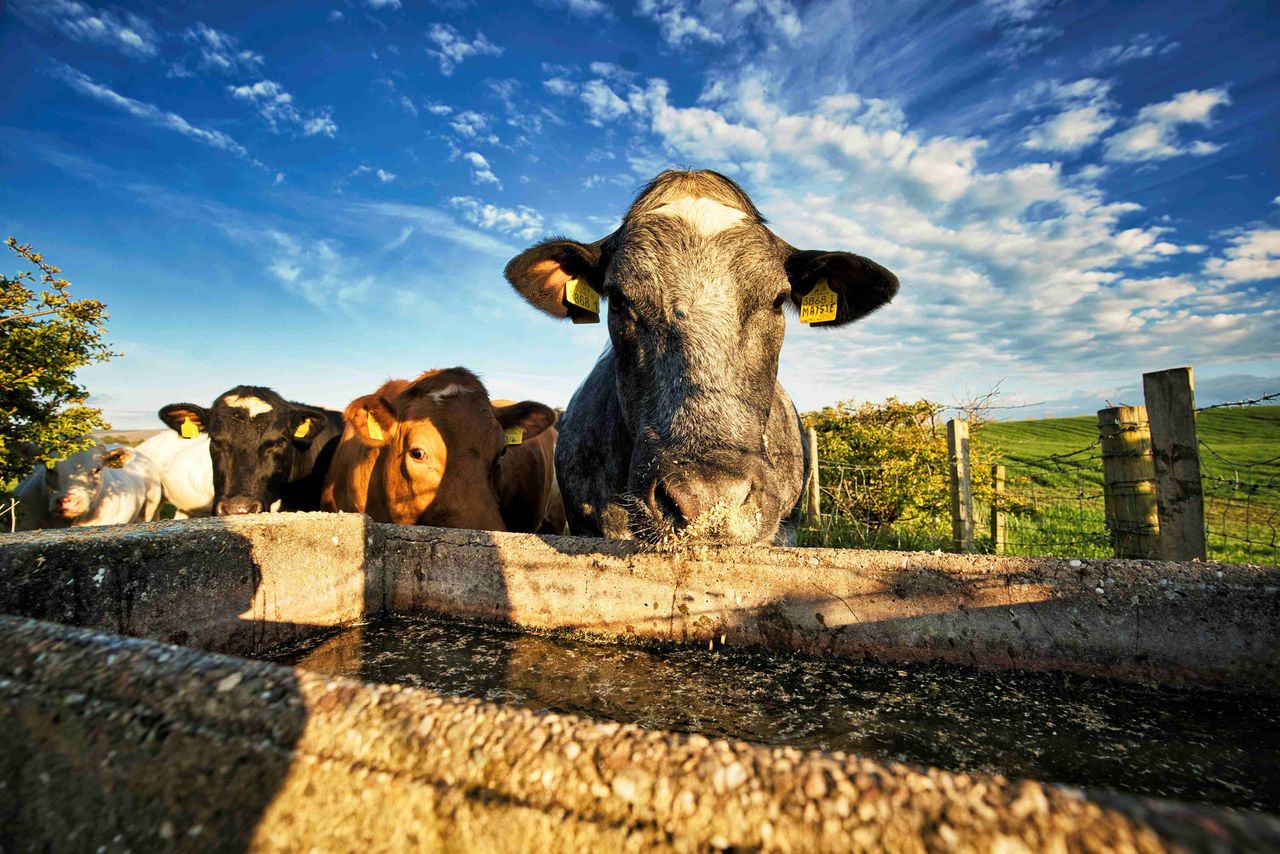
Though many farms are now enjoying more comfortable temperatures, Tirlán has advised farmers that heat stress is still an active threat to cows.
In an online webinar with a focus on animal welfare in the drought yesterday (July 23), Tirlán head of animal health and welfare Joris Somers advised farmers on the need to actively consider water requirements.
When researching advice on a cow's water requirement, any farmers will see figures such as 70-120L of water intake per day .
Somers explained that the 70L/day figure is an average of all stock on farms, while milking cows can consume over 120L/day.
Cows require between 4-4.5L of water for every kg of milk produced.
For a cow producing 23L of milk, multiply that by 0.971 (to convert to kg) =22.33 X 4.5 = 100.5L/day.
Temperature Humidity index
Where grass is plentiful and has a normal summer dry matter percentage (18%), the cow will can get between 40-50% of its water requirement from pasture.
In summer droughts, where dry matter is regularly at and above 25% in the driest area, this pasture supply of water drops to below 20% of a cow's requirement.
Despite the cooler temperatures of late, Somers advised farmers that cows can still be prone to heat stress.
Once temperatures reach 25℃, a cow is no longer in her comfort zone.
Humidity also plays a big role. Farmers can use the Temperature Humidity guide to evaluate a cow's risk of heat stress.
Once a cow scores 72 or above, she is experiencing heat stress.
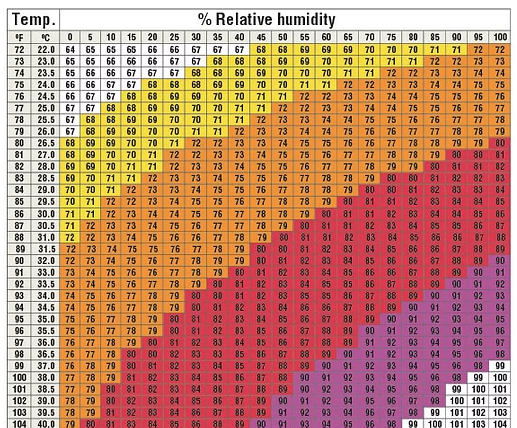
The cow will have to work harder to expel heat while having a reduced intake with warmer conditions. This results in the cow reducing milk yield, as cooling down is an high energy process.
Farmers have also been seeing cows coming back into heat as the embryos fail to hold due to the heat stress over the last three-four weeeks.
Grazing and feeding plan
Farmers should have adequate access to water in all paddocks for cows. Having two water sources will reduce the distance cows have to walk for water.
Paddocks should be shaded, with day-time paddocks especially having ample shaded lying space where possible.
Cows will drink 30-50% of their water requirements in the first three hours post milking. Having water troughs in the collecting yard and on passage-ways near the parlour is essential to reducing stress.
Where farmers are feeding cows, they must ensure every cow has between 60-70cm of feeding space to avoid competition within the herd, where less dominant cattle lose out on feed volume and quality.
Pre-spraying must also be considered where cows are inside, Somers advised. This is to prevent infection from summer flies combined with lying indoors.
Keeping an eye on mastitis and SCC is essential to ensuring productivity and animal welfare are maintained.