How to manage a cold snap on your farm


Temperatures could be set to plummet to -4° delivering a cold snap to many parts of the country over the coming days.
According to Teagasc farmers should prepare for this colder weather by taking practical action to get through it "without injury".
This is especially important for the week ahead, which according to Met Éireann, “will turn wintry at times".
The key advice from Teagasc when it comes to a cold snap is for farmers to focus on herding, clothing, vehicle use, maintaining contact and power use.
John McNamara, Teagasc's health and safety officer has warned that during cold weather, emergency units of hospitals “are inundated with people with weather-related injuries, mainly due to slipping and falling causing nasty breaks and fractures and head injuries”.
“The challenge is to prevent such injuries.”
Cold snap
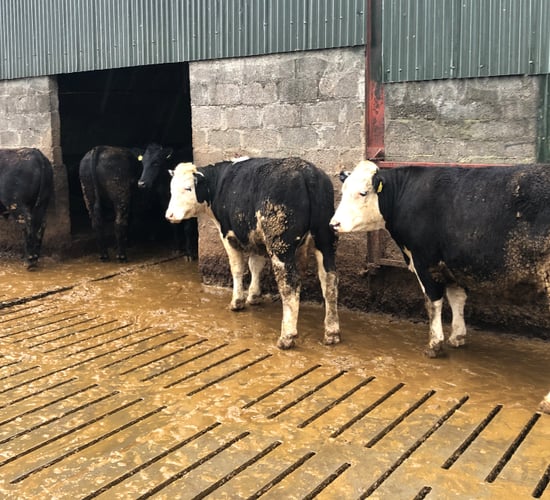
According to McNamara: “The key here is to have clear tracks around the farm to prevent slipping and falling.
“De-icing salt is available from co-ops for around €200/t or €5-€6 per 25kg. bag. Confining the area of walk-way keeps the cost to a minimum.”
He also said that frozen ice, especially under snow, “is particularly dangerous and should be avoided.
“This can arise from leaking taps or gutters so avoid where possible."
“Hot water melts the ice,” he added, “but make sure the water is swept away as it causes an ‘ice-rink’ when it cools down and freezes.”
See Agriland’s guide to getting the yard ready for frosty dairy collections for further details.
Herding stock
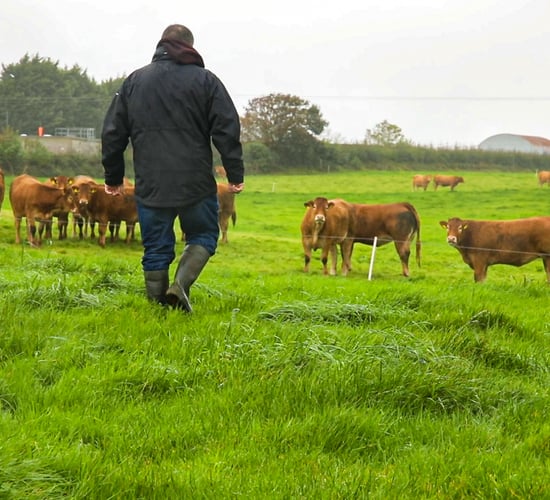
McNamara said that going out into fields to herd and feed stock is associated with injury risk.
“It is best to do this work during the early or middle of the day to avoid nightfall,” he said.
“Make sure that you are wearing adequate clothing for thermal purposes and carry a mobile phone to keep in contact in case help is required.”
Additionally, he said: “It is best to stay well away from hazardous areas such as banks of streams, steep inclines, and the quarries to reduce the risks.”
The key to adequate clothing, said McNamara, is to “wear a number of layers to give warmth and flexibility, and having a waterproof layer is essential”.
“As considerable heat loss occurs from the head, whole body protection is crucial."
Vehicle and electrical usage
Four-wheel drive is recommended in these conditions, said McNamara, "as it provides more grip than two-wheel".
He also advised "to wear seat belts where provided".
“Remember checking anti-freeze to prevent engine coolant freezing,” said McNamara.
“Never take off the coolant pressure cap of an over-heating engine.
"The coolant is under a higher pressure than atmospheric pressure and it turns to steam, which could cause burns to the face and upper body.”
He also had advice when it comes to batteries of vehicles.
“Batteries produce less power at lower temperature so ‘weak batteries’ get ‘found out’ in a cold snap,” he said.
“Particular care should be taken when ‘jump starting’. A weak battery could be frozen and could explode when jump started.
"If possible, keep the vehicle in a warm place but not adjacent to flammable material.”
Additional lamps and extension cables are likely to be used during a cold snap.
McNamara said: “Check these for signs of ‘wear and tear’ and correct wiring before use.
"They should be protected by a 30milliamp RCD – Residual Current Device - on the switch or fuse board to prevent electric shock.”
Cold snap
The cold snap, said McNamara, "is time for slowing down and taking deliberate actions".
"Getting through this time injury-free is the first priority."
“Finally, but most importantly, it’s a time for keeping in contact with isolated neighbours particularly the elderly.
"It is great to see the active engagement of farming and rural organisations in this activity," he added.