Sponsored Article
Helping break the cycle of disease at calving with effective biosecurity from KERSIA

Sponsored Article

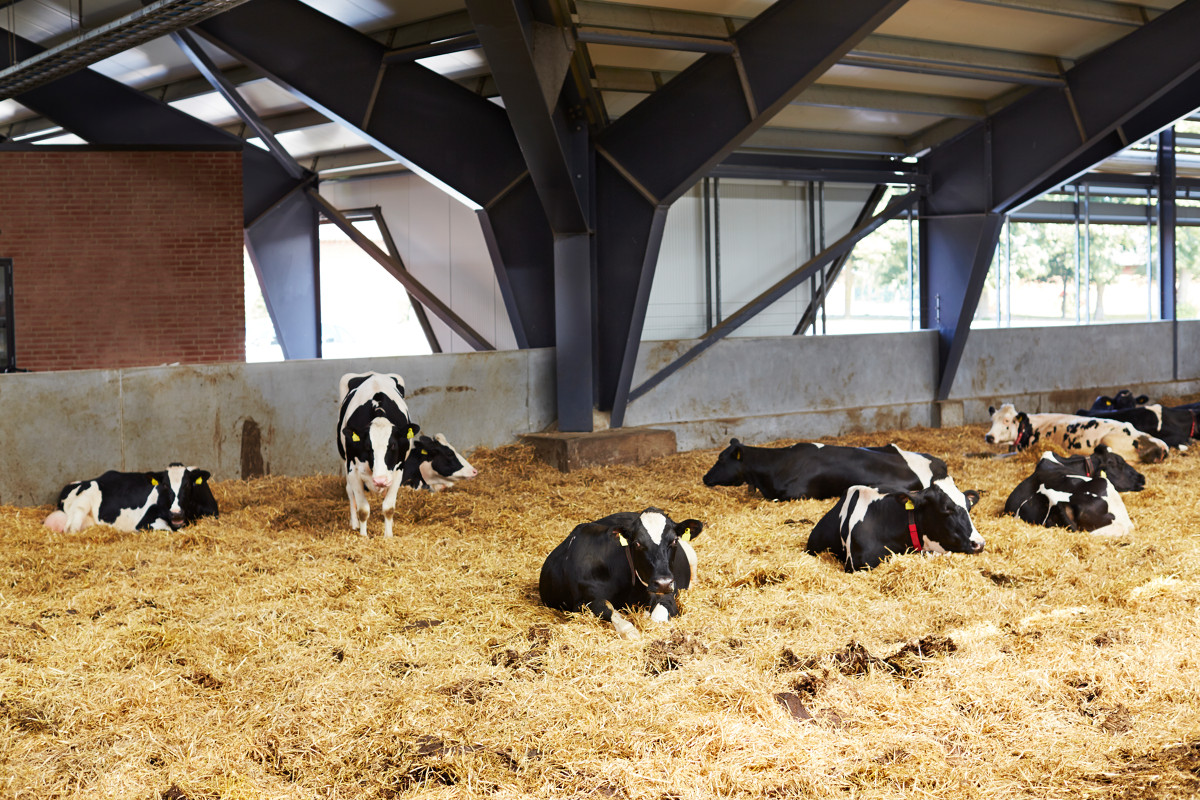
Calving for any dairy farmer means late nights, early mornings and lots of hard work. So it is vital that after all the hard work farmers have the right conditions ready for the arrival of new calves. Effective and easy-to-follow biosecurity ensures optimum health and the very best start for every new-born calf.
It is well documented that coccidiosis and cryptosporidiosis, caused by oocysts, can thrive in a livestock environment, exponentially if it is a dirty one. Both micro-organisms cause illness in cattle and youngstock who are particularly vulnerable to infection due to little or no immune system after birth.
In many cases, animals will show few external symptoms but will simply fail to thrive. This means increased mortality rates. As a result, profit margins will be squeezed placing financial pressure on the farm.
It is possible to use medication to shorten the length of any illness and reduce the chance of secondary infection. Whilst this is effective, it is of course expensive. It is far more cost effective to reduce infection rates in the first place by preventing the intake of oocysts in young animals. As the saying goes “prevention is better than cure”.
How?
The implementation of a robust and effective biosecurity programme cannot be overstated. It is crucial to help reduce and prevent the rate of infection and spread of disease particularly in youngstock.
In short, if a biosecurity programme is adhered to the profitability of each animal will increase. This results in stability further down the line as the calves begin to grow.
Implement a cleaning and disinfection programme now
Implementing a cleaning and disinfection programme can seem like a daunting process. However, the steps are relatively simple and the sooner the better.
Firstly, it is important to accurately assess the current situation including the disease status of the herd and any hygiene procedures already in use.
The first stage should be to remove livestock from the housing area and then remove any residual bedding before starting cleaning. Using a foaming detergent designed to remove soiling and grease greatly helps. This should be thoroughly rinsed and allowed to dry.
The next and most important stage is to then apply a target disinfectant that is effective against the oocysts responsible for coccidiosis and cryptosporidiosis.
Apply the disinfectant following the usage instructions and then the pens can be re-bedded in preparation for the animals to return. It may also be useful to introduce a hygienic bedding powder to enhance the sanitation in the area before the animals return.
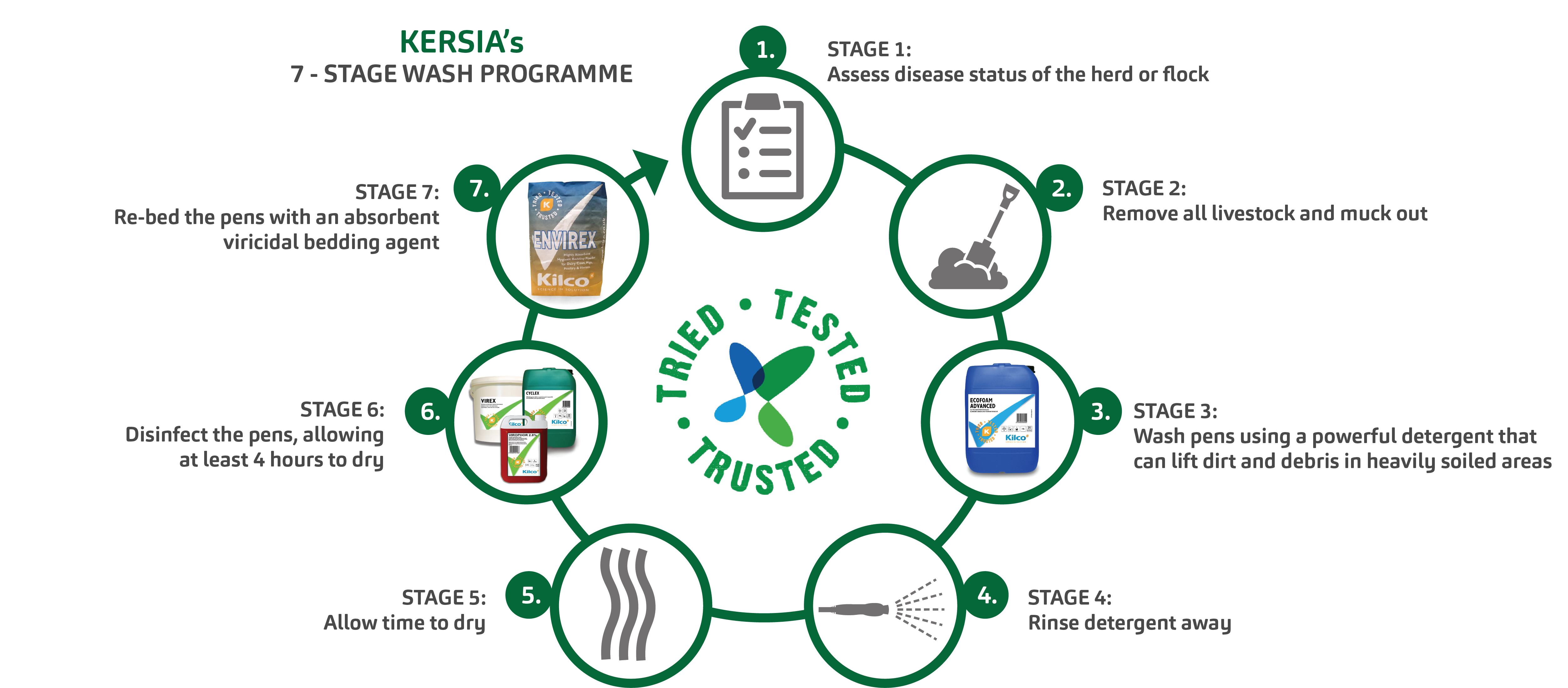
Below is the Kersia seven-stage biosecurity cleaning regime.
The detergent
ECOFOAM advanced
Using a quality detergent to remove all organic matter prior to disinfection is paramount to the overall effectiveness of a robust biosecurity programme. ECOFOAM Advanced has been developed specifically for this purpose.
It is an ultra-high performance, alkaline, long-cling foam cleaner which is designed to clean heavily soiled areas.
The benefits of ECOFOAM Advanced include:
- Advanced “wet film foam” technology which gives enhanced cling to all surfaces (including porous) ones;
- Excellent removal of carbohydrate, starch, fat and protein deposits;
- Fully effective regardless of water hardness;
- Proven to significantly reduce time and the workload required during wash down.

The disinfectant
Cyclex
Cyclex is approved by the Department of Agriculture, Food, and the Marine (DAFM) and the Department for Environment, Food and Rural Affairs (DEFRA).
It is a clinically proven disinfectant. It is effective in the defence against oocysts responsible for coccidiosis and cryptosporidiosis.
The benefits of Cyclex:
- It is easy to mix and apply;
- Specially formulated, chlorocresol-based disinfectant with strong microbiocidal properties (passed EN1656, EN1657, EN14349);
- Passed the rigorous testing requirements recommended by the German Veterinary Association (DVG) against spore-forming oocysts;
- Can be used in cattle, young stock, poultry, pig, sheep and goat housing;
- Eliminates risk of residues (cyuranic-acid free);
- Contains no chemicals of industry concern (QUAT- free).

Bovine TB protection with Virophor 2.8%
Bovine TB can destroy livestock, livelihoods and annual testing on farm is expensive and time consuming. A positive result will undoubtably adversely affect your net milk yield output in the short and long term.
Virophor 2.8% is a DAFM approved surface disinfectant and is a potent weapon in the fight against bovine TB. It is an essential tool in the fight to help control disease as part of an effective biosecurity programme all year round.
The benefits of Virophor 2.8%:
- A clinically proven surface disinfectant, which is DAFM approved;
- Contains Iodophor;
- Effective against foot-and-mouth disease;
- Can be sprayed or foamed;
- Suitable for use on surfaces, equipment and foot dips.

The bedding conditioner
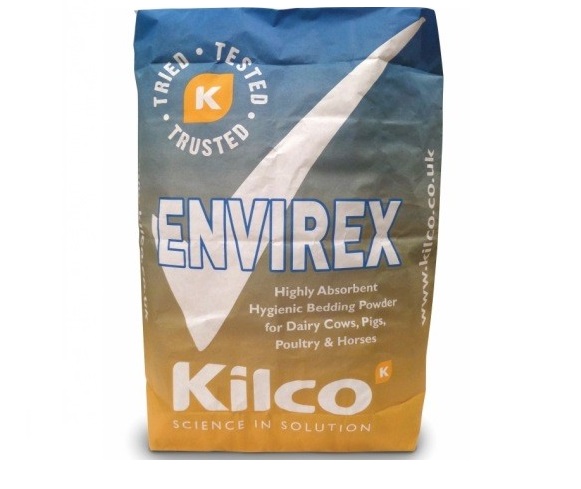
Envirex
Envirex bedding conditioner contains a unique combination of 2% w/w (weight per weight) of the proven biocidal product VIREX. It is found in a base-powder formulation, comprising mineral desiccants and essential oils.
Envirex has been specifically designed to maintain a dry, healthy environment for all types of livestock animals.
The formulation is comprised of ingredients which:
- Ensure longevity of the product, even under high-humidity conditions;
- Does not paste up to form clumps after drying;
- Reduces greasiness in animal accommodation and provides a non-slip environment;
- Has a greater absorptive capacity than that of any other clay;
- Helps prevent the animal’s skin from drying, thus keeping it supple and less likely to suffer from lacerations.
The vital importance of animal nutrition
It is also very important to consider the nutrition and the management routine of young calves, in order to give them the best possible start in life once born.
For example, ensuring a new-born calf receives adequate colostrum after birth, results in the right number of essential antibodies are provided, in order to boost the immune system and help fight disease.
Reviewing your protocols for the handling and housing of your calves can also help reduce the spread of disease within a herd.
Where possible rear in batches to avoid younger calves mixing with or being accommodated in areas used by older calves, to help prevent cross contamination.
Find out more
To find out more on to how to implement an effective biosecurity programme during spring calving as well as how to protect you herd against the ever present threat of bovine TB for year round protection, please contact your local KERSIA representatives:
- Michael Collins on: 087-375-1202; or email at: [email protected];
- James Luttrell on: 087-272-1022; or email at: [email protected];
- Sean O’Toole on: 0044-781-4884-962; or email at: [email protected].
Sponsored Article