Sponsored
From submission to success: How heat detection systems get results

Sponsored by

In Ireland, 68% of cows calved in the first six weeks of the calving season in 2024.1
The national target should be 90% to achieve the maximum lactation length and increase milk production. The difference is estimated to cost farms €206 per cow.2
Fertility management is crucial to achieving targets and saving money.
As everyone knows, managing the breeding season to stay on target can be challenging, especially when external factors, such as weather and grass growth, affect it.
That’s why it is critical to have the factors you can control under control.
What do you need to control, and why?
Sourcing and interacting with your herd's breeding data will help you stay on top of your breeding-season targets.
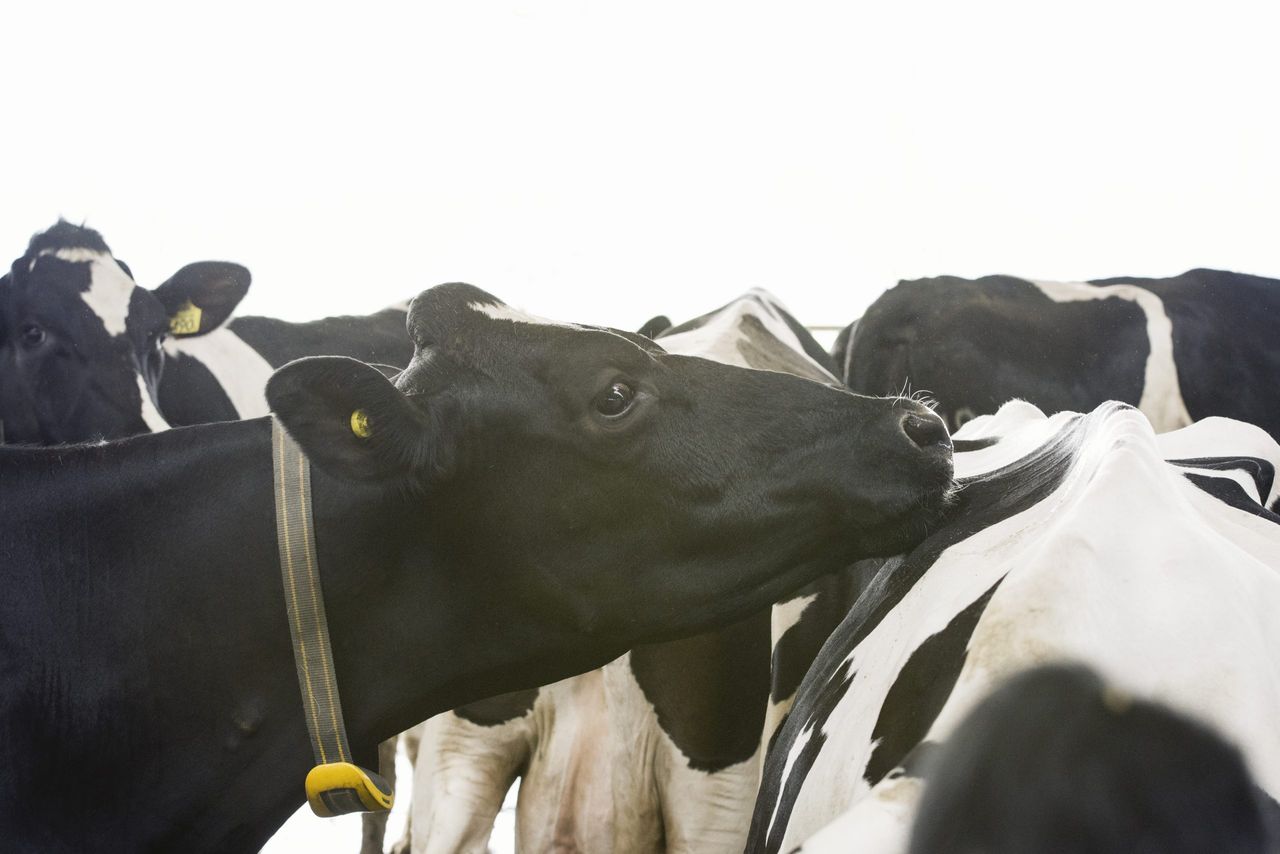
Activity monitoring systems such as Censortec’s Smart Tag technology provide essential data in an easy-to-use way.
It also allows you to compare data year-on-year and identify areas for improvement.
Reports and alerts from Nedap Now, the software behind the collars, give invaluable insight into your herd’s activity.
Submission rates
Submission rates need to be high early in the season to ensure that there are enough cows bred to dairy sires, and to keep next year’s calving season compact.
With many farms now using only dairy semen for the first round of breeding, everything must be right to ensure good submission and conception rates.
Having a continuous record of the herd’s submission rate gives you an advantage, and changes can be made during breeding if required.
As Jamie Kealy in Co. Carlow explains, the certainty that comes from the data is reassuring.
He said: "We could be serving 10 cows at a time, and before we had the system, you’d wonder whether they were actually on heat or not.
"Now we know that what we submit to be served is definitely on heat. It’s a game changer."
Non-return rates
Non-return rates give farmers an early indication of how breeding is progressing and what conception rates may be.
Normally, non-return rates are calculated as the percentage of cows that did not return with a heat within 21 days of being served.
Nedap Now’s non-return rate highlights the number of cows and percentage of the herd that have not had a heat 25 days after insemination.
Knowing this information can help you respond to problems earlier in the season and address issues that may arise.
Sexed semen and timing
Given the higher financial outlay for sexed semen, it’s critical to get the conditions right at breeding time.
Timing and selecting the right cow are two of the biggest factors influencing its success.
If a cow has no prior history of reproductive issues, has cycled during the voluntary waiting period, and is in good body condition, she is a suitable candidate for sexed semen.
Each farm may also include additional genetic factors in its selection criteria.
Censortec’s activity monitors have a unique feature that highlights the best time for artificial insemination (AI) for cows.
The Optimal Insemination Moment highlights when a cow is in the ideal window for insemination.
Cows can be flagged on the system as eligible for sexed semen, too; so, when it comes to time to serve cows, it is very clear which are the optimal cows for sexed semen.
The impact of this is easy to see on the farm.
Jerome O’Brien, who farms in Co. Cork, has been using Censortec’s Smart Tags for several years.
“In 2025, we had 79% of the herd hold to sexed semen after the first serve.
"I’m putting that down to the information that I get from Nedap now, because it shows me the Optimum Time of AI.”
Reproductive Issues
The bigger picture can sometimes be difficult to see. Knowing that a cow hasn’t had a heat is one factor; finding out why is another matter entirely.
Maybe she had a hard calving? Has she historically been a hard breeder? Is she under metabolic stress?
Being able to view a cow’s reproductive and health history gives you all the data you need to take suitable action.

Nedap Now helps elevate your breeding-season management by developing custom worklists.
These can consolidate all relevant information in one place, enabling you to make informed decisions.
A list can be generated showing which cows have not been served yet, but other information adds more detail.
The lactation number, days in milk, and days since last heat can also be included.
The cow’s health information can be accessed to provide a comprehensive overview of her status.
This provides a powerful report with the crucial information needed, all in one place.
With Censortec and Nedap, all the data you need to manage your breeding targets and stay on top of your herd’s fertility is available at the touch of a button.
Sponsored by